
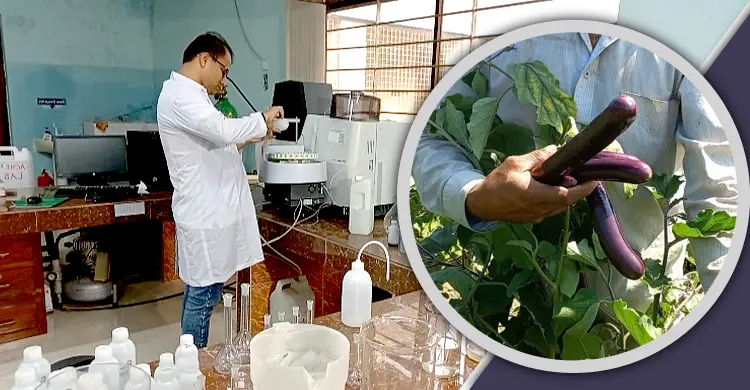
A team of researchers at Bangladesh Agricultural University (BAU) was studying heavy metals in brinjal and the cancer risk they pose. The preliminary findings show that the harmful heavy metals lead, cadmium and nickel are present not only in brinjal but in the very soil in which crops are grown. These metals may also be found in other vegetables, and in rice and wheat.
The BAU researchers recently studied brinjal grown in the soil of Islampur and Melandah upazilas in Jamalpur. They found heavy metals in the brinjal above tolerable levels. To find out why, they tested the soil, and found that it too contained harmful heavy metals (lead, cadmium and nickel) above tolerable levels.
Other crops grown in this soil may also contain these metals. The researchers believe further study is needed to find out why lead, nickel and cadmium are increasing in the soil and to take the necessary remedial measures, because eating these metals regularly in food year after year raises the risk of cancer.
Two years of sampling
The study of brinjal and soil samples was led by Professor Dr Zakir Hossain of BAU's Department of Agricultural Chemistry, with Professor Dr Kazi Farhad Kadir and Professor Dr Harunur Rashid. Samples of brinjal and soil were collected from farmers in Islampur and Melandah upazilas of Jamalpur and studied for two years. The results were recently published in the international journal Scientific Reports.
Brinjal farmer Md Shahidullah said four kinds of pesticide have to be applied to kill pests in brinjal fields. The pests die only if the four are mixed and applied together. "I had to spend about Tk 36,000 on pesticide in nine months on one bigha of land," he said.
He said that in future he would build a net house instead of spraying his brinjal field, which would protect him, the crop and the soil from harm, and that these pesticides are harmful to health. "This year I killed the pests with two kinds of pesticide, but next year I will need four, or the pests will not die. Every year the pesticide use on brinjal fields has to go up like this," he said.
Where the metals come from
Professor Kazi Farhad Kadir, of BAU's chemistry department, told Jago News the research began in 2020 with funding from Bangladesh's Ministry of Science and Technology and later continued with a second grant from the same donor, for two years in total. "We collected brinjal, and the soil it grows in, from Islampur and Melandah upazilas in Jamalpur district. We looked at the levels of heavy metals as well as some other nutrients," he said.
The main aim, he said, was to see whether the iron and zinc in the amount of brinjal we eat is enough for us, and alongside that to find out whether harmful heavy metals are present. "We tried to find out how much of the heavy metals lead, nickel, cadmium and copper there is, whether it is above or below tolerable levels, and how much harm it could do if it is harmful."
"We also looked at where the lead, nickel and cadmium we found came from, and so tried to establish a link with the soil," Kazi Farhad Kadir said. "Through our research we found that four metals, lead, nickel, cadmium and copper, came from the soil itself. Further tests showed these four metals are present in the soil above tolerable levels."
Zakir Hossain, another professor in BAU's Department of Agricultural Chemistry, told Jago News that lead, cadmium, nickel and copper are present in the soil above tolerable levels. "Because of this they can get into not only brinjal but other vegetables, even rice and wheat. This could be a major health risk. These metals are not high only in the soil of Islampur and Melandah in Jamalpur; we have also found them in the soil of Bhaluka and Gazipur. One might think the levels are high in Gazipur and Bhaluka because there are many factories there. That is not right, because there are no factories in Jamalpur. So how did these heavy metals get there?"
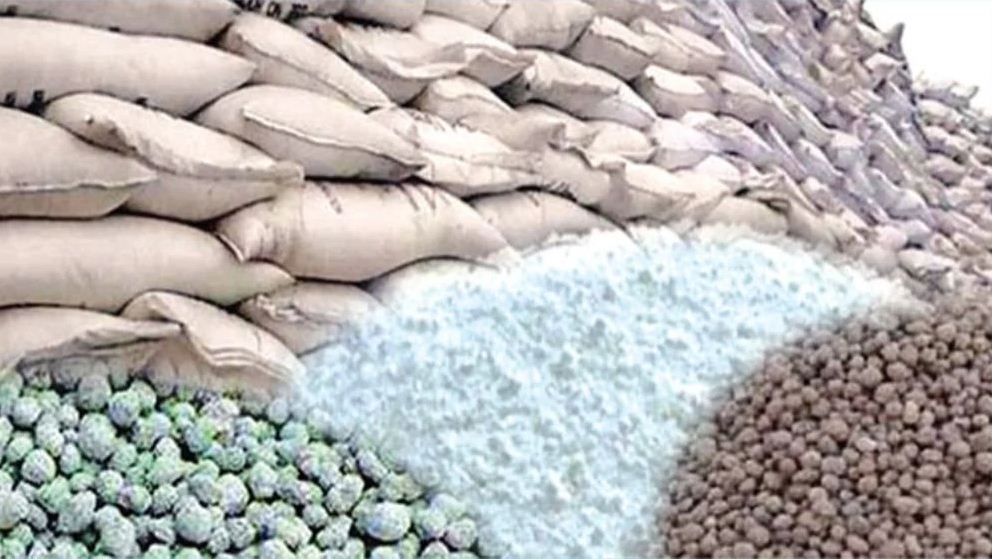
He said extensive research is needed into the source of the heavy metals in the soil: chemical fertiliser, pesticides, irrigation water or some other way the soil is being damaged. "If we can stop the sources the heavy metals are coming from, their amount in the soil will fall and less will get into food. Measures based on this research will make it possible to produce safe crops," he said.
Source: Jagonews24. First published in Bengali on The Agro News.
Comments
(0)