
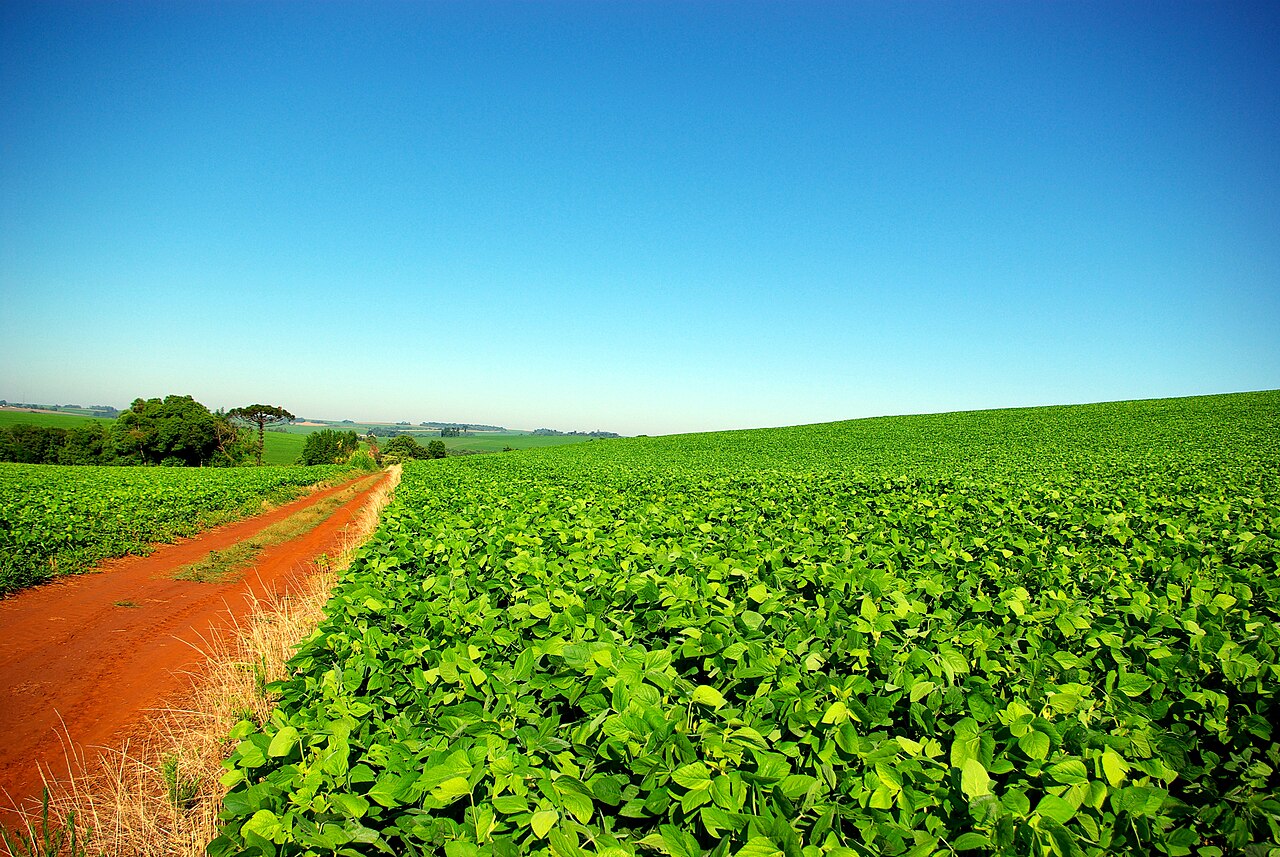
Brazil's National Technical Commission on Biosafety (CTNBio) has classified 109 agricultural products developed by gene editing as conventional organisms since 2018, according to a survey released by the commission. The list covers microorganisms for crop and livestock production, crop varieties and animals.
Microorganisms make up 70 of the 109, or 64.2%. There are 32 plants, among them soybeans, maize, sugarcane, eucalyptus, potatoes, tomatoes and blackberries, and seven animals, including cattle, tilapia and pigs. Gene-edited potatoes and tomatoes keep longer, citrus has been developed for resistance to citrus greening, and blackberries for more even ripening and better plant architecture.
Approvals rose every year from 2019 to reach 25 in 2024, fell to 16 in 2025, and stood at seven so far in 2026. "I see this as a one-off decline, since requests for assessment continue to increase," said Mario Murakami, president of CTNBio and director of the Brazilian Biorenewables National Laboratory. "Gene editing has significantly facilitated access to advanced biotechnology," he added, because genetically modified organisms carry far higher costs and approval requirements.
Gene editing, chiefly with CRISPR, makes targeted changes to an organism's DNA without bringing in genetic material from another organism. Under CTNBio's Normative Resolution No. 16 of 2018, a gene-edited organism that contains no introduced recombinant material can be treated as conventional, though each product still needs a CTNBio assessment before it reaches the market. Argentina, Canada, the United Kingdom and China have adopted or are developing similar approaches.
Companies working on gene editing in Brazil include Bayer and Inari on soybeans, Vylor on maize, Syngenta on tomatoes, Pairwise on blackberries and other fruit, and Tropic Biosciences on bananas. Research and Markets valued the global market for CRISPR in agriculture at about $231 million in 2024 and projects $645 million by 2032. Murakami expects investment to shift from transgenics to gene-edited organisms, which he says will appear more often on supermarket shelves. The report was edited by Leonardo Gottems.
Photo: Tiago Fioreze / Wikimedia Commons (CC BY-SA 3.0)
Source: AgroPages

Comments
(0)