
A severe drought has hit southern Africa. The El Nino weather pattern is badly damaging nature in the region's countries and has caused crop failures. The region's biodiversity is also in crisis.
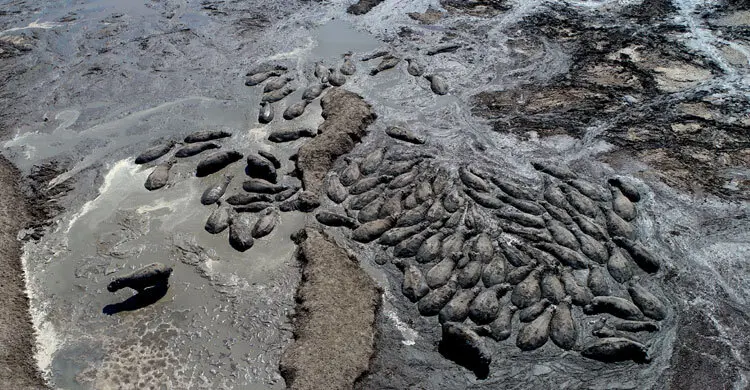
Drought has dried up the Thamalakane, a major river in the southern African country of Botswana, and more than a hundred hippos have become stuck in its mud. The animals face a risk of death in the hostile conditions, local wildlife conservation authorities told the news agency AFP on Friday (26 April).
According to AFP, the Thamalakane River, which flows along the southern edge of the Okavango Delta, a vast wetland in northern Botswana, has dried up. This forced herds of hippos to move close to the tourist town of Maun in search of natural water.
Wildlife officials assess deaths
Lesego Moseki, spokesperson for the Department of Wildlife and National Parks (DWNP) in the capital Gaborone, said a major river had dried up and the animals were in a critical situation as a result.
"The vegetation along both banks of the river has weakened. The hippos living in the wetlands of Ngamiland, the north-western district, depend on the water of the Thamalakane. But with the river dried up, the hippos here are stuck in the mud. We are now checking how many hippos have died," he said.
Although hippos have thick skin, it is quite sensitive. To protect themselves from the sun they must bathe regularly and stay in moist areas. Without water, hippos can become aggressive and may move close to human settlements in search of it.
Botswana is home to the largest population of hippos living in floodplains. A survey by the International Union for Conservation of Nature (IUCN) found there are an estimated 2,000 to 4,000 hippos in the country.
This year severe drought has also struck Zimbabwe, Zambia and Malawi as well as Botswana. Millions of people in these countries are struggling daily with hunger, and the countries have already declared national disasters.
Citing AFP and NDTV.
Source: Jagonews24. First published in Bengali on The Agro News.
Comments
(0)