
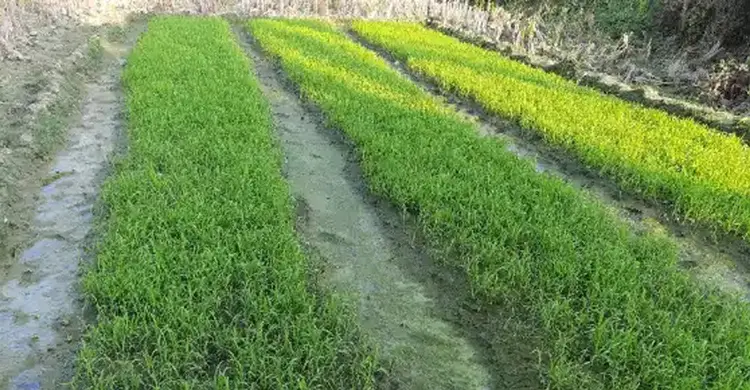
December is almost over, yet the winter has so far been mild. Fog has not settled in, and even in the northern region cold and fog have had little grip this year. Cyclone Midhili caused some damage to Boro seedbeds at the start, but the weather changed quickly and there were few further problems. Preparation of Boro seedbeds has made good progress, and farmers' fears have eased.
Taken together, there is big news at the national level: this year farmers are set to prepare more Boro seedbeds than targeted. If all goes well, Boro production should rise this season.
Good progress on seedbeds
According to the Department of Agricultural Extension (DAE), Boro seedbed preparation across the country had reached 91.5 per cent by last Tuesday (the headline figure is given as 92 per cent), against 52 per cent at the same time last year. Seedbed preparation will continue across the country until mid-January, so this year's target will be exceeded.
The department said this year's Boro seedbed target is 242,300 hectares. So far seedbeds have been prepared on 221,355 hectares, against a little over 125,000 hectares at this time last year.
Last year seedbeds were eventually prepared on 270,000 hectares, against a target of 241,000 hectares, or about 112 per cent of the target. Those involved expect the area to grow further this year.
Information from around the country shows that in some places seedlings have already been transplanted, while elsewhere farmers are waiting for seedlings to be ready.
Hopes of higher Boro output
For the coming season of the current 2023-24 fiscal year, the target is to produce 2.17 crore tonnes of Boro paddy on 50.4 lakh hectares. Last season (FY2022-23) production was 2.07 crore tonnes, about two lakh tonnes less than the year before, when 2.09 crore tonnes were produced. Agriculture officials expect production to rise further if the seedbed area grows.
DAE Director General Badal Chandra Biswas told Jagonews: "Boro production is expected to be close to 2.20 crore tonnes this year, which is more than in other years. So far the weather has been entirely favourable. The winter is mild and will stay mild to the end, which is good for paddy yields. With no fog, farmers are also making more seedbeds. Because of paddy prices, improved technology and seed, and big government incentives, farmers have become keen on Boro."
He said: "Our farmers cultivate Boro with care. The reluctance they used to feel over poor prices and shortages of fertiliser and seed is completely gone. We are holding inter-ministerial meetings on irrigation. There will be no problem with electricity for irrigation, and fertiliser stocks are sufficient. So far everything is favourable this year. I hope we will get very good results."
The government is also keen to raise Boro production this year. To expand cultivation and output of high-yielding varieties in the Boro season of the current fiscal year, the Ministry of Agriculture announced incentives in two phases, of Tk 107.62 crore and Tk 90 crore. In all, Boro incentives in the two phases come to Tk 198 crore, benefiting nearly 29.5 lakh farmers.
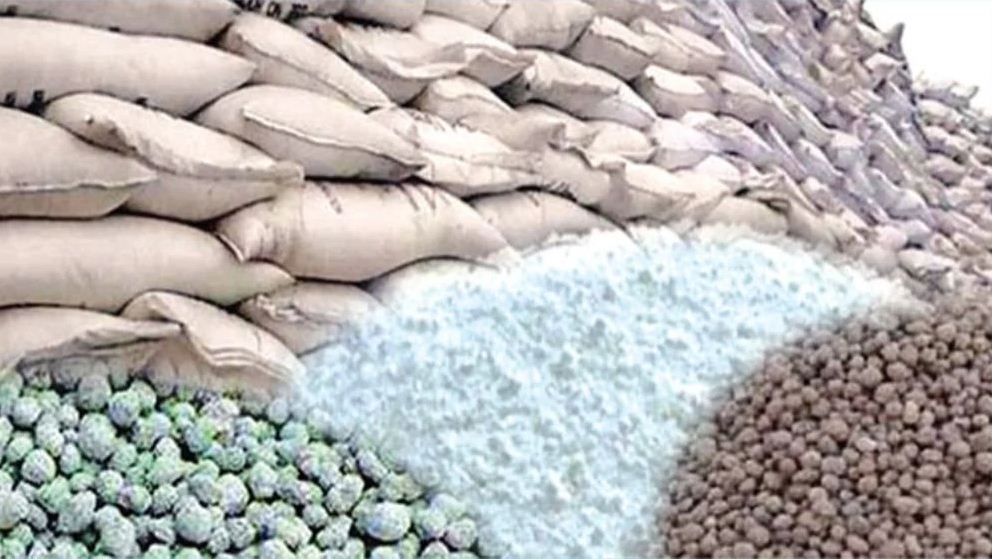
Under the scheme, a small or marginal farmer receives free of charge five kg of high-yielding seed, 10 kg of DAP and 10 kg of MoP fertiliser needed to cultivate one bigha of land.
Enquiries in different areas show that in most places farmers are now preparing for IRRI-Boro cultivation alongside the seedbeds. In some places land is being prepared; in others farmers are busy transplanting seedlings and watering fields.
Many farmers worry about rising costs
Boro production costs will rise this year compared with before, across irrigation, pesticides, labour wages, fertiliser and more, and they may rise further in the days ahead. Farmers are worried. They say that in the northern region, Boro cultivation now costs an extra Tk 5,000 per bigha compared with two or three years ago, but having not received a fair price for paddy at the end of last season, they are not recovering their production costs.
Fazlul Haque, a farmer in Kola village of Badalgachhi upazila in Naogaon, said: "This year I am preparing to grow Boro on about seven bighas. Boro cultivation will cost much more this year than last season, because last year the cost of irrigation water went up by about Tk 2,000 per hour (for the whole season). The prices of fertiliser, pesticides and seed are also higher."
Several farmers said a kg of seed paddy that cost Tk 200-250 last year now costs Tk 350. After the government raised fertiliser prices, spending on this item has gone up from Tk 2,000 to Tk 3,500. They will also have to pay more for pesticides, transplanting wages, labour, threshing and transport.
Asked about this, Abul Kalam Azad, deputy director of the DAE in Naogaon, told Jagonews: "Irrigation charges have not yet been fixed this year. Work is being done at field level to keep irrigation costs reasonable. There is also a sufficient allocation of fertiliser this year, so there is no risk of prices rising due to a fertiliser shortage."
By the Bangladesh Rice Research Institute's (BRRI) calculation, the cost of producing a kg of rice in the Boro season will rise by Tk 3 this season to about Tk 41. The cost of paddy has risen from Tk 28 to about Tk 31 a kg. Costs have gone up because fuel oil, electricity and fertiliser have been bought at higher prices since last year.
M Asaduzzaman, economist and former director of the Bangladesh Institute of Development Studies (BIDS), told Jagonews: "Farmers' costs have risen abnormally. Incentives are needed not only for hybrids but for other rice varieties too. At the same time, sufficient production is possible simply by giving farmers a good price for their crop. If they do not get the price, they will lose interest."
Rice production has risen
Bangladesh produced 3.80 crore tonnes of rice in FY2021-22. Last fiscal year (2022-23) production was 3.9095 crore tonnes. At least 50 lakh tonnes more rice is produced now than ten years ago; in FY2010-11 the country's rice production was 3.378 crore tonnes.
Rice is grown in three seasons in Bangladesh. The biggest is Boro, planted in December and January and harvested in April and May. Aus follows Boro, and Aman is grown in the height of the monsoon. Aus and Aman depend on rain, while Boro depends on irrigation.
Last fiscal year 2.07 crore tonnes of Boro, 1.54 crore tonnes of Aman and 29 lakh tonnes of Aus paddy were produced. Over the past decade Boro production has grown the most, while Aus production has fallen.
Source: Jagonews24. First published in Bengali on The Agro News.
Comments
(0)