
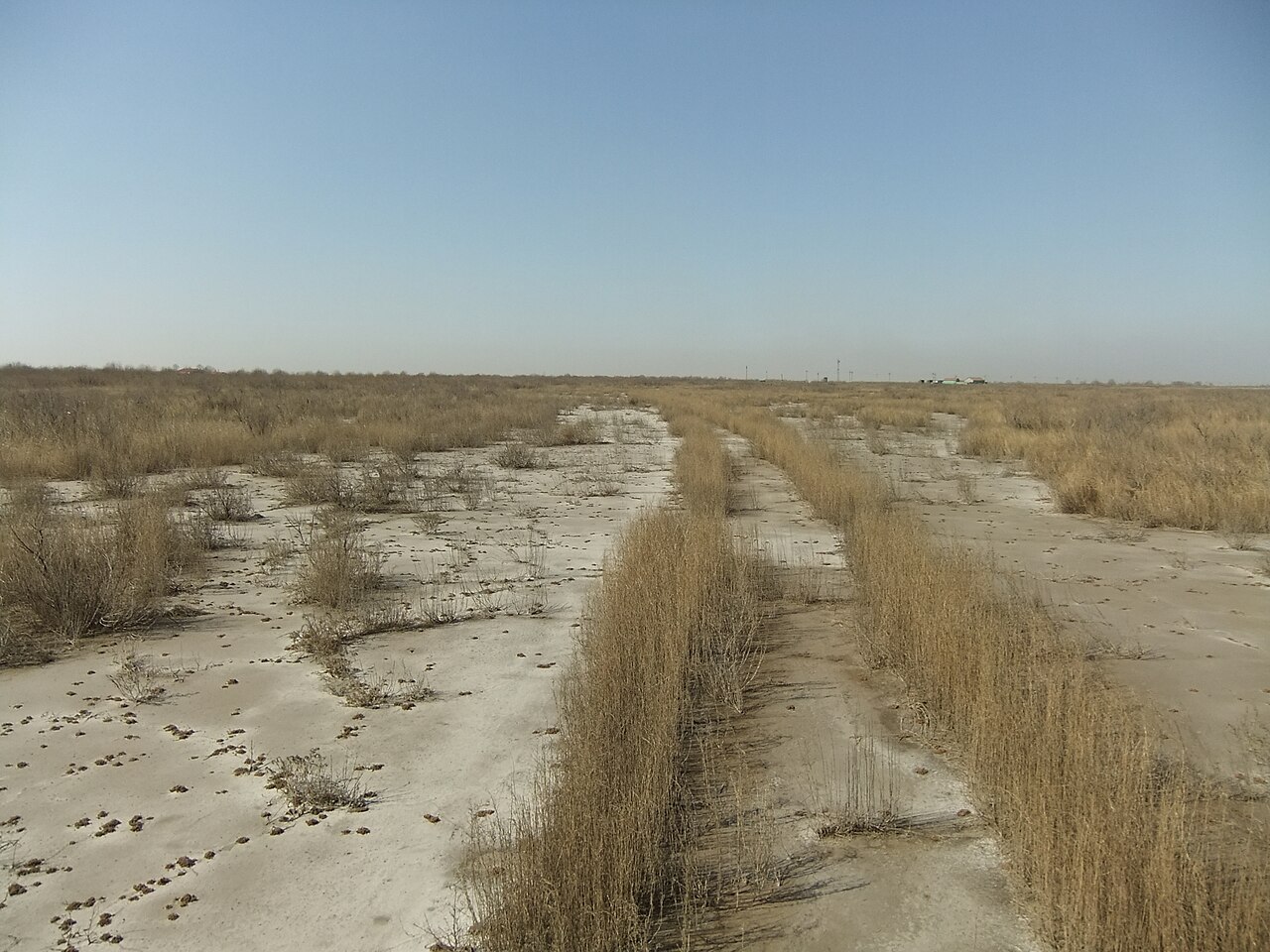
Mixing biochar made from crop waste with the residue of a native salt-tolerant plant builds markedly more stable carbon in degraded coastal farmland than either material alone, researchers at Ocean University of China and Shihezi University report in the journal Biochar. The journal's editorial office highlighted the paper, first published online on 29 October, in a release on 25 November.
The team took soil from a salt-affected field in the Yellow River Delta near Dongying, in Shandong province, where seawater intrusion and poor drainage leave land too salty for many crops. They added litter of Suaeda salsa, a salt-tolerant plant common on the Chinese coast, and biochar made by heating corn straw to 450 degrees Celsius without oxygen.
For 370 days they incubated four sets of samples: untreated soil, soil with biochar, soil with litter, and soil with both, at normal and waterlogged moisture levels. They tracked lignin phenols, a marker of plant carbon entering the soil, and microbial necromass carbon, the carbon held in the remains of dead microbes, which tends to last far longer than fresh plant matter.
Soil given both materials gathered 22 to 41 percent more lignin phenols and up to 233 percent more bacterial necromass carbon than soil with litter alone. Its gain in total soil organic carbon was 23 percent larger than the sum of the two separate treatments, and its gain in hard-to-decompose carbon 40 percent larger. The researchers say biochar eased salt and sodium stress on soil microbes and improved nutrient supply, so bacteria turned more of the litter into stable carbon instead of releasing it as carbon dioxide.
“Improving coastal salt affected soils is not only about restoring soil productivity but also about strengthening their capacity to retain carbon,” said corresponding author Xianxiang Luo. The method uses two cheap local materials: straw that would otherwise be burned or discarded, and a plant that already grows on degraded coastal land. The authors caution that the results come from laboratory microcosms, and field trials are still needed.
Photo: rheins / Wikimedia Commons (CC BY 3.0)
Source: Global Agriculture

Comments
(0)