
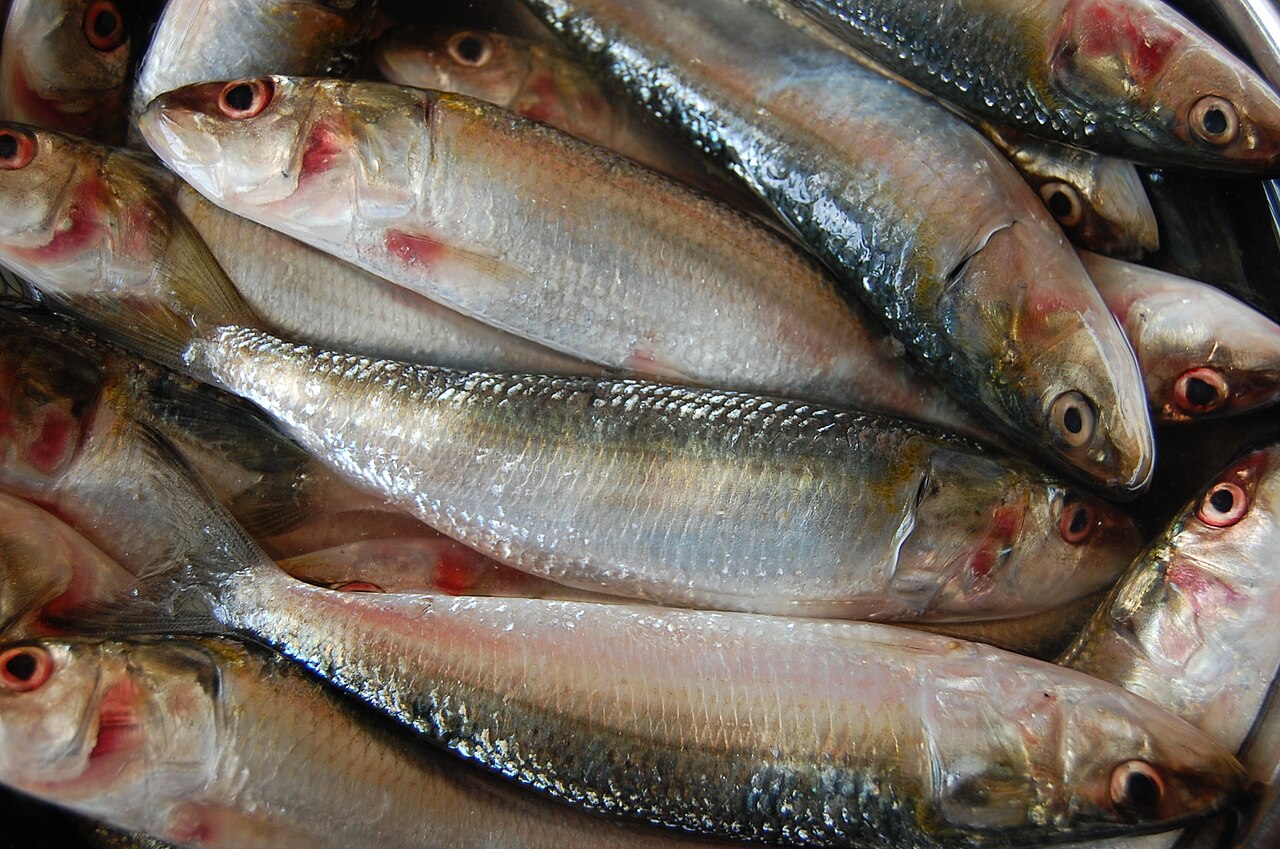
Sardine and anchovy catches in Indian waters rise and fall with climate patterns that start thousands of kilometres away, in the Pacific and the Atlantic, a study by the Indian Institute of Tropical Meteorology (IITM) in Pune has found. The work, published in Scientific Reports, analysed almost four decades of fish landing records.
The researchers used annual landings in India's exclusive economic zone from 1981 to 2019, collected in surveys by the Central Marine Fisheries Research Institute. They grouped fish into small pelagics (Indian oil sardine, Indian mackerel, Stolephorus and Thryssa anchovies), large pelagics (ribbonfish, two tunas and seer fish) and bottom-dwelling demersals, and compared them with global sea-surface temperatures and with climate oscillations including El Niño-Southern Oscillation, the Pacific Decadal Oscillation (PDO) and the Atlantic Multidecadal Oscillation, as well as winds over the Indian Ocean.
Small pelagic fish went through alternating periods of plenty and scarcity lasting several decades, while large pelagics and demersals varied more from year to year. Oil sardine landings swung in three-to-four-year cycles, and anchovies moved against them: sardines recovered three to four years after anchovies declined, and the reverse. The authors stress that this pattern does not show either species causing changes in the other.
Sardine and anchovy landings were the most closely tied to global sea temperatures. Higher landings came with a negative phase of the PDO, and northward winds along India's west coast were associated with better sardine catches, possibly by keeping eggs and larvae near coastal nursery grounds. “This suggests a greater sensitivity of small pelagics to environmental variability,” said Faseela Hamza, a project scientist at IITM.
Shark landings fell by about 0.4 kilotonnes a year with no clear link to the climate variables, which Hamza reads as a mix of fishing and ecological signals. Sharks grow slowly, mature late and breed little, which makes them vulnerable to sustained fishing. Roxy Mathew Koll of IITM's Centre for Climate Change Research explained that changes in the Pacific or Atlantic can alter winds over the Indian Ocean, which then shape local temperatures, upwelling, nutrients and fish.
The researchers call for monitoring that combines climate, ocean conditions and fishing activity so that fisheries can be managed adaptively and coastal livelihoods protected.
Reporting: Aditi Tandon, Mongabay India.
Photo: Nithin bolar k / Wikimedia Commons (CC BY-SA 3.0)
Source: Mongabay India

Comments
(0)