
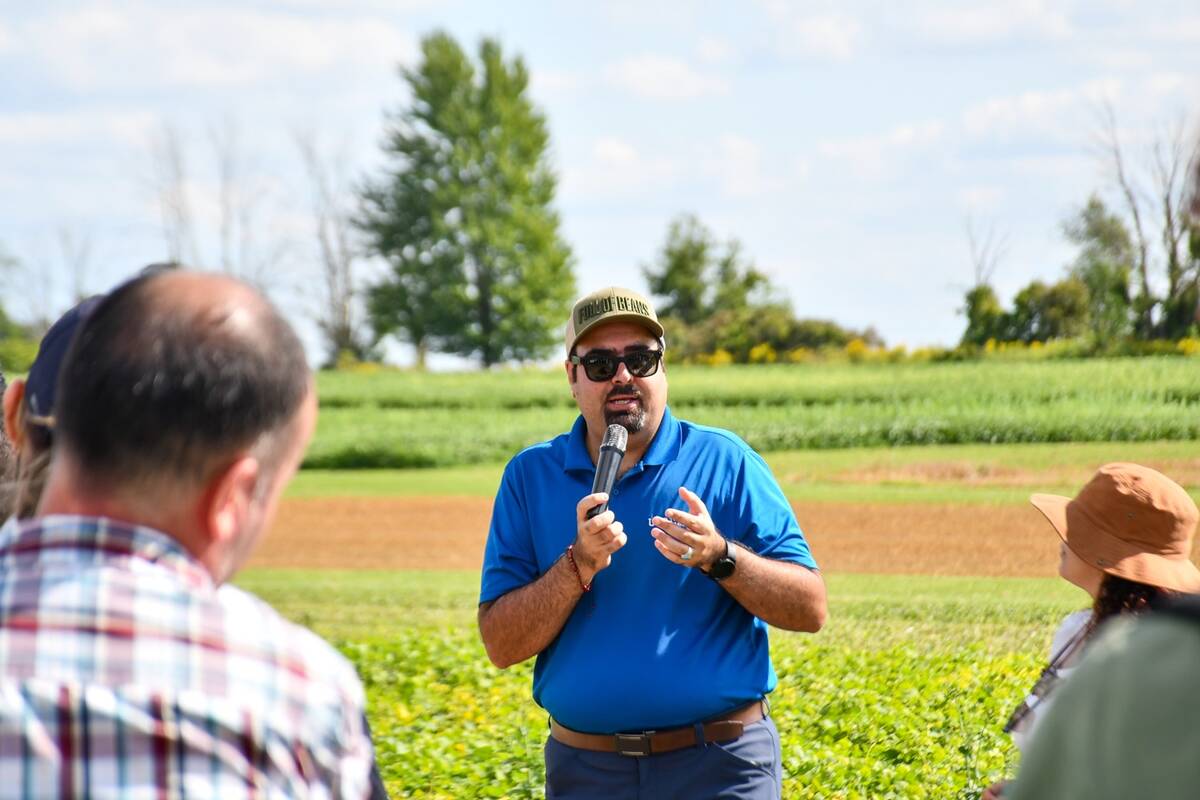
The first edible bean variety selected with the help of an artificial intelligence model called BeanGPT should be available within the next couple of years, the University of Guelph's edible bean breeder, Mohsen Yoosefzadeh Najafabadi, told the Manitoba Co-operator.
His programme now mixes traditional breeding with computational biology. BeanGPT has been trained on years of data on dry bean breeding and agronomy and also draws in global information researchers might otherwise miss. "We have field trials, genetic information, phenotyping, drone imaging, seed quality, weather and soil data right at our fingertips," he said. "Using all this data, we can go from tens of thousands of suggested crosses to just a few hundred."
People still make the crosses between breeding lines by hand; the value of the model is in deciding which crosses to prioritise, with the breeders then sorting its suggestions using their own knowledge. The first variety developed with AI assistance was shown at the Ontario Bean Growers' research day at the Huron Research Station in Centralia, and Yoosefzadeh Najafabadi said it looked great in the field so far.
The lab is also working on anthracnose resistance. A graduate student developed 200 genetic lines, exposed them to the disease and tested them genomically, finding three important resistance markers. Two were already known; BeanGPT was used to examine the third, on chromosome 11, which can also serve as a marker, and varieties carrying all three will now be brought forward.
Other students are testing hyperspectral imagery in a growth chamber to tell whether a line is susceptible to anthracnose, with early results looking successful, and have built an app that counts soybean cyst nematode cysts on bean roots, a tedious job that has relied on human eyes. Hyperspectral imaging also helps screen for the nematode, because infected bean leaves turn a brighter green before they yellow.
Faster genetic gains in edible beans would reach growers sooner, but Yoosefzadeh Najafabadi said the aim is not to abandon traditional breeding: "It's not actually like having a transition from traditional to the modern, but merging traditional breeding with the computational powers to better understand what happens in the field." The report was written by John Greig.
Photo: University of Guelph
Source: Manitoba Co-operator
Comments
(0)