
Many Bangladeshis know the name of the chotra or bichhuti, the stinging nettle tree, but few have looked at one closely. Nature and environment writer Mokarram Hossain first recognised it in 2019 in the botanical garden of Bangladesh Agricultural University (BAU) by its long, tassel-like flower clusters; from the upper leaves he had taken it for a kadam tree. In the pond behind the university's agriculture museum he found a second, less familiar plant, an aquatic flower.
The stinging tree, or devil nettle (Dendrocnide sinuata), is a large shrub or small tree with smooth white bark and soft, whitish young branches covered in stinging hairs. Contact causes intense itching, raised welts, fever and shivering, and the writer notes the symptoms can return for anything from 10 days to six months.
Its leaves grow up to 20 cm long and it flowers in November and December. It is a main shrub of the understorey in tropical evergreen forest between 300 and 1,200 metres, beside streams and springs. The bark yields a strong fibre for rope and coarse cloth, and in North Lakhimpur in Assam its flowers are cooked as a vegetable.
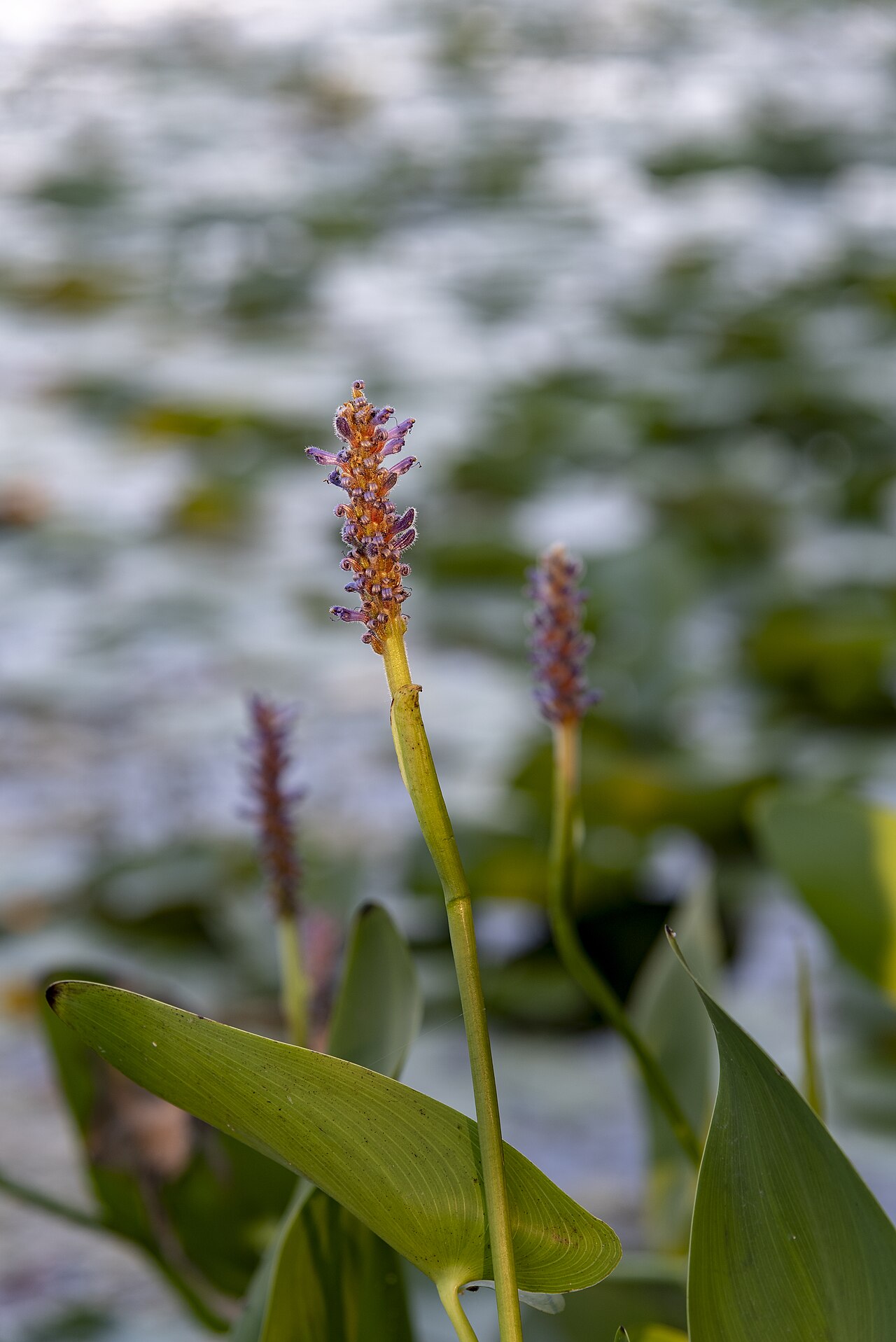
The second plant is pickerelweed (Pontederia cordata). Finding no Bengali name for it in botany books, the writer offers "jol nilambori", blue lady of the water, though the name is used in some places for another water flower. He first saw it in 2013 at the Aranyak garden house in Gazipur and again, in some numbers, in the BAU museum pond in 2024.
Pickerelweed grows in partly flooded or submerged ground and survives in soil low in oxygen, so it thrives where water rises in the monsoon and falls in winter. In its native range it blooms in late summer, but in Bangladesh it flowers almost all year.
Its blue flowers carry yellow markings that guide bees to pollinate them. When the seeds ripen, the flower stalk bends to push fruit and seed under water; the seeds rest for a while and germinate in six to eight weeks. The flower has not yet spread much among hobby lily ponds, the writer observes.
Photo: Sixflashphoto / Wikimedia Commons (CC BY-SA 4.0)
Source: Prothom Alo

Comments
(0)