
BASF Agricultural Solutions has launched Ampliqan, its latest nitrification inhibitor, for the fertiliser industry in China in 2026. The company says the product lets fertiliser manufacturers differentiate their portfolios while helping farmers cut nitrogen losses to air and water.
Nitrogen is the nutrient that most decides yield and crop quality, yet on average only about half of what is applied is taken up by plants, BASF notes. The rest can escape to the air as ammonia or nitrous oxide, a potent greenhouse gas, or leach into water as nitrate. Low nitrogen-use efficiency caps a farmer's yield and adds to climate warming, acidification, eutrophication and smog.
Ampliqan's active ingredient, DMPSA-K2, keeps ammonium stable for longer by inhibiting nitrifying bacteria, slowing the conversion of ammonium to nitrate so that nitrogen stays in the root zone and is available when the crop needs it. Urea and ammonium-containing fertilisers stabilised with it are better protected against leaching and greenhouse-gas emissions, and the company says ammonium-based nutrition can also improve the availability of micronutrients and phosphate from the soil.
The ready-to-use formulation is stable in storage across a wide temperature range and is compatible with all major nitrogen fertilisers, including urea, ammonium nitrate products, DAP, MAP, NPK blends and liquid fertilisers. It can be applied at the production plant or anywhere along the supply chain using standard batch and continuous blending equipment, and treated fertilisers keep a long shelf life.
Markus Schmid, Director and Head of Key Account Management, Nitrogen Management at BASF Agricultural Solutions, called it a 'plug-and-play solution' that helps the fertiliser industry and farmers pursue better yields while reducing greenhouse-gas emissions. Jackson Wang, Vice President of BASF Agricultural Solutions Greater China, said the launch strengthens the company's nitrogen-management portfolio and its support for fertiliser manufacturers in China as the industry pursues its green transformation.
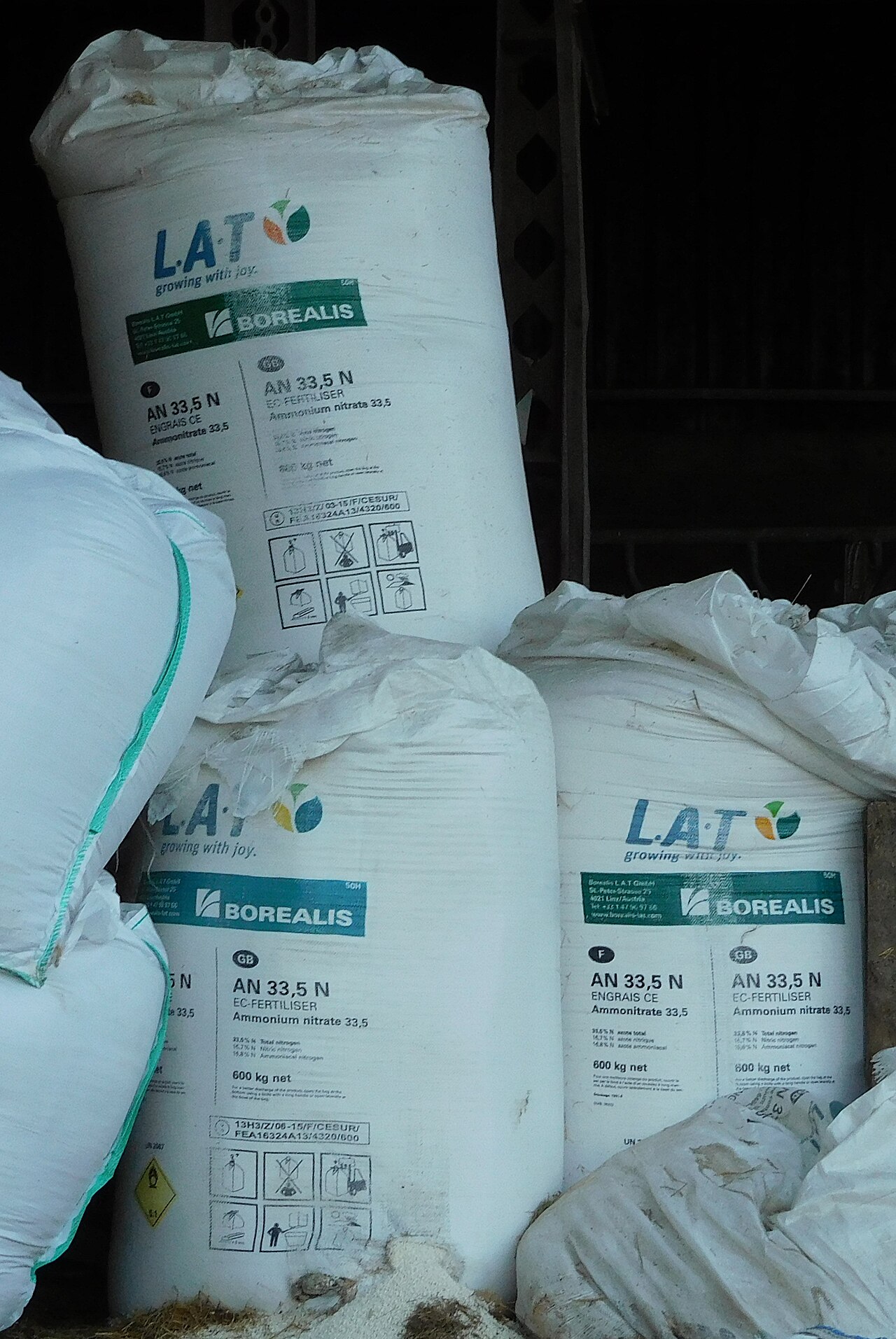
Photo: Cjp24 / Wikimedia Commons (CC BY-SA 4.0)
Source: Global Agriculture


Comments
(0)