
Bangladesh produces more than 15 million (1.5 crore) metric tonnes of vegetables a year, yet exports less than 0.3 percent of it. To establish the country as a reliable supplier of safe, quality vegetables to international markets, representatives of government and the private sector have called for a coordinated push from production to export, with improvements in six areas: pesticide management, traceability, testing and certification, packaging, logistics and finance.
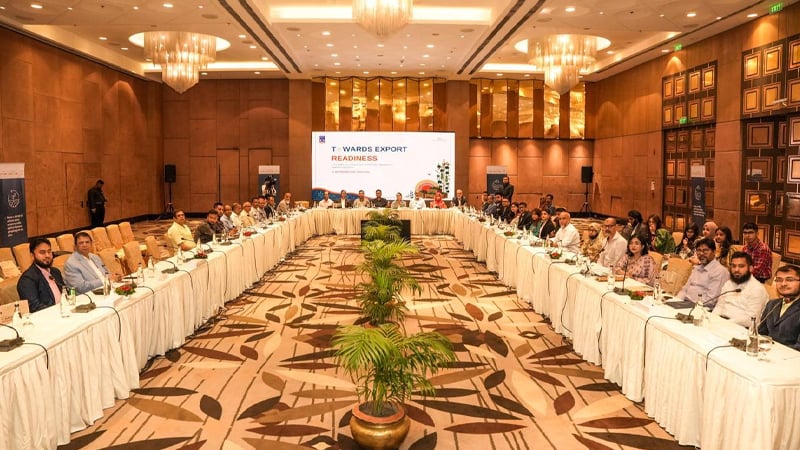
The call came on Thursday at a roundtable titled 'On the road to export readiness: barriers and commitments in Bangladesh's vegetable export sector', held in the Ruposhi Bangla Grand Ballroom of Hotel InterContinental in Dhaka. Swisscontact Bangladesh organised the meeting, which was moderated by Dr. Selim Raihan, professor of economics at the University of Dhaka.
The discussion identified the main obstacles as pesticide residue, testing and certification, weak traceability, high transport costs, delays at the airport and customs, poor packaging and a lack of coordination along the value chain. Exporters and other stakeholders analysed the competitiveness and compliance constraints on export consignments using the findings of a market study by SGS Bangladesh. The rejection of gourd-type vegetable shipments in European markets came up in particular, for the damage it has done to buyers' confidence in Bangladesh as well as to the exporters concerned.
Dr. Amirul Bahrain, additional director of the Plant Quarantine Wing of the Department of Agricultural Extension, said that although pesticides are classified by colour according to their toxicity, ensuring correct use at field level remains a major challenge, and that competitive packaging and presentation matter alongside product quality in winning international markets. Md. Abdul Majid Pramanik, director general of the Rural Development Academy, named weak market information, high and unpredictable airfreight costs, inadequate logistics, limited coordination and weak traceability as the biggest barriers, and urged export-market diversification and stronger traceability at the field.
Mobasserur Rahman Jewel, acting president of the Bangladesh Fruits, Vegetables and Allied Products Exporters Association (BFVAPEA), said rising airfreight costs are putting exporters under growing pressure and making it hard to compete internationally. Helal Ahmed, chief of branch business and head of operations at IFIC Bank PLC, said the bank is ready to provide finance tailored to the needs of exporters, farmers, consultants and other stakeholders in agricultural exports.
Ishrat Fatema, deputy country director of Swisscontact Bangladesh, observed that Bangladesh has the land, the favourable climate and the farmers, but not yet a complete compliance system that lets a buyer trust the product after it arrives; that system, she said, has to be built in a coordinated way at every stage of the value chain. Participants recommended correct pesticide use at field level, simpler and more effective testing and certification, market diversification, better logistics, market information and financial services suited to exporters.
Representatives of the Ministry of Commerce, the Ministry of Agriculture, the Department of Agricultural Extension, the Export Promotion Bureau, BSTI, commercial banks and BFVAPEA member exporters took part. For a vegetable grower the message is simple: a record of which pesticide went on the field and when is now the first condition of export. The story was written by a Samakal staff reporter.
Source: Samakal


Comments
(0)