
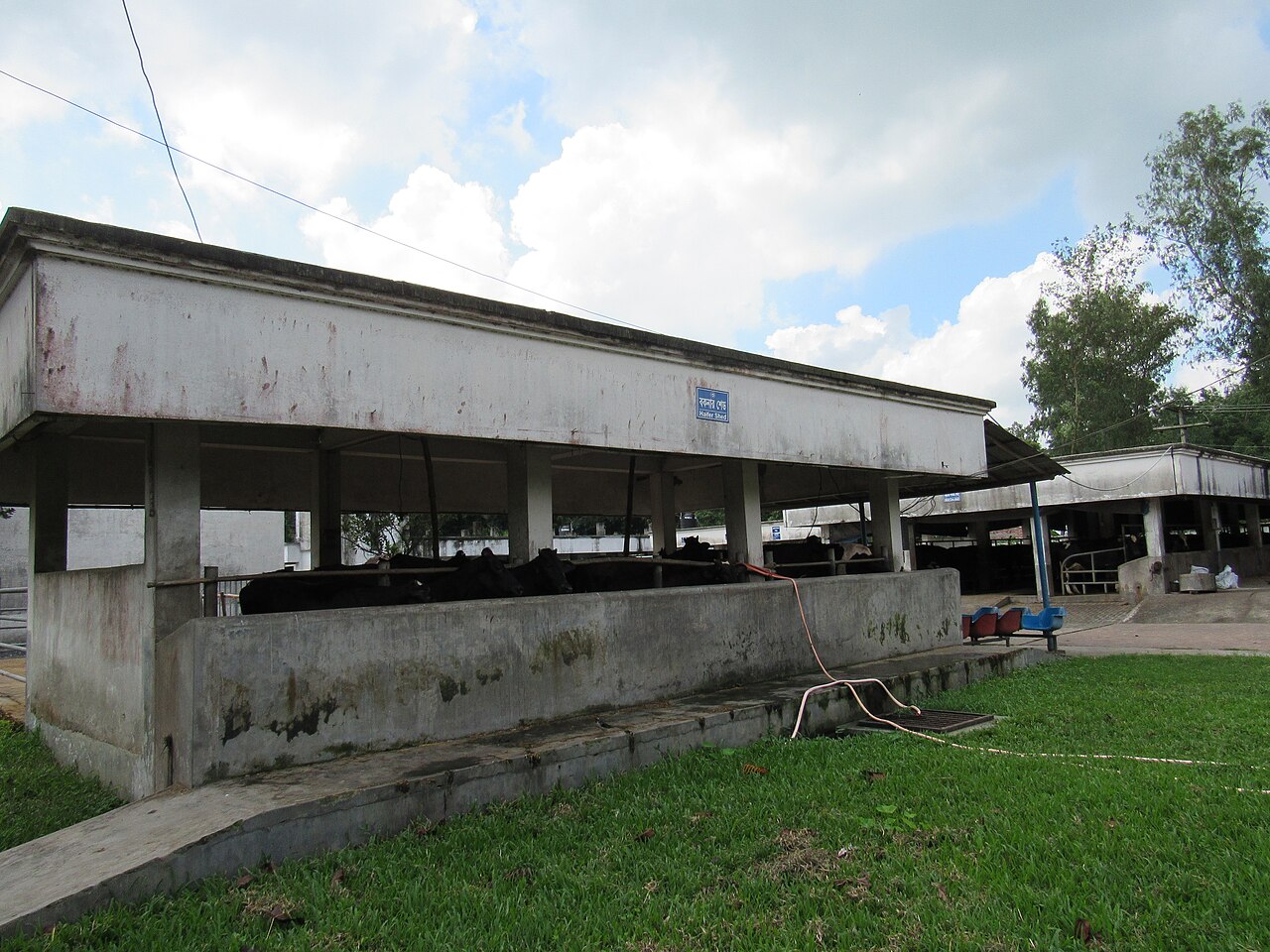
The carbon footprint of milk produced on Bangladeshi dairy farms is 27 percent lower than previously estimated, according to a new study. The joint work by the University of Connecticut's animal science department and Bangladesh Agricultural University (BAU) has been published in the international Journal of Dairy Science.
The team built its estimate from data collected on the BAU dairy farm between 2018 and 2023. Following standard life cycle assessment guidelines, it counted the farm's other cattle as well as the milking cows.
About 48 percent of the farm's total emissions came from the cows' digestion. Fertiliser used to grow feed accounted for 24 percent, manure management for 20 percent and the energy used to run the farm for 8 percent.
Over the five years, better management and a balanced diet raised the cows' productivity by 63 percent, and the farm's emissions fell by 37 percent over time, the researchers said. Conventional estimates show far higher footprints on South Asian dairy farms than in the United States or Europe, where a cow gives 30 to 40 litres of milk a day against 4 to 8 litres in Bangladesh.
Scientist Elias Uddin said animals that give no milk cannot be left out of the count because they are part of the farm's production system. In developing countries, he said, raising productivity and efficiency is the key, more than emission-cutting strategies alone.
The study also notes that while meat and dairy farms are separate in the United States and Europe, cattle in Bangladesh are raised for both. Only 50 percent of total emissions on Bangladeshi farms is therefore allocated to milk, against about 90 percent in the United States. The researchers have also made it possible to compare carbon per unit of calories produced for human nutrition.
With demand for environmentally friendly products growing in international trade, such accurate data will matter to farmers, the report says. For a dairy farmer the message is simple: more milk per cow from balanced feeding and good management also means lower emissions per litre.
Reported by Zahid Hossain Khan for Prothom Alo.
Photo: Ibrahim Husain Meraj / Wikimedia Commons (CC BY-SA 3.0)
Source: Prothom Alo
Comments
(0)