
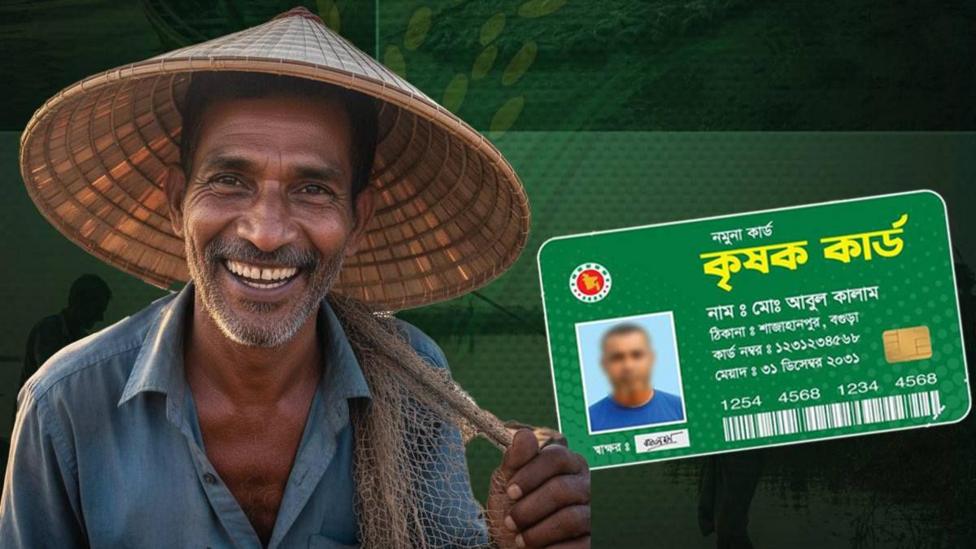
Two months after taking office, the BNP government is launching a Farmer Card to deliver an election promise. Agriculture Minister Mohammad Amin Ur Rashid says cardholders will be able to buy seed, fertiliser and pesticide at fair prices, sell their crops, obtain farm credit on easy terms and take out insurance, and poor farmers will receive a fixed sum of financial support each year. Prime Minister Tarique Rahman is due to hand out the first cards at Shaheed Maruf Stadium in Tangail on Tuesday, the first day of the Bengali new year.
Official figures put the number of farming households at 16.5 million. They will be sorted into five classes for the card: landless, with under five decimals of land; marginal, five to 49 decimals; small, 50 to 249; medium, 250 to 749; and large, above 750 decimals. The pre-pilot phase covers 22,065 farmers in ten districts. At a press conference at the Secretariat on Sunday the minister said 2,246 of them are landless; the ministry lists about 9,458 marginal, 8,967 small, 1,303 medium and 91 large farmers among the rest.
Despite the name, the card is not restricted to crop growers. Ministry data show 21,141 of the first cardholders are crop farmers, alongside about 855 cattle, goat, poultry and dairy farmers, 66 fishers and three salt farmers. The programme has three stages: the current pre-pilot in 11 upazilas of ten districts with high numbers of poor farmers, where lists were updated by local agriculture officers and farmer leaders together with the administration and elected representatives; a pilot to begin by August, which will test whether the card works as intended; and, in the minister's words, a phased roll-out of cards and a database across the country over the next four years in the light of the pilot.
The 11 agricultural blocks in the first phase are Suruj in Tangail Sadar, Uthali in Shibganj, Bogura, Kamalapur in Panchagarh Sadar and Panchpir in Boda, Kripalpur in Shailkupa, Jhenaidah, Rajabari in Nesarabad, Pirojpur, Rajarchhara in Teknaf, Cox's Bazar, Tenapacha in Goalanda, Rajbari, Fultala in Juri, Moulvibazar, and Gaibandha block in Islampur, Jamalpur, where distribution is to begin on 14 April. In Aranyapur block of Adarsha Sadar, Cumilla, cards will be issued from 17 April.
Cardholders are promised inputs and irrigation at fair prices, machinery at low cost, easy credit, market and weather information by mobile phone, pest and disease advice, training and crop insurance, as well as easier sales to the government at fair prices and easier access to subsidies and incentives. Digital point-of-sale machines will be placed with local seed and fertiliser dealers so transactions can be made on the card. The cash support of at least Tk 2,500 a year goes only to landless, marginal and small farmers; 20,671 of the first 22,065 fall into those classes and will all receive it. An account has been opened for each at a local Sonali Bank branch, so the card will function as a debit card. The pre-pilot budget is about Tk 8.34 crore.
Farmers welcome the scheme but past experience breeds doubt. Rahmat Ullah, a farmer in Cumilla, says timely inputs at fair prices or the chance to sell paddy to the government would be good news; Nahid Khan of Munshiganj asks how far it will actually be implemented. The Agricultural Input Assistance Card of the army-backed caretaker government in 2007 and the later Awami League initiatives of Tk 10 bank accounts for farmers and separate cards for fishers never delivered, experts say, largely because of irregularities, corruption and lists drawn up on political grounds. Researcher Gawher Nayeem Wahra says a scheme will not work unless those it is meant for are consulted and see a benefit. The minister's assurance: "This Farmer Card is one hundred percent free of politics. We want to break with what happened in the past."
Source: BBC Bangla


Comments
(0)