
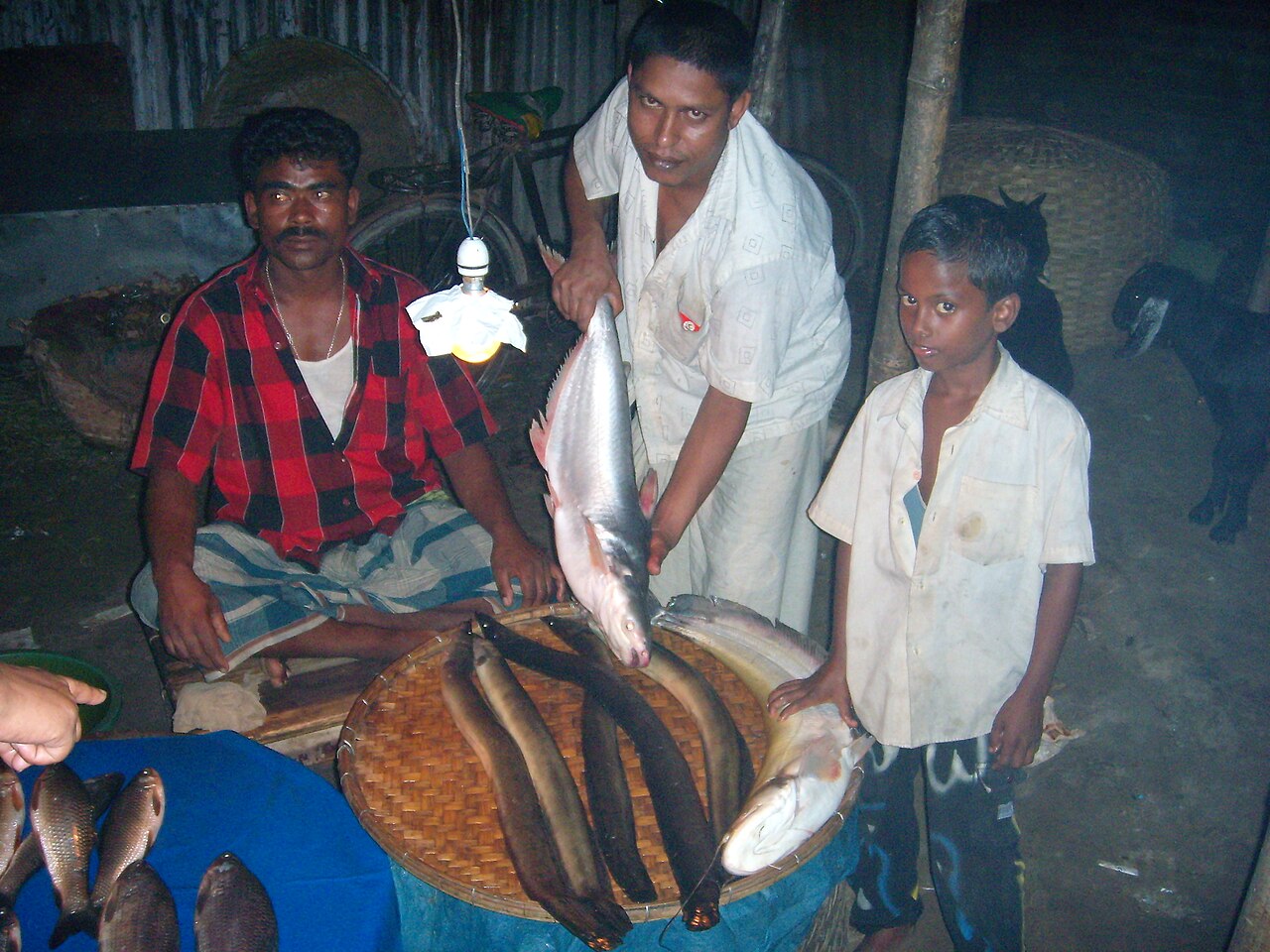
Step into a fish market at dawn and the choice is everywhere: rows of silver hilsa, baskets of tiny puti, stinging catfish and walking catfish thrashing in tubs of water, and great rui and catla laid out on the slab. Buyers ask the price, lift a gill to check freshness and drop the fish into a bag. Behind that variety lies another one that cannot be seen: a variety of nutrition. Fish is an outstanding source of nourishment and does a great deal for a healthy life, but each species has its own nutrients and its own benefits. Knowing which fish looks after the heart, which the bones and which the blood makes it possible to fill the shopping bag more wisely.
Fish on the Bangladeshi plate: the numbers
"Fish and rice make a Bengali" is more than a saying; the statistics bear it out. According to the Bangladesh Bureau of Statistics' household income and expenditure survey, the average person in the country ate about 67.8 grams of fish a day in 2022, up from 62.6 grams in 2016. The Department of Fisheries puts production in the 2022-23 fiscal year at about 4.915 million tonnes. Fish supplies a large share of the animal protein the country eats.
Fish, in other words, is not a luxury here but everyday food. Knowing what each species contains means a family can plan its nutrition better.
What fish contains, and why it matters
Almost every fish provides high-quality protein, which the body needs to build muscle, skin, hair and the cells that fight infection. Fish protein is digested more quickly than meat, which makes it suitable for children, the elderly and the sick.
The importance of protein shows in the body’s daily repair work. Muscle, blood cells, enzymes and hormones are all built from protein, and the body renews part of them every day. Fish protein contains all the essential amino acids the body cannot make for itself and must get from food. A piece of fish beside the rice lifts the nutritional value of the whole plate.
Oily fish contain omega-3 fatty acids, a beneficial kind of fat the body cannot make in sufficient amounts on its own. A great deal of research has examined their role in the health of the heart and blood vessels and in the development of the brain and eyes. Fish also supply vitamins A and D and minerals such as calcium, iron, zinc, selenium and potassium. Which of these a fish is richest in is what sets one species apart from another.
Small fish deserve a special word. Research by WorldFish, the international fisheries research organisation, shows that small fish such as mola, eaten whole with head and bones, are an excellent source of iron, zinc, calcium, vitamin A and vitamin B12. Its studies have also found that the body absorbs calcium from whole small fish as well as it does from milk.
Another finding from the same research is striking. In homestead ponds, mola made up only 15 per cent of the fish by weight, yet it produced 98 per cent of all the vitamin A from those ponds, along with 56 per cent of the iron and 35 per cent of the zinc. By WorldFish’s estimate, if a pond’s mola is eaten at home it can meet half the annual vitamin A needs and a quarter of the iron needs of a family of four. Vitamin A deficiency is a leading preventable cause of blindness in children, so these numbers matter.
How fish is cooked also affects its nutrition. Long frying at high heat damages delicate fats such as omega-3 and adds oil from the pan. Curries, steaming and cooking in a little oil keep more of the fish’s own value. Vitamin D deserves a note too: very few foods contain it naturally, and fish is one of those few.
The role of fish in protecting the heart is so widely accepted that health bodies such as the American Heart Association recommend eating fish, especially oily fish, at least twice a week. For most Bangladeshis that advice is not hard to follow, since fish is close to a daily food. The only questions are which fish, and how it is cooked.
Tilapia and pangas, both farmed, have one more advantage: they are available all year round at fairly steady prices. When the season for river fish ends, these remain in the market, so a family’s supply of protein holds up through the year.
Hilsa: a friend to the heart
Hilsa (ilish) is Bangladesh's national fish, and in 2017 it was registered as a geographical indication of Bangladesh, formally recognised as a product identified with the country. It is as rich in nutrition as it is in flavour.
Hilsa is rich in omega-3 fatty acids, which help to lower the risk of heart disease. Studies of hilsa fat in Bangladesh and abroad have found notable amounts of two omega-3s, EPA and DHA, with levels that vary with the size of the fish, the season and the river it came from. These fats support brain function, keep skin and hair healthy and help to ease arthritis, joint pain and inflammation in the body.
Hilsa also holds a special place in the country’s fish supply. According to fisheries research, this single species accounts for about 12 per cent of Bangladesh’s total fish production, and most of the world’s hilsa is caught in Bangladeshi rivers and coastal waters. To protect the resource, catching hilsa is banned for a set period during the breeding season, and catching juvenile hilsa (jatka) is prohibited. Refusing to buy jatka is part of protecting this source of nutrition.
How hilsa is cooked matters too. Steamed or in a light curry, the fish keeps much of its own oil; deep-fried, it takes on added oil from the pan.
Rui: the everyday staple
Rui is the fish most often found on Bangladeshi plates. It is available everywhere from ponds to rivers, and its price stays within reach. Rui is rich in protein and vitamin D. Vitamin D helps the body absorb calcium from food, which keeps bones strong.
Its flesh is relatively light, which helps digestion. Because it is low in fat, eating rui in place of red meat can also help to keep blood cholesterol in check. Cooking the rui head with rice or lentils is an old tradition here, and the head carries nutrition of its own.
Catla: for the eyes and the brain
Catla, rui's close relative, stands out at the market for its large head and broad body. It is rich in vitamin A and omega-3. Vitamin A is good for the eyes and is well known for its role in preventing night blindness.
The omega-3 in catla supports brain development in children and helps to keep blood pressure under control. In many families the big catla head is the most prized part, rich in both fat and nutrients.
Puti: small fish, big nutrition
Cheap, small and packed with nutrients: that is puti, the pool barb. Because this small fish is eaten bones and all, it is rich in calcium for bones and teeth, which matters especially for growing children, pregnant women and older people.
The iron in puti helps to prevent anaemia. Anaemia is a familiar problem among women and children in the country, and eating small fish regularly is a low-cost way to fight it. Puti also helps to keep the skin bright. Whether it is fried or cooked in a dry curry, eating the whole fish rather than picking out the bones gives the most benefit.
Tilapia: a companion for light meals
Tilapia, which came originally from Africa, is now one of the most widely farmed fish in the country's ponds. It is affordable and has few bones, so children like it too.
Tilapia is low in calories and high in protein, which helps with weight control. For anyone who wants to lose weight without cutting protein, it is a good choice. It is also counted as helpful against heart disease, and it contains potassium, which plays a part in controlling blood pressure.
Prawn: a store of selenium
What the market calls a prawn "fish" is, zoologically, not a fish at all but a shelled aquatic animal, a relative of the crab. In the Bengali kitchen, though, prawns are treated as fish and prized in everything from malaikari to prawns cooked with bottle gourd. Tiger prawns and giant freshwater prawns are also a well-known source of export earnings.
Prawns are rich in selenium, a mineral that protects the body's cells from damage, supports the thyroid gland and helps the immune system; it is also spoken of as a nutrient that helps protect against cancer. The protein and vitamin D in prawns are good for skin and hair.
On cholesterol, some care is needed. Prawns are very low in saturated fat, and nutritionists say it is mainly saturated fat that raises harmful cholesterol in the blood. Prawns do, however, contain some cholesterol themselves, so people with heart disease or high cholesterol may want to ask a doctor how much to eat. Cooking them in ghee, butter or a lot of oil also takes away much of their benefit.
Boal: protein that sits lightly
Boal, a large predatory catfish of rivers and wetlands, is known for its mouthful of sharp teeth and its soft flesh. It has few bones and is comfortable to eat.
Boal helps digestion and supplies nourishing protein. Its nutrients keep the skin healthy and support brain function. It is usually cooked in a spicy curry; keeping the oil and spices moderate preserves its lightness.
Air-breathing fish: why they are food for the sick
Magur, shing and koi are grouped together in Bengali as jiol fish, a name linked to the idea of staying alive. Besides their gills they have an extra breathing organ that lets them gulp air from above the water. They can survive for a long time in very little water, even in mud, and so they are sold alive.
Bought alive, they leave no doubt about freshness, and their flesh is soft, low in fat and light to digest. That is why, for generations, Bengali households have given a thin curry of these fish to the sick, to new mothers and to people recovering from illness. The three are described one by one below.
Magur: for blood and strength
In rural Bengal, a thin curry of magur, the walking catfish, has long been given to people who are unwell. Magur is rich in iron, which helps to prevent anaemia.
It supports children's physical growth and strength. A lightly spiced magur curry is considered good for stomach complaints because it is not heavy to digest. Native magur fingerlings are now produced in hatcheries by induced breeding, and the fish is farmed in ponds as well.
Shing: for strength and healing
Like magur, the stinging catfish (shing) is an air-breathing fish that can survive for a long time in very little water, which is why it is usually sold alive. Its spines demand care: a sting from a shing is painful.
Shing is rich in calcium and iron, which strengthen the bones. It builds up the body's strength and is known as an aid to healing wounds. Many families give a thin shing curry to patients weakened by illness or surgery.
Pangas: affordable energy
Among farmed fish, pangas is now one of the most affordable. It plays a big part in bringing protein to the tables of lower and middle-income families.
Pangas supplies protein and fat, which keep the body's energy up. It is also considered helpful against heart disease and, eaten in moderation, can help with weight control. Trimming away the extra belly fat before cooking makes it lighter still.
Boal lives in the haor wetlands, beels and large rivers and can grow very large. Big boal are cut up and sold in pieces, so even a small household can buy as much as it needs.
Koi: an ally of immunity
The climbing perch (koi) is famous for its tough scales and its hardiness; Bengali has a saying about having "the life of a koi fish". Like shing and magur, it can breathe air.
Koi boosts immunity and gives the body quick energy. It is considered effective in warding off colds, coughs and stomach complaints on winter days. Koi cooked in its own rich gravy, or wrapped in leaves and steamed, is a familiar dish of Bengali cooking.
On the plates of children, mothers and the elderly
Not everyone in a family needs the same nutrients. A growing child needs calcium for bones, omega-3 for brain development and iron for the blood. Rui or catla with the bones removed, ground small fish and some hilsa now and then can meet all three needs.
Pregnant and breastfeeding mothers need more iron and calcium; fish such as puti, mola, magur and shing help to prevent anaemia. Older people tend to lose bone, so rui and small fish are useful sources of vitamin D and calcium, and a light curry that is gentle on the stomach of air-breathing fish suits them well. Anyone with kidney disease or another long-term illness should, of course, plan meals with a doctor’s advice.
A few tips before filling the bag
Once it is clear what each fish offers, the question is which to buy. The answer is variety. Because each fish supplies different nutrients, eating a range of them through the week covers all the needs. Rui or catla one day, small fish the next, hilsa in season and shing or magur now and then: rotating is the sensible approach.
An example helps. Over a seven-day week, two days of rui or catla, two days of small fish such as puti or mola, one day of tilapia or pangas, one day of shing, magur or koi, and a day of hilsa in season would bring nearly every nutrient mentioned here onto the plate: protein, omega-3, vitamins A and D, calcium and iron. The list can be adapted to budget and taste; the point is to rotate rather than eat the same fish again and again.
- Eat small fish whole, with head and bones; that is where much of the calcium, iron and vitamins are.
- Steaming, light curries and gentle frying in a little oil are healthier than deep-frying.
- To spot fresh fish, look for bright eyes, red gills and firm flesh that springs back when pressed.
- For children, remove the bones before serving; small fish can be ground into a paste or mash.
- Anyone with a particular illness should ask a doctor or dietitian which fish to eat and how much.
Where fish is bought matters as well. Buying from a familiar, clean market, cleaning and cooking the fish or chilling it soon after purchase, and not leaving cut fish out for long all protect both its nutrition and its safety.
Price has to be considered too. Hilsa and large prawns are beyond the reach of many families. But in nutritional terms the most expensive fish is not always the best. Puti, mola and other small fish supply nutrients such as calcium and iron for much less money, and tilapia and pangas provide protein cheaply. A nourishing fish meal is possible even on a tight budget.
One caution is needed. No single fish is a medicine for any disease. Fish is one part of a healthy diet, and its full benefit comes together with vegetables, fruit, lentils and enough physical activity.
From market to kitchen: keeping the nutrients
Buying good fish is only half the job; how it is kept at home also decides its nutrition and safety. Once home, fish should be scaled, gutted and rinsed in clean water as soon as possible. If it is not cooked the same day, it belongs in the fridge or freezer, and fish that has been thawed is safer not refrozen.
Many households throw away the heads and bones of small fish while cleaning them, yet that is where much of the nutrition lies. The head, liver and roe of larger fish are nourishing too, though roe and liver are relatively high in cholesterol and are best eaten in moderation. Cooking with less oil and spice, letting the fish’s own flavour come through, is the healthier custom.
Fish every day, protection every day
Fish is rich in many kinds of nutrients and is essential for the body. Keeping fish in the daily diet keeps people healthy and strengthens their resistance to disease. The omega-3 of hilsa, the vitamin D of rui, the vitamin A of catla, the calcium of puti, the iron of magur and shing: each fish guards one side of the body's health in its own way.
So on the next trip to the market, it is worth thinking about nutrition as well as price and taste. Choosing fish for what it offers can turn the old identity of the fish-and-rice Bengali into the most affordable route to a healthy life.
Photo: Kishoreganj fish market, Rmrony / Wikimedia Commons (CC BY-SA 3.0)

Comments
(0)