
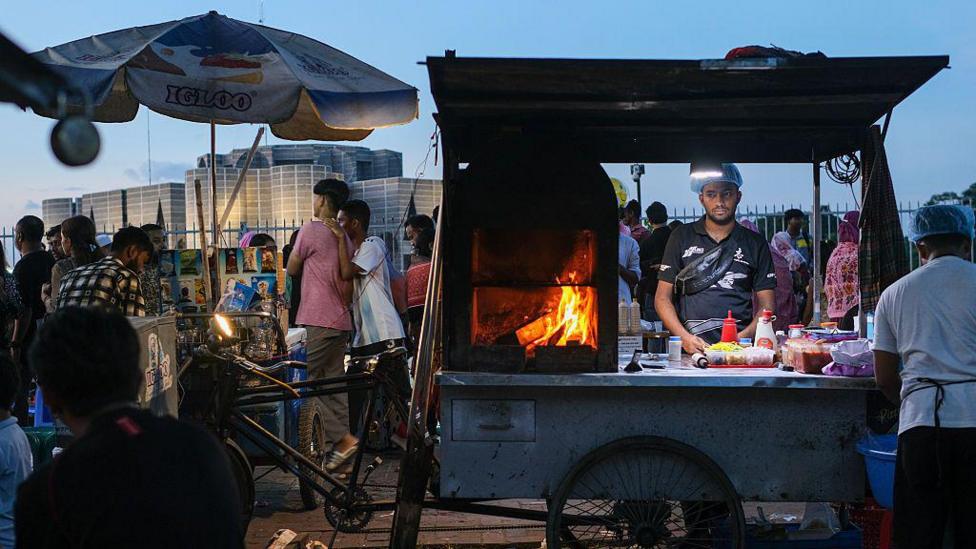
The government has issued rules requiring every person and business involved in the food trade in Bangladesh to hold a licence. Under the rules, everything from food stalls and small restaurants built on roads and footpaths to food importers and processors must obtain registration and a licence from the Food Safety Authority.
There are thousands of temporary and mobile food stalls on the country's streets, many of them cooking on a stove set up on the footpath. From tea stalls to fast food carts, no reliable count exists. The latest Bangladesh Bureau of Statistics figures put the number of food-serving establishments in the country at about 450,000, including hotels, restaurants and tea stalls.
The risk is documented. A study published by the Bangladesh Food Safety Authority (BFSA) in 2024 found alarming levels of harmful bacteria in popular street foods sold in Dhaka. Foods such as chholamuri, chotpoti, sugarcane juice, sharbat, mixed salad and sandwiches carried high levels of bacteria responsible for diarrhoea. All 450 samples collected from 50 locations across Dhaka North and South city corporations tested positive for bacteria.
Md Shafiqul Islam, chairman of the Food Safety Authority, called the rules a positive step. "This is a very positive step. We may not be able to change everything in a day. But gradually street food shops too will come under supervision through licensing," he told BBC Bangla.
Capacity, however, is in question. Dr Latiful Bari, chief scientist of the Food and Research Laboratory at the University of Dhaka, said everything about these stalls, from ingredients to recipes, raises questions. "With these rules they have come within a framework. Although the government does not have the capacity to verify whether their food is safe," he said.
The trade has objected. Imran Hasan, general secretary of the Bangladesh Restaurant Owners' Association, said the rules were framed one-sidedly and will only expand a trade in licences. "The authority's power has increased here. But there is no direction as to how it will be implemented," he said.
For the food chain the question matters, because these stalls are the last step between farm and plate. As Imran Hasan put it: "Food safety is a vast chain. There is no vision in this about which step will be secured and how."
Source: BBC Bangla

Comments
(0)