
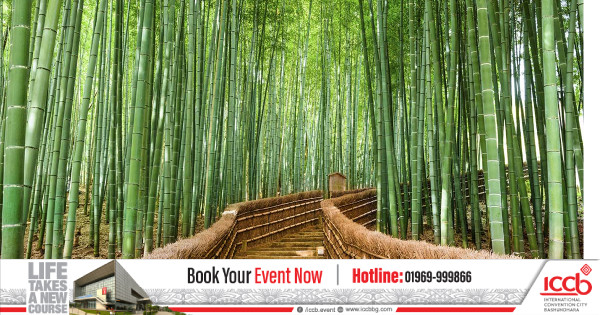
Bamboo is one of the most familiar plants of rural Bangladesh. Ordinary to look at, it is being used for more and more: houses, furniture and handicrafts, and increasingly modern construction, textiles and a range of environmentally friendly products. World Bamboo Day, observed every 18 September, exists to make that point: a plant everyone knows could play a significant part in a sustainable economy and in protecting the environment.
The day was launched in 2009 by the World Bamboo Organization to raise awareness of bamboo's environmental, economic and social importance. This year the organisation is highlighting bamboo's potential in conservation and ecological restoration, sustainable construction, new industries and employment. Its message is that bamboo is not merely a plant but a way of building the future in harmony with nature.
Bamboo's defining trait is how fast it grows. That makes it a candidate to replace timber in sustainable materials: green building products, furniture, textiles, handicrafts and a range of industrial goods. The World Bamboo Organization also sees a role for it in meeting the challenge of climate change, because of its rapid growth and capacity to absorb carbon. Bamboo-based enterprises, it argues, can add to local employment and income.
In Bangladesh bamboo has long been woven into the rural economy and culture, from baskets, winnowing trays, sieves and fishing gear to house posts and fencing. Joining that tradition to modern technology and design could open the door to a new bamboo-based industry, as is already happening elsewhere in the world with striking bamboo architecture, contemporary furniture and clothing materials.
Bamboo is also food. In several Asian countries young bamboo shoots are eaten as a vegetable, cooked, pickled or served alongside other dishes. Bamboo flowers too, but only after long intervals; simultaneous flowering across many species is rare and has given rise to folk beliefs in different regions. In some areas the seeds produced after flowering are used as food.
Perhaps the most striking of all is 'bamboo rice'. In a few regions the seeds that some species produce after flowering are gathered and cooked like rice. They do not look like paddy rice, but they are eaten as a staple and carry special significance for the local people.
For farmers and agri-entrepreneurs the day's lesson is that the bamboo clump standing at the corner of a homestead or on fallow land is not just a source of posts and fencing. From edible shoots to seed, from building material to handicrafts, and from carbon capture to employment, it is a resource with many possible streams of income.
Source: banglanews24
Comments
(0)