
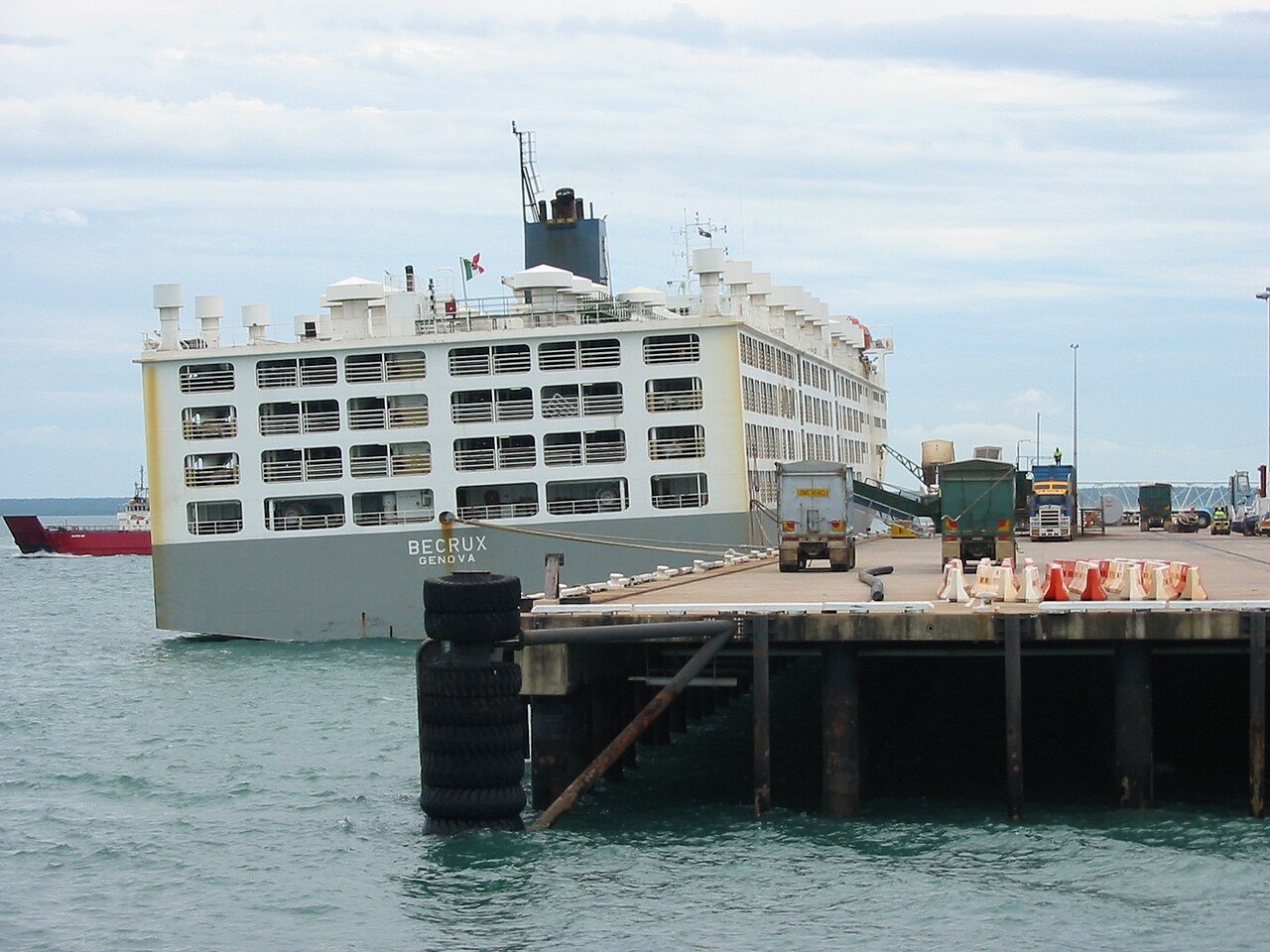
Australia exported 447,101 live cattle in the first nine months of 2026, 23.5 per cent fewer than a year earlier, as high Australian prices and Indonesia's domestic price caps squeezed buyers, according to Beef Central's monthly South-East Asia report. Indonesia took 352,197 head, down 14.2 per cent, showing how much the trade depends on one market.
Darwin feeder steers stayed around A$4.50 to A$4.60 a kilogram liveweight in mid-October, close to slaughter steer prices in Indonesia (A$4.86) and Vietnam (A$4.90) even before freight. September exports fell to 46,765 head from 71,711 in August, 34,085 of them to Indonesia. The report expects only a limited lift in buying ahead of Ramadan and Lebaran, normally a restocking season.
Indonesia's state companies are taking a bigger role. PT Berdikari has received its first shipment of Australian water buffalo as a cheaper protein; Australia exported 7,384 buffalo in 2025. State firms now import beef and buffalo meat to steady prices, and Berdikari has also been given a role in importing soybean meal for feed. In Bali, the writer saw tethered cattle on bare ground eating cut branches; the provincial herd was about 392,000 in 2025, against about 558,000 in 2021.
Vietnam's cattle herd was 1.6 per cent smaller at the end of September and its buffalo herd 6.4 per cent smaller, yet beef output rose 1.3 per cent to 396,400 tonnes in nine months. The statistics office blamed mechanisation, shrinking grazing land, long production cycles and labour shortages. Australian exports to Vietnam reached 12,721 head from January to September, against 77,870 in the same period of 2025.
In China, live cattle sold at 30.58 yuan a kilogram in the main producing provinces in early October, up 12.8 per cent on the year, and the herd stood at 95.57 million in June, down 4.3 per cent. Elsewhere, Sabah took 780 Brahman-cross cattle from Darwin and now asks farmers who receive breeders to post a refundable bond of at least 10 per cent of their value, and the Philippines received 1,419 pregnant Australian dairy cattle on 20 October.
For northern Australian producers, the message is that strong prices at home are costing them volume in their nearest export markets.
Photo: kenhodge13 / Wikimedia Commons (CC BY 2.0)
Source: Beef Central


Comments
(0)