
Asia's agricultural biologicals sector, the microbial and natural products used to protect and feed crops, has plenty of products but little trusted field data, and a new non-profit wants to fix that. The Asia Biologicals Foundation, a science-led institution, was announced at the Asia Biologicals Summit 2026 in Singapore.
Its work will start with rice, cassava and cocoa, with other crops under consideration. Universities, institutes and companies across Asia have produced a great deal of research and field data on biologicals, but it is scattered across crops, products and markets, which makes results hard to compare and holds back confidence. The foundation aims to provide shared research capabilities, validation methods, data governance and comparable evidence, feeding into crop deployment programmes under the Asia Biologicals Platform.
"When scientific evidence falls short, farmers bear the risks and uncertainty limits adoption," said Dr Ulrich Kuhlmann, chief scientist at CABI. Dr Yvonne Pinto, director general of the International Rice Research Institute (IRRI), said scientific responsibility must keep pace as investment in biological agriculture grows, because understanding how these products interact with living farm systems and their wider ecological effects needs new scientific leadership.
Joshua Soo, founding convenor of the Asia Biologicals Platform and co-founder of Agrifood Futures, said the sector tends to move from proving that a product works straight to asking farmers to adopt it, skipping what he calls "deployment readiness": regulation, economics, evidence and distribution. He also questions whether evidence from one market applies in another. "It's not about getting more biologicals into the market," he said. "The objective should be about better performing agricultural systems."
Agrifood Futures, with support from Wharf42, brought together scientists and companies including CABI, IRRI, the National University of Singapore, Mars, Salim Agrochemicals Division and Thai Wah to shape the first crop programmes. Agricultural scientist Paul Teng linked the effort to ASEAN's Food, Agriculture and Forestry Sectoral Plan 2026-2030. Governance and research priorities will be set with prospective scientific, philanthropic and institutional partners.
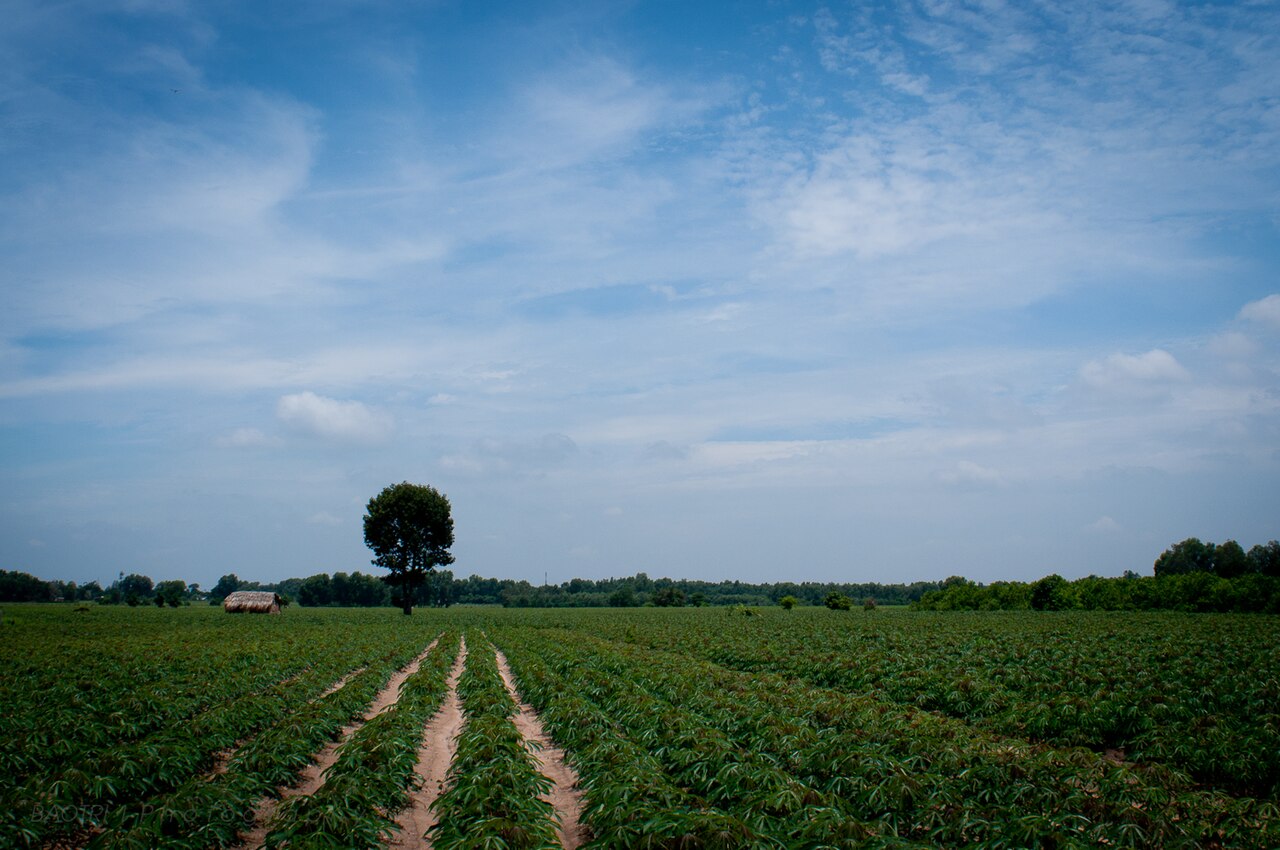
Photo: Bảo Trí Nguyễn (cassava on a Vietnamese farm) / Wikimedia Commons (CC BY 2.0)
Source: AgNavigator

Comments
(0)