
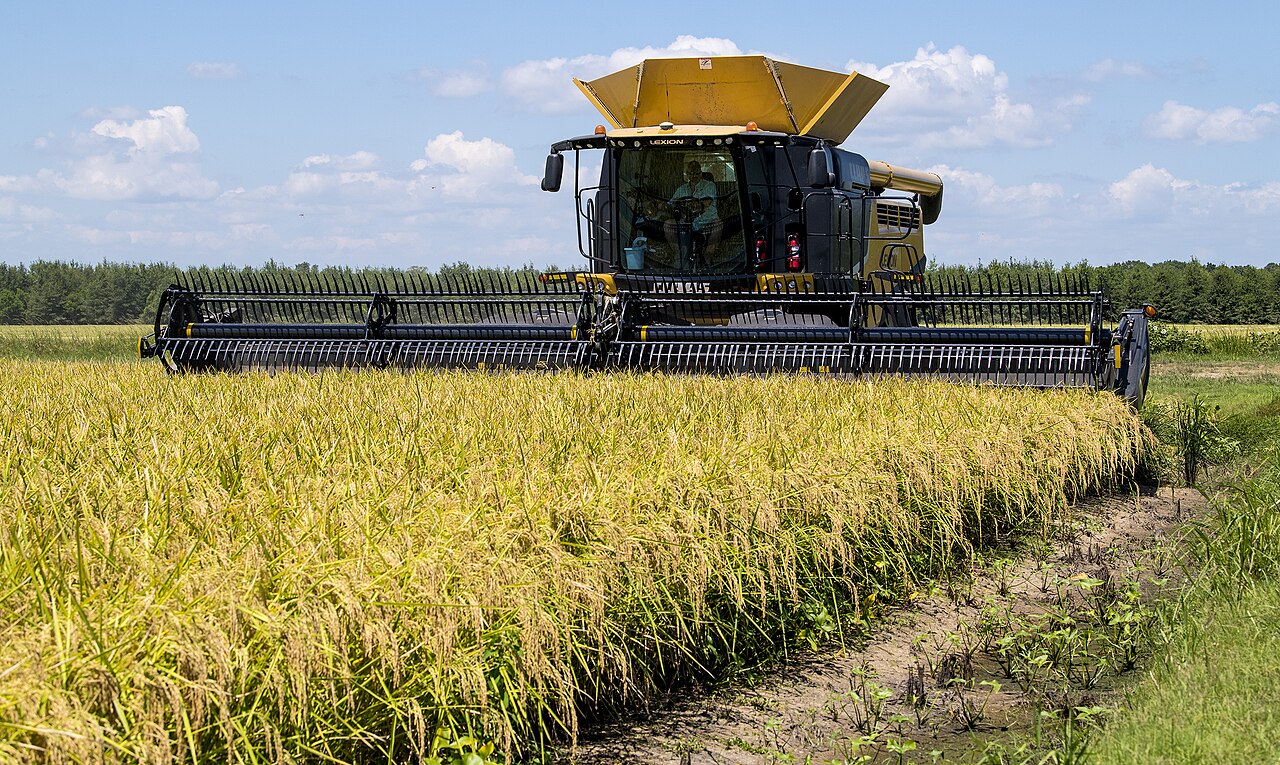
Arkansas rice growers are struggling through a fourth consecutive hot harvest that is hurting grain quality and milling yields, according to University of Arkansas Division of Agriculture rice specialist Jarrod Hardke. Arkansas grows roughly 45% to 49% of the rice produced in the United States, mostly long- and medium-grain varieties in the east of the state.
Hardke says long spells of heat during harvest have made rice dry down in the field faster than normal. Grain that becomes too dry before harvest is more likely to crack and break in the mill, lowering milling yields and growers' income.
The problem has been building. 2022 and 2023 were acceptable, but in 2024 an early planting season brought an early harvest, many fields dried quickly before they could be cut, and hurricane-related weather later damaged rice still standing, giving some of the lowest milling yields in recent years. 2025 was somewhat better, though a warm September still limited quality. In 2026 record heat returned for much of the harvest, with daytime temperatures often above 100 degrees Fahrenheit and warm nights that gave the crop no chance to recover.
Agronomists note Arkansas has been this hot before, for example in 1980. The difference is that farmers now plant earlier and harvest sooner, so mature rice spends more time exposed to late-summer heat.
One answer under study is to plant later. Historically the best yields came from late-March planting, but recent data show that planting in early to mid-April can do as well or better in some places, and trials in northeast Arkansas have produced strong yields from mid-April dates. Spreading planting over a wider window could reduce the risk of heat losses at harvest. "Ideally, we need to go back to a way to spread planting dates out and lean towards later planting," Hardke said, adding that difficult spring weather means growers cannot easily pass up a chance to plant.
For rice farmers in other hot regions, the Arkansas experience shows how planting dates set years ago may need to move as harvest-time heat becomes more common.
Photo: Arkansas Agricultural Experiment Station / Wikimedia Commons (CC BY 2.0)
Source: Farms.com
Comments
(0)