
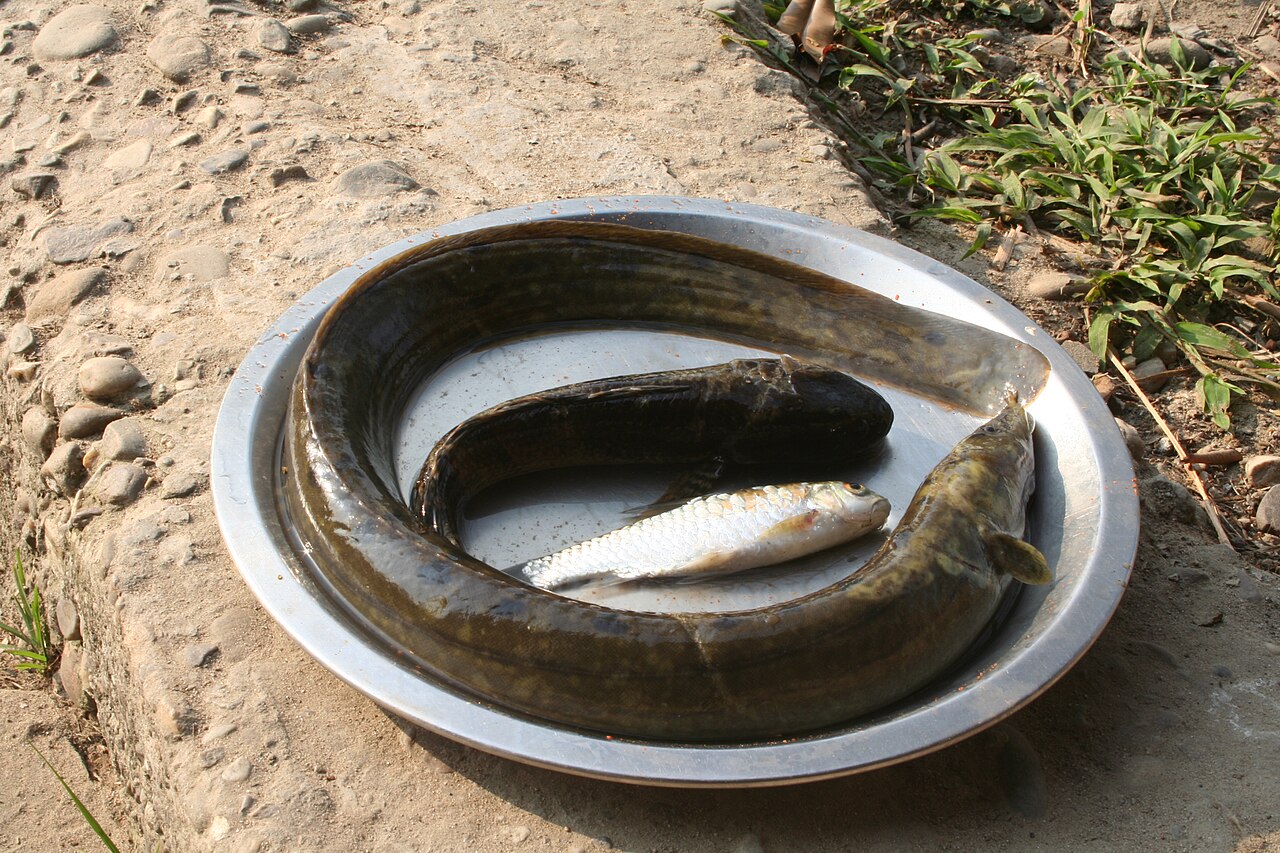
The snake-like creature that farmers on the Charsindur char in Narsingdi once chased out of their cucumber fields at night was in fact a fish: the bahok, also called basuki or khirabaim, the Indian mottled eel (Anguilla bengalensis). Writing in Prothom Alo, wildlife conservationist and author Sarwar Pathan says that in his own searches over the past 20 years he has found no trace of it anywhere in the Shitalakshya.
He recounts a night with farmer Buruj Mia, who would scatter dry ash across the eel's path from the river to his field, chase it, and catch it with a stick when it stopped to roll in the ash. That eel was about four feet long and weighed seven kilograms. In 1988, Rahman Mia, caretaker of the Bandhab Cotton Mill at Charsindur, hooked one of about 9 kg and five feet.
Stories of bahok coming ashore to eat cucumbers, mustard or stored paddy are common, but the author himself stresses that they are folklore. Scientifically, the bahok is a nocturnal carnivore that eats small fish, crabs, frogs, prawns and other aquatic animals, and it prefers deep holes in steep riverbanks.
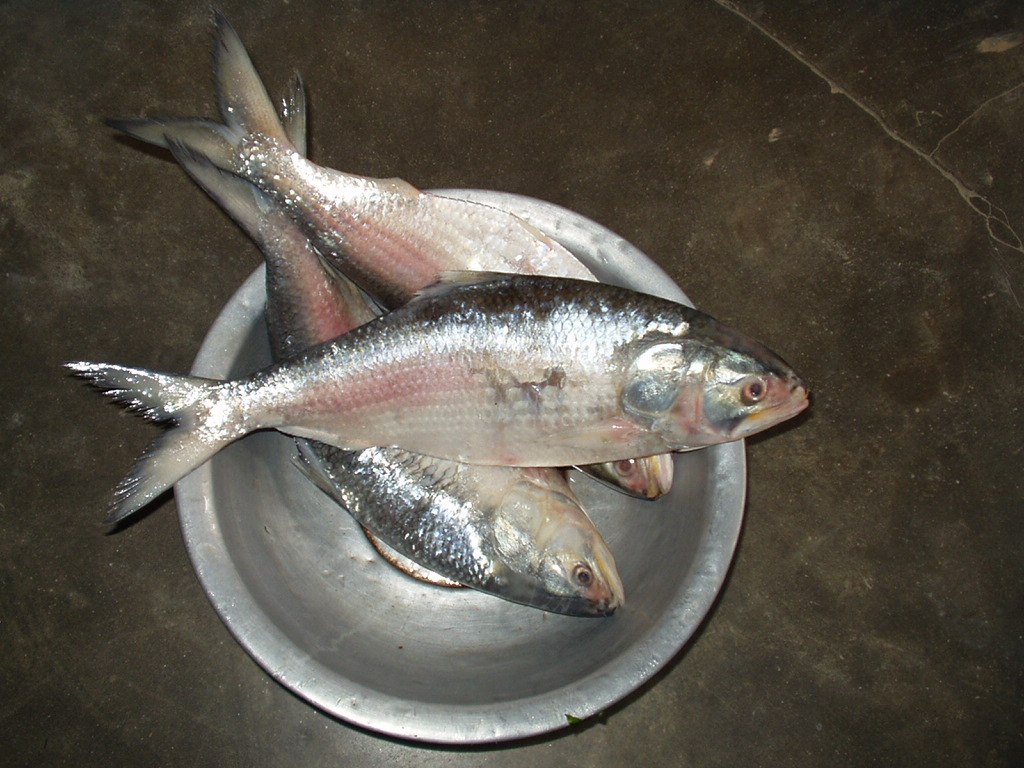
Its life cycle is the reverse of the hilsa's. The bahok is born at sea; transparent, leaf-like larvae drift to the coast, become glass eels and enter rivers. After several years in fresh water they return to the sea to spawn. As they grow, the clear body turns grey, brown or olive with dark mottling. Quoting the writer Haripada Dutta, Pathan notes that young bahok used to mix with shoals of kachki and come up in nets in Baishakh.
Also known as telkoma, baobaim and bamosh, the eel was once found in rivers and hill streams across the country. River pollution, habitat loss and overfishing are now its main threats, the author says, although bahok still turn up now and then in rural markets and even at Dhaka's fish wholesalers.
Pathan calls for more research on the bahok's range, diet, breeding and habitat, so that its story does not survive only as folklore. As a fish that moves between sea and river, it depends on river routes staying open and clean, a question most pressing in industrial rivers like the Shitalakshya. The views are the writer's own.
Photo: Nandini Velho / Wikimedia Commons (CC BY-SA 3.0)
Source: Prothom Alo

Comments
(0)