
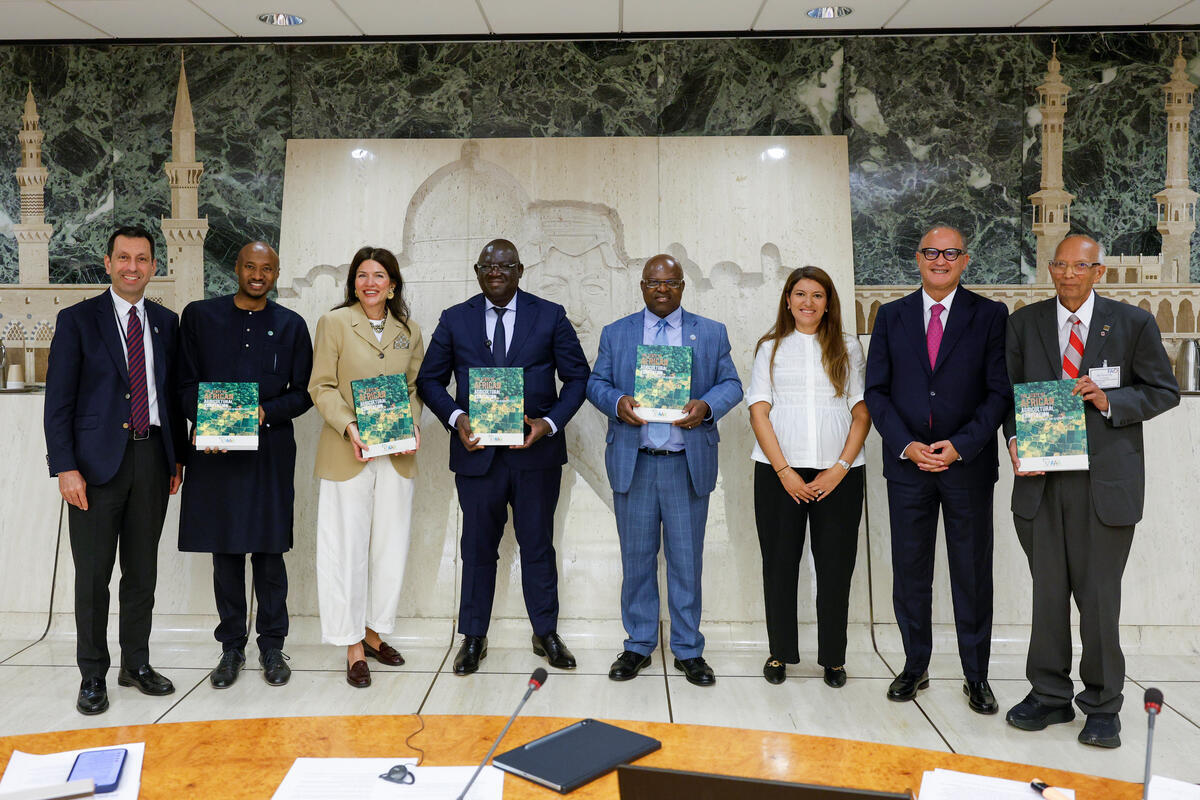
Rome — African governments have already written down, in their national climate and adaptation plans, what it would take to adapt the continent's farming to a hotter, drier and less predictable climate. What is missing is the link between those plans, policy and money. That is the central finding of the first continent-wide assessment of African agricultural adaptation, presented at FAO headquarters on 17 September.
The report, "The State of African Agricultural Adaptation, 2016–2026: Assessment and Roadmap to 2036", was prepared by the AAA Initiative Foundation in partnership with the Food and Agriculture Organization of the United Nations (FAO). It was launched at a high-level event marking the tenth anniversary of the Initiative for the Adaptation of African Agriculture (AAA Initiative), which began at COP22 in Marrakech in 2016.
Of the 53 African countries covered, 46 have costed their climate adaptation needs, at a combined $566 billion over the periods of their national plans — around $56 billion a year on average. At least $80 billion of that relates specifically to agriculture, and the report calls this a minimum, because 22 countries fold agricultural adaptation into broader totals without a separate figure.
Turning those needs into investment will take more money and sustained help with capacity, the report says. It asks for stronger support so countries can prepare projects that are ready for investors, and it proposes that continental support be delivered through institutions that already exist — with no new institution and no new fund.
Opening the event on behalf of FAO Director-General QU Dongyu, Deputy Director-General Godfrey Magwenzi said climate change is already hitting agricultural productivity, water availability, soil health, rural livelihoods and food security across Africa. "The next decade must be a decade of delivery," he said, calling for national ownership and closer alignment of climate, agriculture, water and development policies, and for financing that is accessible, predictable and responsive.
"Ten years ago, at Marrakech, we asked that African agriculture be heard. It is now heard," said Ghita El Ghorfi, Director General of the AAA Initiative Foundation. "Today we come with an assessment that can be verified and a roadmap that can be measured." Speaking for Ahmed El Bouari, Morocco's Minister of Agriculture, Maritime Fisheries, Rural Development, Water and Forests and president of the Foundation's board, Ambassador Youssef Balla said Morocco remains committed to the effort.
FAO is scaling up its own support for embedding agrifood solutions in adaptation plans, including through a new project, "Supporting climate-resilient, inclusive and low-emission agrifood systems", and the Food and Agriculture for Sustainable Transformation (FAST) Partnership it hosts. The event also looked ahead to COP31, which Türkiye will host with the launch of the Turquoise Nexus Initiative, and to COP32 in Ethiopia. It formed part of FAO's Climate Policy and Finance Week, whose agenda includes women farmers' access to finance and a workshop on loss and damage in agrifood systems.
Source: FAO Newsroom

Comments
(0)