
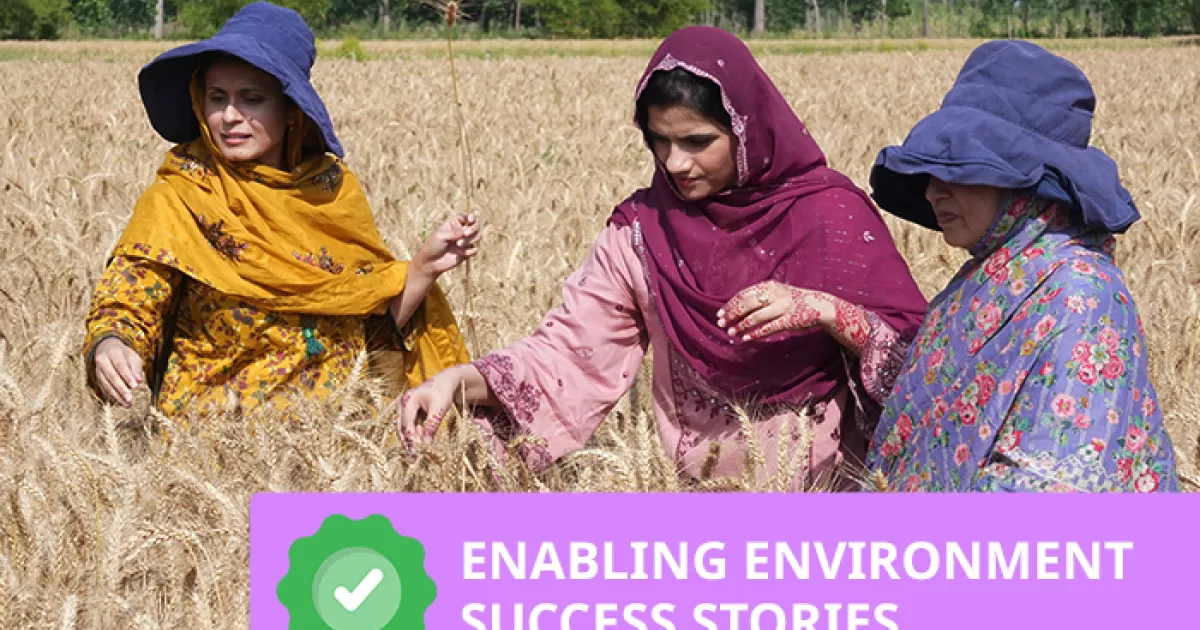
Zinc deficiency affects more than 20 per cent of Pakistan's population and nearly 40 per cent of its women and young children. Wheat is what the country eats, which is why breeding zinc into the grain has been treated as a public health measure as much as an agricultural one. Between 2019 and 2023 the area sown to biofortified zinc wheat rose from 64,000 hectares to more than 3.1 million.
The work centred on Punjab, which grows most of Pakistan's wheat. The International Maize and Wheat Improvement Center (CIMMYT) and HarvestPlus, an initiative led by the International Food Policy Research Institute, worked with the Ayub Agriculture Research Institute on high-yielding zinc-rich varieties, among them Akbar-19 and Zincol-16.
Breeding was not the constraint. Early generation seed was. The Punjab Agriculture Department put public money directly into multiplying breeder seed, and provincial authorities streamlined seed certification, protected breeder rights and wrote the biofortified varieties into the official wheat production plan and the input subsidy programme — the paperwork that decides whether a variety a farmer wants is a variety a farmer can buy.
Demand needed its own push. With Precision Agriculture for Development, HarvestPlus ran advisory campaigns by mobile text message and robocall explaining that the zinc varieties yielded as well as the ones farmers already grew and carried a nutritional benefit besides. Partnerships with local seed companies then matched multiplication to the demand those messages created.
Seed production rose from five million kilograms in 2019 to nearly 179 million kilograms in 2023. The expansion reached 3.3 million farming households, and biofortified wheat now reaches more than 20 million consumers.
What makes the case worth reading is the ordering. The variety existed before 2019; what changed was who paid for breeder seed, how fast a variety could be certified, and whether farmers heard about it. The technical work was the easier half.
Bangladesh runs a comparable zinc-rice programme through BRRI, with BRRI dhan62, dhan72 and dhan84 released for the same reason. The Pakistani experience suggests the yardstick to watch is not the number of varieties released but the tonnage of certified seed reaching the market.
Source: CGIAR
Comments
(0)