
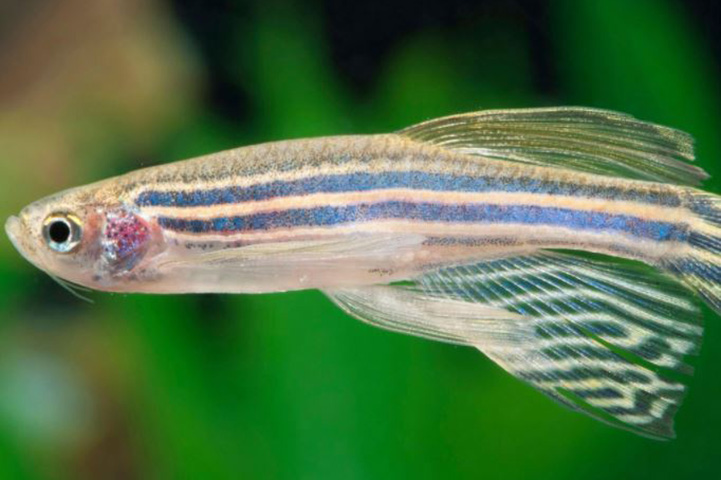
The little fish that lives along the ridges of our paddy fields and in our canals, beels, ponds and rivers seems to know some magic. Many people recognise it; many others do not even know its name. It is the zebra fish, and what it can do is astonishing. It is found mainly in the rivers, ponds, canals and beels of rural Bengal and north-eastern India.
About the size of a finger and marked with stripes, the fish can rebuild almost every organ of its body, including the brain, heart, liver, pancreas and spine, even after being badly injured. Neither humans nor any other mammal can do this.
A gene that revives the injured heart
Under the supervision of scientist Chinmoy Patra of the developmental biology department of the Agharkar Research Institute in Pune, India, Debanjan Mukhopadhyay and his colleagues have found this life-giving formula for reviving a weakened heart. Debanjan is now a researcher at the Institute for Cardiovascular Regeneration of Goethe University in Frankfurt.
A 10-member team including Chinmoy and Debanjan has shown through experiments, for the first time in the world, how a particular gene helps the injured heart of the zebra fish (myocardial injury) regenerate. The gene is called connective tissue growth factor (CTGF). It has another name: cellular communication network factor 2a.
This research has shown for the first time why we cannot get our heart back to its former state after a heart attack, and why death becomes inevitable after a third heart attack, and why the zebra fish heart can be damaged again and again and still regenerate, almost like a new heart.
The paper has been published in the international science journal Development, published from Britain. Lead researcher Debanjan worked under the supervision of Chinmoy Patra, associate professor in the developmental biology department of the Agharkar Research Institute (ARI) in Pune. Germany's Max Planck Institute for Heart and Lung Research and the medical centre of Duke University in Durham, America, also collaborated.
Why the zebra fish
Zebra fish usually live for two to three years, so they become adults at three months of age. The researchers worked with zebra fish at least six months old, all adults. Because heart attacks occur more often in adults than in children, and more still in the elderly, the researchers chose adult fish.
One advantage of working with zebra fish is that for 10 to 15 days after birth, the development and functioning of all their organs, including the heart, liver and pancreas, can be observed directly from outside. Even the formation of the heart valves can be watched, right down to the level of cells. Another advantage is that most of the zebra fish's functional genes (many genes in animals and plants are not functional) closely resemble the functional genes of humans and mice.
Research on this "magician" fish of rural Bengal began abroad in the 1960s. Today zebra fish are studied in about 1,000 laboratories around the world.
Source: Staff Correspondent. First published in Bengali on The Agro News.



Comments
(0)