
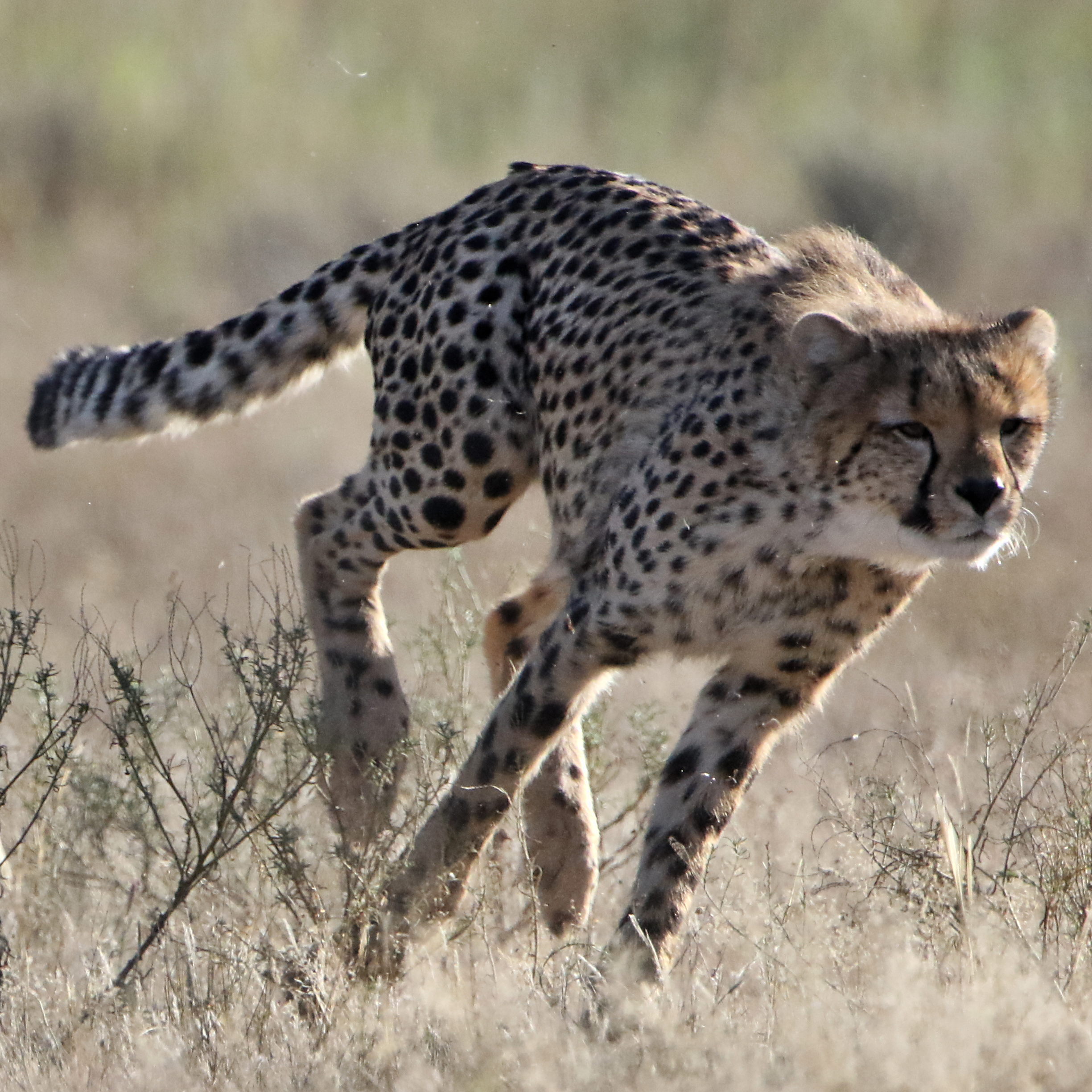
American YouTuber and live streamer Darren Watkins Jr., known online as "Speed" or "IShowSpeed", raced a cheetah in a video he shared on his verified X account on Saturday, 3 January 2026, while visiting South Africa. The 20-year-old kept level with the animal in the first moments of the sprint, but the cheetah soon pulled clear and reached the finish line first. Before the start, the cheetah scratched his leg, and he went ahead with the race regardless, according to reports published in the days after the clip appeared.
The stunt was one of many from a trip that Kenya's Citizen Digital described on 6 January as a month-long tour of Africa. His opponent, the cheetah, is the fastest animal on land, and it is also a species that the International Union for Conservation of Nature lists as Vulnerable.
What the video showed
The clip was posted with the line "I Raced A Cheetah!". In it, as quoted by Citizen Digital, Speed tells viewers: "I'm going to race this cheetah today!" A fully grown cheetah stands on the track as his opponent.
Before the race began, the cheetah lunged at him and scratched his leg. Citizen Digital wrote that the scratch left two bloody marks; NDTV's report, which Jagonews24 carried in Bengali on 7 January, said blood could be seen on his leg. Speed decided to carry on.
The two then lined up at the start. When the cage holding the cheetah was opened, the animal surged forward at great speed. The running news site Marathon Handbook, writing on 4 January, described the cheetah being released from a cage at the same moment Speed took off, accelerating almost immediately and pulling ahead within seconds while he kept running beside it. Speed ran with everything he had and stayed level in the opening stretch, but the cheetah drew away easily and crossed the finish line first.
Reaction online mixed jokes with admiration. According to the reports, many viewers praised his nerve and his all-out effort, while others joked about a result that had never been in doubt. None of the reports named the place where the race was filmed.
A stop on the "Speed Does Africa" tour
The cheetah race came at the start of a long trip across the continent. Citizen Digital reported on 6 January 2026 that the 20-year-old had spent the festive season streaming live from Cape Town and Johannesburg, and that he had raced a cheetah there. It described the trip as a 28-day "IRL" tour called "Speed Does Africa": IRL, short for "in real life", is the name streamers give to broadcasts filmed out in the world rather than in front of a computer.
According to Citizen Digital, Speed was set to visit 20 African countries on the tour, though it added that the order and timing could change. The countries it listed were:
- Algeria, Angola, Benin, Botswana and Egypt
- Eswatini, Ethiopia, Ghana, Ivory Coast and Kenya
- Liberia, Morocco, Mozambique, Namibia and Nigeria
- Rwanda, Senegal, South Africa, Zambia and Zimbabwe
South Africa, where the video was made, is a country where cheetah numbers had risen over the previous half century, as a later section of this report sets out, and several other countries on the list, among them Botswana and Namibia, are home to wild cheetahs too.
Who Speed is
Speed was born Darren Watkins Jr. in the United States. Citizen Digital described how he rose to fame through live streams of the basketball video game NBA 2K, where viewers came for his reactions rather than his skill at the game, and how short clips of those reactions on TikTok spread his popularity further. He has also released music, including the 2022 song "World Cup", and won Streamer of the Year at the Streamer Awards in both 2024 and 2025.
The NDTV report said his YouTube channel had more than 47.3 million followers, many of whom watch for his daring and unusual challenges. Running against fast opponents had become one of those challenges: Marathon Handbook recalled that in July 2025 the YouTuber MrBeast had publicly suggested that Speed race a cheetah, a dare that India's Times of India also reported at the time.
How fast a cheetah really runs
The NDTV report put the cheetah's running speed at 100 to 120 kilometres an hour. Scientific measurements give a more careful picture, and the figure depends on how the speed is measured.
Smithsonian's National Zoo and Conservation Biology Institute in Washington says a cheetah's top speed averages between 96 and 112 kilometres an hour (60 to 70 miles an hour). At top speed, it says, a cheetah covers about 7 metres in a single stride and completes four strides every second, and it can accelerate from standstill to 72 kilometres an hour in just 2.5 seconds.
The best-known timed run comes from a 1997 paper in the Journal of Zoology by N. C. C. Sharp. An adult cheetah was timed at 29 metres a second, the average of three trials over a 201.2-metre course with a running start, which the paper called the highest running speed recorded reliably for any animal.
Wild cheetahs hunting on their own terms are rarely that fast. In a 2013 study in the journal Nature, a team led by A. M. Wilson fitted five wild cheetahs in Botswana with collars of their own design that combined GPS with motion sensors, and recorded 367 runs, most of them hunts. The fastest was 25.9 metres a second, or 93 kilometres an hour, but most hunts involved only moderate speeds. What stood out was the animals' ability to change speed and direction: the team recorded some of the highest values of sideways and forward acceleration, deceleration and power for body weight measured in any land mammal.
The Smithsonian adds that a hunting cheetah usually creeps to within about 91 metres (100 yards) of its prey before its final burst, that about half of its chases succeed, and that it kills by clamping its jaws on the prey animal's windpipe until it suffocates.
A body built for the sprint
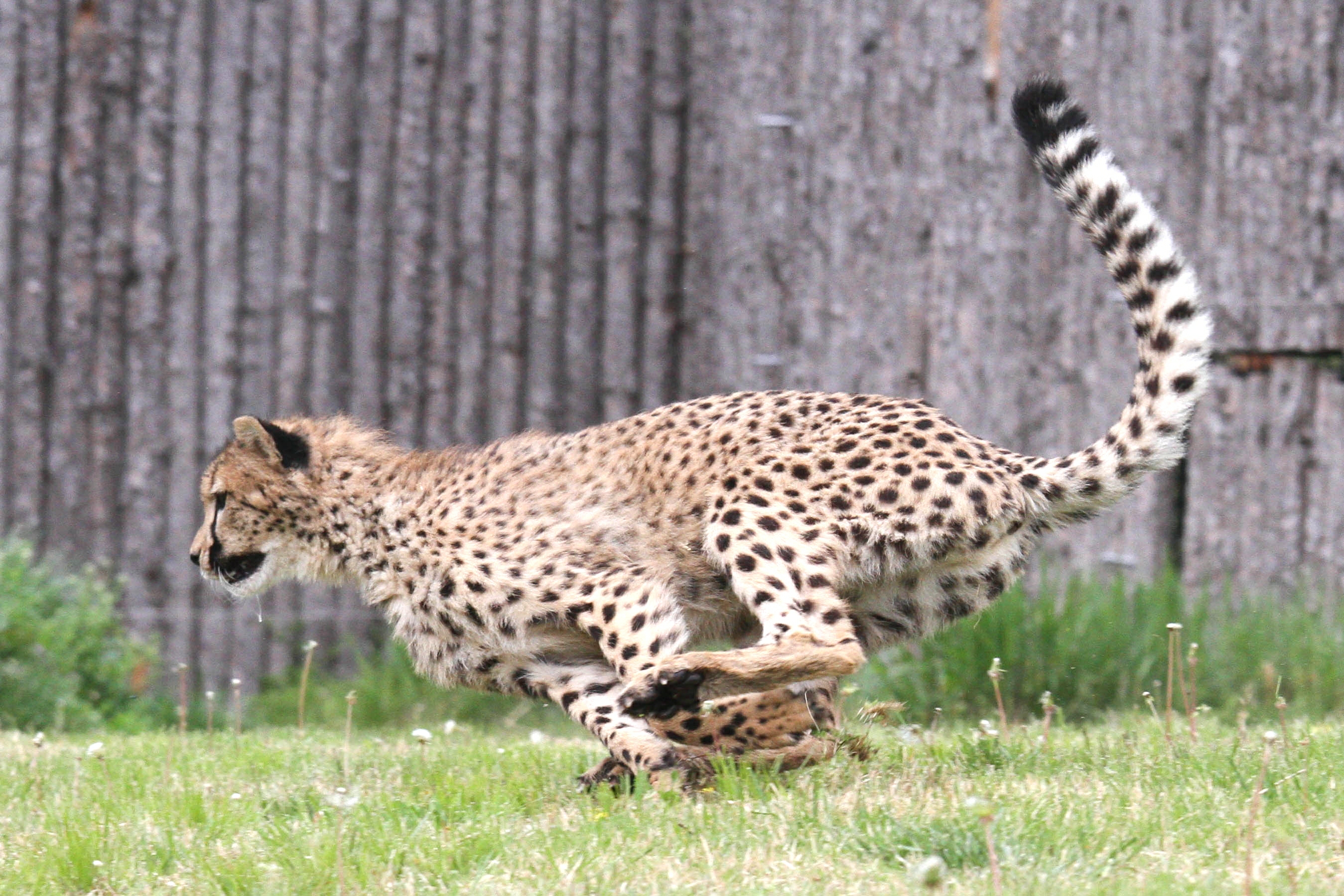
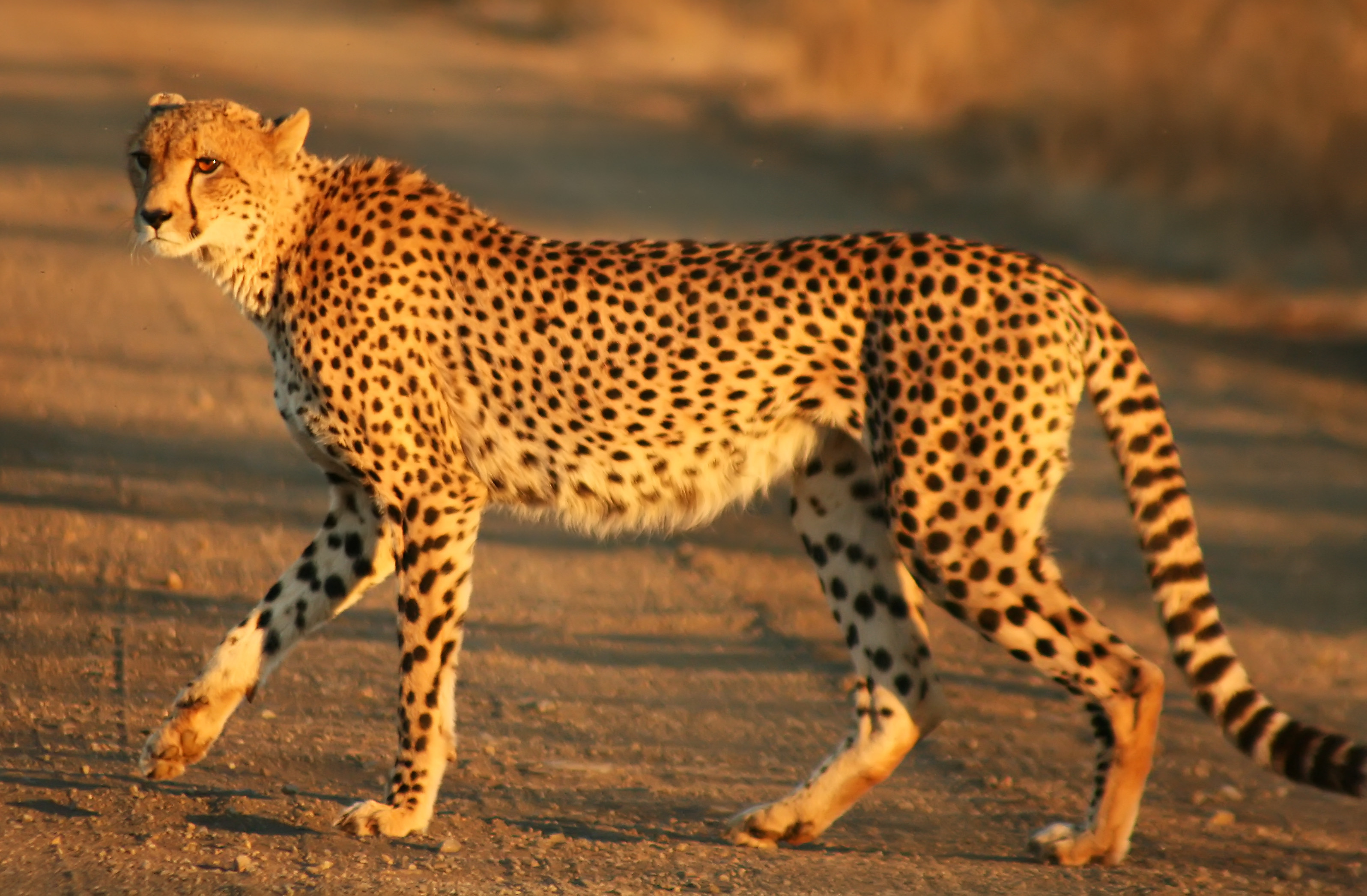
According to the Smithsonian, cheetahs have slender, long-legged bodies and blunt claws that are only partly retractable. The long tail acts as a rudder for quick turns, balancing the weight of the body. The flexible spine works as a spring for the powerful back legs, lengthening the reach of each stride, and large nostrils and lungs take in air quickly so the animal can breathe while it runs. An adult weighs 34 to 64 kilograms and stands about 77 centimetres tall at the shoulder.
A 2012 study in the Journal of Experimental Biology by Penny Hudson and colleagues at the Royal Veterinary College in Britain compared galloping cheetahs with racing greyhounds, which are of similar size and build, to find out why the cat is so much faster. Using force plates and high-speed video, the researchers found that the cheetah takes longer strides at a lower stride frequency than the greyhound at any given speed. In some trials the cheetahs swung their legs as quickly as the greyhounds, in as little as 0.2 seconds, which gives them room to raise their stride frequency to as much as four strides a second. At 18 metres a second, the cheetahs carried 70 percent of their body weight on their hind legs against 62 percent in the greyhounds, which the authors said is likely to reduce the risk of slipping when they push off hard.
The Smithsonian gives the average lifespan of a cheetah as 8 to 10 years in the wild and 12 to 15 years in human care. Cheetahs become sexually mature at 18 to 23 months; pregnancy lasts about three months, and a litter usually has three to six cubs.
People who raced cheetahs before
No human comes close to a cheetah over a sprint. The fastest 100 metres ever run by a man, according to Guinness World Records, is the 9.58 seconds of Jamaica's Usain Bolt, set in the final of the World Athletics Championships in Berlin on 16 August 2009.
A cheetah has run the same distance far faster. On 20 June 2012, during a photo shoot for National Geographic magazine, an 11-year-old female cheetah named Sarah at the Cincinnati Zoo in the United States ran 100 metres in 5.95 seconds, reaching about 98 kilometres an hour, NBC News reported on 2 August 2012. Sarah, part of the zoo's Cat Ambassador Program, had set the previous best of 6.13 seconds in 2009, beating the 6.19 seconds run in 2001 by Nyana, a male South African cheetah. The documentation was funded through National Geographic's Big Cats Initiative, a cat conservation effort.
South Africa has staged a race between a star athlete and a cheetah before. In April 2007, the Springbok rugby wing Bryan Habana ran a 100-metre exhibition race against a cheetah at the De Wildt Cheetah and Wildlife Centre, also known as the Ann van Dyk Cheetah Centre, to raise awareness of the danger that the cheetah could be classified as endangered, according to the centre. De Wildt is a captive breeding facility for cheetahs and other animals in the foothills of the Magaliesberg mountains, near Brits and the Hartbeespoort Dam in North West Province. Its account says the three-year-old cheetah, named Cetane, "effortlessly tore past" the man then called the fastest player in Super 14 rugby. Habana said afterwards that he "always knew" he did not stand a chance; before the race he had said: "It's not about me. The cheetah's the most important thing at the moment, and I'm going to do everything in my power to focus on the conservation of the cheetah."
A Vulnerable species that has lost most of its range
The speed that makes cheetahs a spectacle does not protect them. The species is listed as Vulnerable on the Red List of the International Union for Conservation of Nature (IUCN), as a 2021 review in the journal Animals noted.
The most detailed global count was published in the Proceedings of the National Academy of Sciences (PNAS) in December 2016 by a team led by Sarah Durant of the Institute of Zoology at the Zoological Society of London. It estimated the world population at about 7,100 cheetahs, confined to 9 percent of the species' historical range. Most of the range that remained, 77 percent, lay outside protected areas, where cheetahs face many threats, and the authors argued that the evidence supported moving the species up to Endangered on the IUCN Red List. They called for a shift towards protecting cheetahs across large landscapes shared with people, with incentives for coexistence.
Illegal trade adds to the pressure. A study published in the journal Conservation Biology in October 2024 said that fewer than 7,000 cheetahs survive in Africa and that, although conflict with people, loss of habitat and loss of prey are major threats, the illegal trade in live cubs for pets may have the most significant impact on cheetahs in the Horn of Africa. Its model of trafficking routes linked cheetah populations in eastern Ethiopia and northern Somalia with buyers in the Arabian Peninsula.
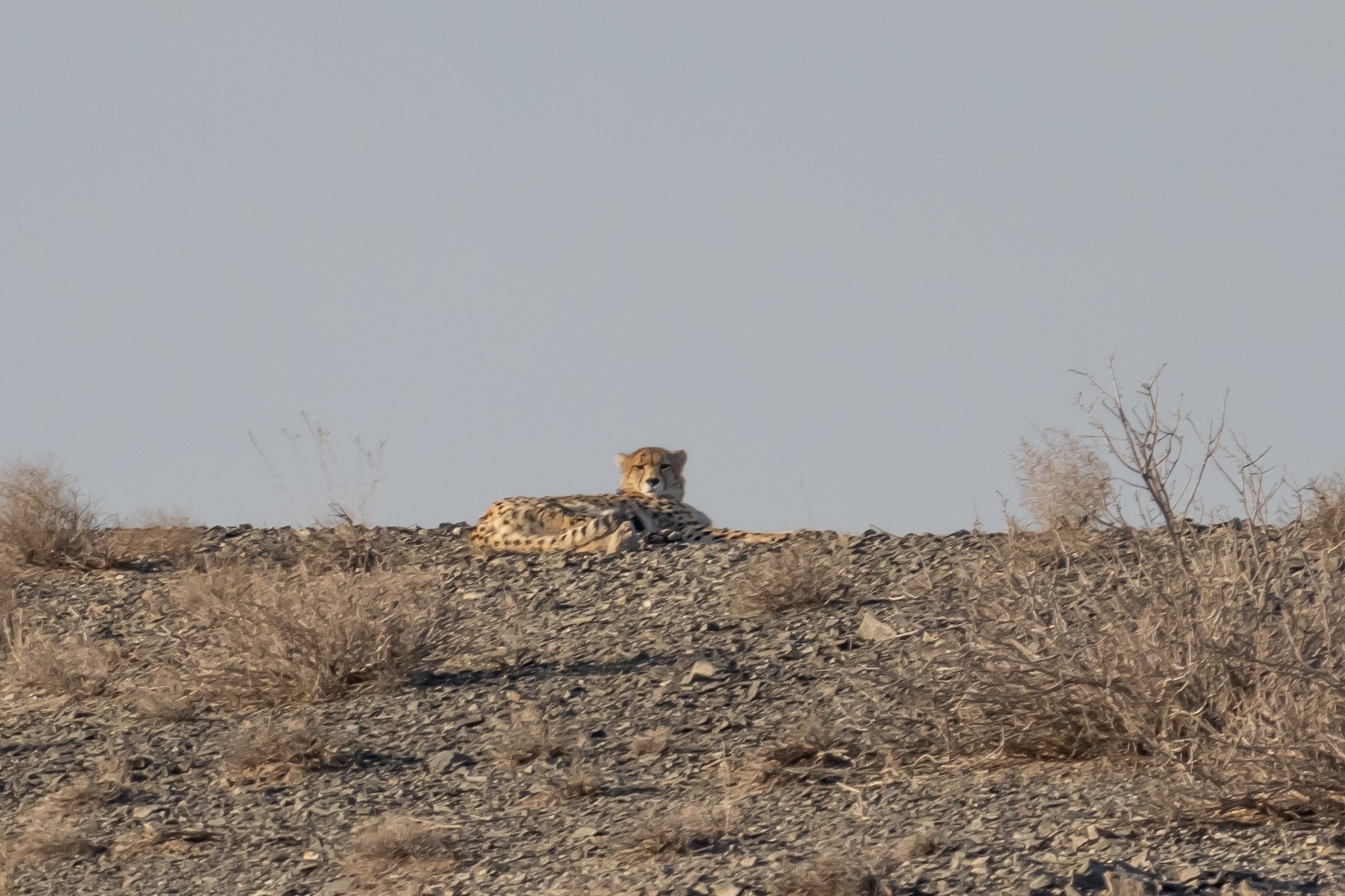
Asia has almost lost its cheetahs. The Smithsonian says the Asiatic cheetah survives only in Iran and is critically endangered. In India, where cheetahs were wiped out by coursing (hunting with trained cheetahs), sport hunting, over-hunting and the loss of their habitat, the government declared the animal extinct in 1952, ETV Bharat reported in September 2022, when eight cheetahs, five females and three males, were being brought from Namibia to Kuno National Park in Madhya Pradesh to start a reintroduction programme.
South Africa's cheetahs
South Africa, where Speed filmed his race, is one of the few bright spots. Mongabay reported in September 2020 that the country held about 1,300 of the world's roughly 7,100 cheetahs, up from about 500 in 1975. In its neighbours the picture was different: Botswana had held steady at about 1,500, Namibia had fallen from about 3,000 to roughly 1,400, and Zimbabwe from 1,500 to about 170, and most cheetahs in those countries live on unfenced land.
Most South African cheetahs live behind fences, in national parks and private reserves, which shield them from conflict with farmers and illegal capture. To stop small fenced groups from becoming inbred, the Endangered Wildlife Trust (EWT), a South African conservation group, started a cheetah metapopulation project in 2011, managing the cats on separate reserves as one population and moving animals between them. When it began, the project covered 217 cheetahs on 41 reserves; by 2020 it covered 419 cheetahs on 60 reserves, more than a third of all the cheetahs in South Africa. The project's coordinator told Mongabay that fences are "both a blessing and a curse", because they protect the animals but also block their natural movement.
South Africa has also become a source of cheetahs for India. On 27 January 2023 the government news agency SAnews reported that South Africa and India had signed a memorandum of understanding on bringing cheetahs back to India. An initial batch of 12 cheetahs was scheduled to be flown to India in February 2023 to join the eight brought from Namibia in 2022, with a plan to send a further 12 a year for the next eight to ten years. On the South African side the programme was coordinated by the Department of Forestry, Fisheries and the Environment with the South African National Biodiversity Institute, South African National Parks, the Cheetah Range Expansion Project and the EWT, working with India's National Tiger Conservation Authority and the Wildlife Institute of India.
Captive cheetahs are part of the story too. The 2021 review in Animals said that captive breeding has long been used in cheetah conservation, with the aim of producing healthy animals with more genetic variety for release into protected areas. Breeding is difficult, it said, because older females are less fertile while younger ones mate less often, but the experience of breeding centres in South Africa and the Netherlands shows that cheetahs can be bred successfully in captivity.
Wild animals in viral videos: the welfare debate
The cheetah in Speed's video was released from a cage onto a prepared track. Marathon Handbook wrote that the video appeared to have been made in a controlled environment with handlers present, but that content involving wildlife often draws scrutiny, and that the clip had prompted some discussion about where influencers should draw ethical lines. None of the reports said the cheetah was hurt, and none carried a statement from the facility.
Researchers studying South Africa's wildlife tourism have described the wider debate. A 2024 paper in the journal Animal Welfare, on tourists who pay to handle lion cubs, said that such interactions are controversial, with the debate hinging largely on the compromised welfare of the animals used. The authors surveyed 300 visitors at three lion cub interaction facilities in South Africa: 38 percent knew about the controversy, 69 percent wanted the experience regardless, and 74 percent said they would still have visited if no cub interactions had been offered.
Online video is part of that debate. A 2022 study in Animals examined 49 public YouTube videos of tourists handling lion cubs, filmed at no fewer than 11 South African safari parks between 2008 and 2019. The authors counted a median of four poor husbandry practices in each video, and in 61 percent of the videos the cubs appeared to be under three months old. Both studies concern lions rather than cheetahs.
Photo: Derek Keats / Wikimedia Commons (CC BY 2.0)
Sources: Jagonews24 (7 January 2026, from NDTV), NDTV, Citizen Digital (6 January 2026), Marathon Handbook (4 January 2026), Smithsonian's National Zoo and Conservation Biology Institute, Journal of Zoology (Sharp, 1997), Nature (Wilson and others, 2013), Journal of Experimental Biology (Hudson and others, 2012), Guinness World Records, NBC News (2 August 2012), De Wildt Cheetah and Wildlife Centre, Wikipedia, PNAS (Durant and others, 2016), Conservation Biology (2024), Animals (2021 and 2022), Animal Welfare (2024), ETV Bharat (14 September 2022), Mongabay (28 September 2020), SAnews (27 January 2023), The Times of India (July 2025)
Comments
(0)