
Fruit is usually thought of as healthy food, but some fruits in the world are not just food but symbols of luxury. Japan in particular produces many fruits whose prices can sometimes equal that of a motorcycle or a car. Perfect shape, special taste, limited production and an auction culture send their prices sky-high.
Melons, grapes and watermelons
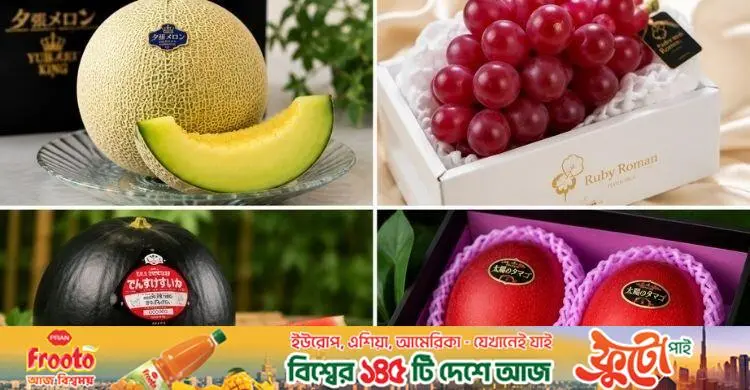
The Yubari King melon, grown in Japan's Hokkaido region, is called the world's most expensive fruit. Its perfect shape, sweet taste and limited production make it extremely valuable. A pair of Yubari King melons has sold at auction for more than $30,000 to $45,000 in the past.
Each grape of a variety grown in Japan's Ishikawa region is almost as big as a ping-pong ball. Grapes that do not meet set standards of weight, colour and sweetness are not sold. A single premium bunch has sold for a record of more than $10,000, over Tk 12 lakh.
Famous for its black rind, the Densuke watermelon is grown only in Hokkaido. A limited number reach the market each year, and because of its rarity a single watermelon can fetch up to several thousand dollars.
Mango, pineapple and square watermelon
A mango from Japan's Miyazaki region, whose name means "egg of the sun", is extremely sweet and colourful. A pair of perfect mangoes has sold at auction for several thousand dollars.
A pineapple grown using Victorian-era methods at the Lost Gardens of Heligan in Cornwall, in the United Kingdom, can cost up to about $1,500 because its production process is so complicated.
Developed by Japanese farmers, the square watermelon is grown in a special mould, which gives it a cube shape. Used mainly for gifts and decoration, it can cost up to several hundred dollars.
Strawberries, citrus, apples and pears
Strawberries sold in Japan's luxury fruit shops are almost perfect in size, colour and taste. Even a small box can cost more than $80.
The Dekopon, a cross between an orange and a mandarin, is very popular in Japan. It peels easily and is remarkably sweet. A pack of six sells for up to $80.
In Japanese, "Sekai Ichi" means "the world's best". These huge apples are hand-pollinated and grown with special care, and a single apple can cost $20 or more.
In China, special moulds are used to shape pears like small Buddha statues. Their novel shape makes them popular as gifts, and they sell for much more than ordinary pears.
Why they cost so much
Behind these expensive fruits lie strict quality control, limited production, hand care and a gift culture. In Japan especially, fruit is seen not just as food but as a symbol of respect and status, so people do not hesitate to spend thousands of dollars on perfect fruit. It is no surprise, then, that while some fruits cost a few hundred taka, others cost more than a lakh.
Source: Jagonews24. First published in Bengali on The Agro News.
Comments
(0)