
Today, 4 October, is the 100th World Animal Day. But more urgent than celebrating the day is discussing the grave danger facing life on Earth. Scientists identified the aquatic jellyfish as the planet's first animal.
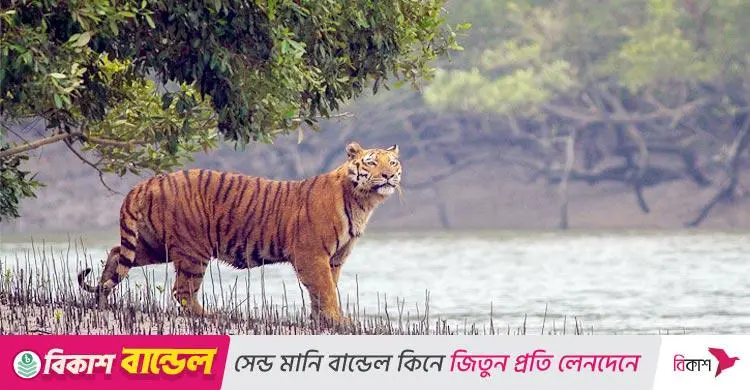
From the beginning of creation to today's modern world, a diversity of life built up over hundreds of millions of years is on the way to disappearing as it meets humanity's many needs. This vast diversity cannot be saved by protecting only a few much-discussed species such as tigers, elephants or deer.
The global picture
According to United Nations data, the extinction of animals on Earth began about seven hundred years ago. Of the roughly 20 lakh known animals and plants, between 7 and 13 per cent have already been lost forever. The International Union for Conservation of Nature (IUCN) has published its "Red List" regularly since 1968. By its latest survey, about 40,000 species worldwide are on the path to extinction, including 41 per cent of amphibians, 26 per cent of mammals and 23 per cent of birds.
The main causes of this decline are clear: climate change, a growing population, wildfires, drought, unplanned urbanisation and industrialisation, the upsetting of environmental balance and, most damaging of all, the destruction of animal habitats. Weak laws, poachers, the silting of haors, wetlands and rivers, overuse of pesticides on farmland and the illegal wildlife trade are speeding up this silent extinction. This diversity and interdependence are vital not only for nature but for our own lives, development and peace.
Bangladesh's wealth of life
Bangladesh is very rich in biodiversity. According to an IUCN survey, the country has 193 species of mammals, 630 of birds, 125 of reptiles, 22 of amphibians, 269 of freshwater fish and 5,000 species of flowering plants (including 160 species of algae).
This treasure is held in our forests, which are the right places for animals to be born, roam and breed. Once, tigers, leopards, hoolock gibbons, nilgai, wild elephants, deer, dholes, civets and pangolins roamed freely in the country's forests, including the Garo hills. Wild ducks, cranes, mynas, doves, cuckoos, egrets, quails, eagles, hawks, vultures and adjutant storks were common sights, as was the sweet call of the waterhen late at night.
Today these animals are rarely seen. According to experts, habitat destruction is now the greatest threat to wildlife, the result of excessive legal and illegal human intrusion into forests driven by population pressure and economic reasons.
Species already lost
Among the country's mammals, 11 species have already disappeared forever and another 40 are heading for extinction. The critically endangered list includes the Royal Bengal tiger, elephant, otter, hoolock gibbon, spectacled langur, gaur, sambar deer and black bear.
Among birds, the pink-headed duck and the peafowl have become extinct. Critically endangered birds include the black francolin, the peacock pheasant, the great hornbill, the red-headed vulture, the adjutant stork, the hill myna and the lesser adjutant. Bengal's famous whistling duck, the pink-headed duck, the greater adjutant, the king vulture and the green peafowl have vanished from the country forever, and the huge sarus crane has also been wiped out by hunters.
Among reptiles and aquatic animals, freshwater and saltwater crocodiles have become extinct, while the gharial survives in a critically endangered state. The yellow hill tortoise and the large kaita turtle are also critically endangered, and even snakes such as the non-venomous Burmese python and the venomous Russell's viper are on the critically endangered list. The blackbuck once seen in Rajshahi and Dinajpur, the swamp deer (barasingha) of Sylhet and the haor areas, and the wild buffalo once found in all the country's forests now exist only in the pages of history.
A moral duty
If we care for a few animals like tigers, elephants and deer but do not think equally about all other animals, it will be impossible to stop this silent extinction. Our lives are beautiful because life is diverse. To keep this beauty and wealth for future generations, indiscriminate human exploitation must stop now, and stricter laws and greater awareness are needed to protect nature and wildlife habitats. Protecting these lives facing an existential crisis is our moral responsibility.
The writer, Fahim Hasnat, is a student at Jagannath University, Dhaka.
Source: Jagonews24. First published in Bengali on The Agro News.


Comments
(0)