
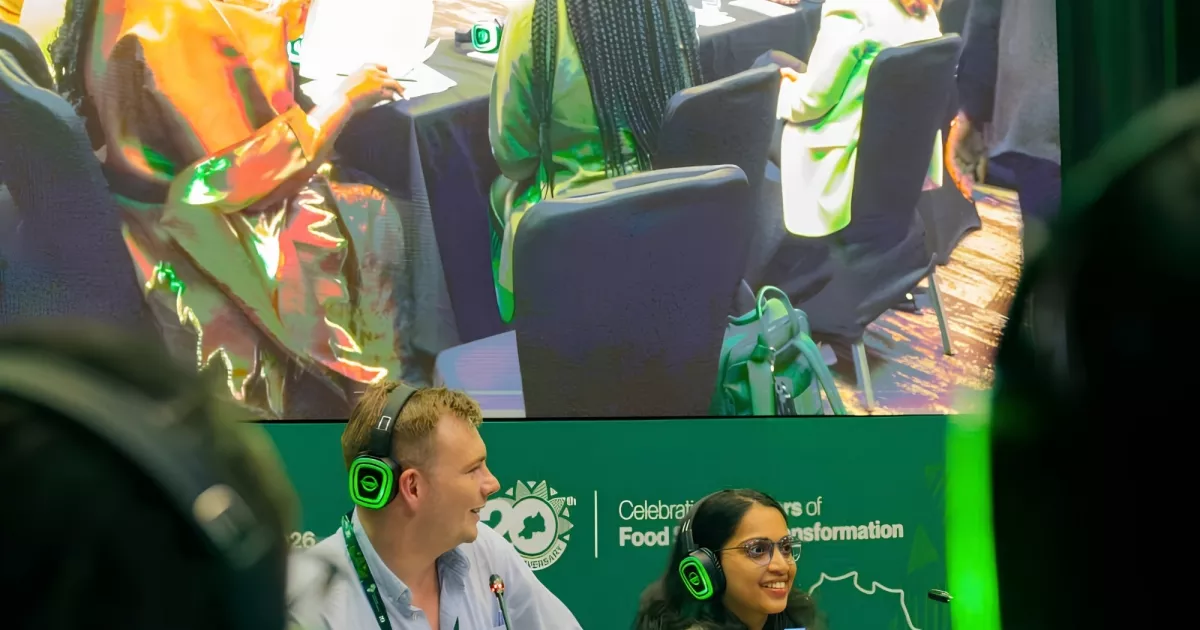
Artificial intelligence is being built into agriculture everywhere, but women farmers and leaders remain under-represented in the design, governance and investment decisions that shape digital farming, CGIAR researchers said after a session at the Africa Food Systems Forum in Kigali.
The session, "Gender and AI: Women Shaping Africa's Digital Agrifood Futures", was convened by the CGIAR Gender Equality and Inclusion Accelerator and Emerging Ag and opened with a keynote by Rwanda's Minister of ICT and Innovation. Researchers, technology developers, policymakers, investors and practitioners asked how to design AI with women rather than for them, how to govern data and algorithms responsibly, and how to measure success beyond adoption, productivity and profit.
Access to phones and connectivity is only the beginning, the reflection argues; a stronger measure is agency — whether women can understand, question, adapt and shape digital tools. As an example, CGIAR researchers are working with partners in Kenya and India on picture-based insurance that uses smartphone photos to assess crop damage when conventional insurance indices do not trigger a payout. Uptake rose sharply, especially among women, who can claim settlement and repay credit digitally from home instead of travelling long distances to town.
AI advisory can combine information on crops, soils, climate and markets into increasingly specific recommendations, but advice may still be hard to act on if it ignores women's time, care duties, mobility, cash and control over devices. To bring such voices in, CGIAR is working with Farm Radio International and IFPRI on Longa, an automatic speech-recognition tool that turns thousands of voice messages farmers leave for radio programmes into text that can be analysed.
Downloads and registrations are easy to count but do not show whether a technology has increased anyone's agency, the authors write. They call for responsible AI to become everyday practice: understandable consent, clarity over who owns and uses data, ways to correct or withdraw information, bias audits and routes for redress.
Nomsa Daniels, a board member of Heifer International, summed up the session's view on data: women should have a say in how their data are used and benefit from it, their privacy must be protected, and researchers must consider how published findings could affect women and their communities.
The reflection was written by Niyati Singaraju, a postdoctoral fellow in gender research at the International Rice Research Institute, with the CGIAR Digital Transformation Accelerator and the CGIAR Gender Equality and Inclusion Accelerator.
Source: CGIAR
Comments
(0)