
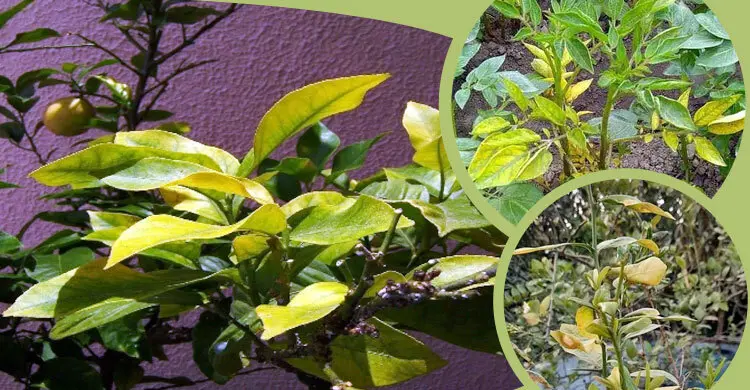
Suddenly you notice the leaves of your plant turning yellow. For a pot or rooftop gardener this is a worry: is the plant dying? Leaves can turn yellow for various reasons, and if you know why, there is nothing to worry about; you simply take the right action.
Age, water and soil
The lower leaves of an older plant will turn yellow and fall. This is entirely normal and nothing to worry about. If old leaves are touching the soil and yellowing little by little, it is best to cut them off.
Too little or too much water can turn leaves yellow. Feel the soil with your hand to see whether it is damp, and water it only if it is dry. You can also push a needle into the soil: if mud sticks to it, no watering is needed. Rub a leaf between your fingers; if it feels damp, you are overwatering the plant.
The plant may be in soil that lacks the food it needs because the soil was not prepared properly. Without the nutrients it needs, the plant droops, stops growing and its leaves turn yellow.
We apply fertiliser for plant growth, but too much in the soil can turn leaves yellow and can even kill the plant. There is no such risk if organic fertiliser is used instead of chemical fertiliser; a little extra organic fertiliser does no harm.
A lack of iron in the soil can turn leaves yellow. Push two iron nails into one corner of the pot; the iron will make up the deficiency.
Some leaves may turn yellow and drop when the seasons change. There is no need to worry, as new leaves will grow again.
Nutrient shortages
A lack of potash can turn leaves yellow. Dissolve three grains of potash in a glass of water and pour it a little away from the base of the plant. You can also dry banana peel, grind it to powder and give it to the plant, either dissolved in water or as it is.
A lack of nitrogen can turn leaves yellow. Dissolve a very small amount of urea in water and apply it away from the base of the plant. Drying tea leaves and giving them to the plant will also remove the nitrogen shortage.
A shade plant suddenly placed in strong sun, especially an indoor plant, can get yellow leaves. Young leaves in particular can turn yellow from a lack of sulphur. A lack of magnesium can also turn leaves yellow; for this, add a spoonful of Epsom salt to a litre of water and spray it once a month.
Fungus and pests
Fungal attack can make leaves yellow and discoloured, so it is good to spray any fungicide dissolved in water from time to time. For an organic option, spray turmeric powder mixed in water, at two grams of turmeric powder per litre.
Pests can make leaves turn yellow, dry up and fall. Whitefly, aphids and mealybugs in particular can make leaves yellow and full of holes. Insecticides of the imidacloprid and cypermethrin groups will get rid of these pests.
When you see leaves turning yellow, the first thing to do is to find out why and act accordingly. Applying neem insecticide twice a week will also keep harmful insects away from the plant.
The writer, Muhammad Shafiqur Rahman, is assistant manager, sales operations, at Fair Distribution Limited.
Source: Jagonews24. First published in Bengali on The Agro News.


Comments
(0)