
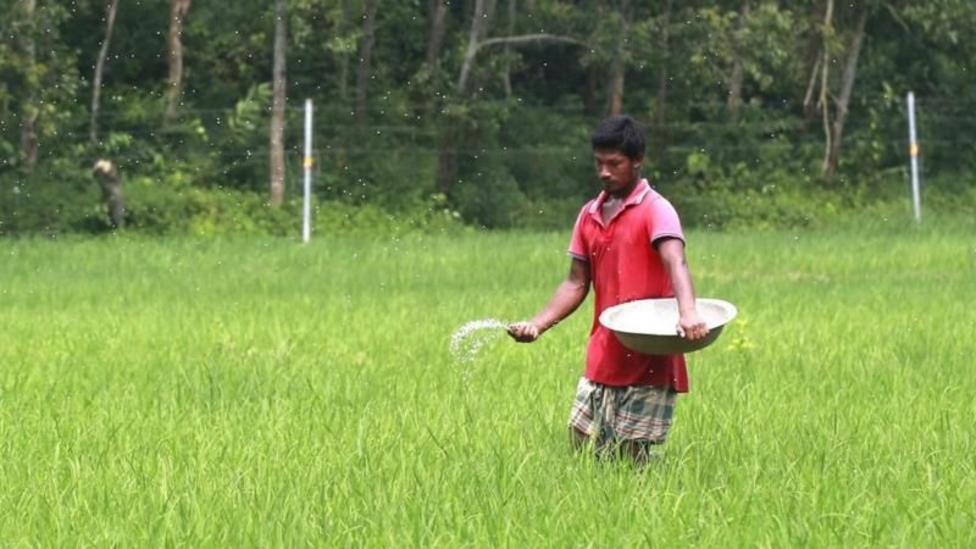
At the height of the aman season, farmers across several Bangladeshi districts say they cannot get the fertiliser they need — even though official figures show no shortage at all. Growers in Kurigram, Rajshahi, Nilphamari, Jhenaidah, Jashore and Magura describe the same picture: no fertiliser in some places, inflated prices in others, and long waits everywhere.
Chhobir Uddin, a farmer in Moghalbasa union of Kurigram, said he spent an entire day searching. "I dropped my work and spent all day yesterday looking for fertiliser, and even with money in hand I could not get five kilograms anywhere," he said. Prahlad Das, a farmer in Magura, said he had trouble over diesel a few days ago and is now in trouble over fertiliser, and asked whether buying it at a higher price would leave him anything at all.
The government's account is different. The agriculture minister said that at the same time last year the state-held fertiliser stock stood at 1.2 million tonnes, and it is now close to 1.3 million tonnes. Ministry sources say total demand this year for urea, TSP, DAP and ammonia fertiliser is 5.82 million tonnes, with about 1.6 million tonnes held as a security stock.
Imports are covered too, according to the ministry. Bangladesh currently has fertiliser import agreements with Saudi Arabia, Morocco, Canada and Russia, and agreements with Tunisia, China and Egypt are being concluded. The government says it holds three to four months of advance stock against monthly allocations.
So why is the field going short? Farmers, dealers, district administration staff and ministry officials point above all to the dealer appointment rules. Fertiliser is normally distributed through two master dealers in each union, with nine to sixteen sub-dealers working under them, and the new policy changes several conditions for appointing them.
The policy was drafted under the interim government but repeated revisions delayed it. The agriculture ministry had intended to implement it and appoint new dealers during the off-peak season, when demand is lower. In practice it began to take effect once the extra demand of the aman season had already started and the rabi season was approaching.
Agriculture Minister Mohammad Amin Ur Rashid said the government is drawing up a list of dealers accused of irregularities and that action will be taken against those who breach the policy. Allegations have also been raised in parliament that manipulation by some dealers appointed under the previous government lies behind the present shortage.
Source: BBC Bangla

Comments
(0)