
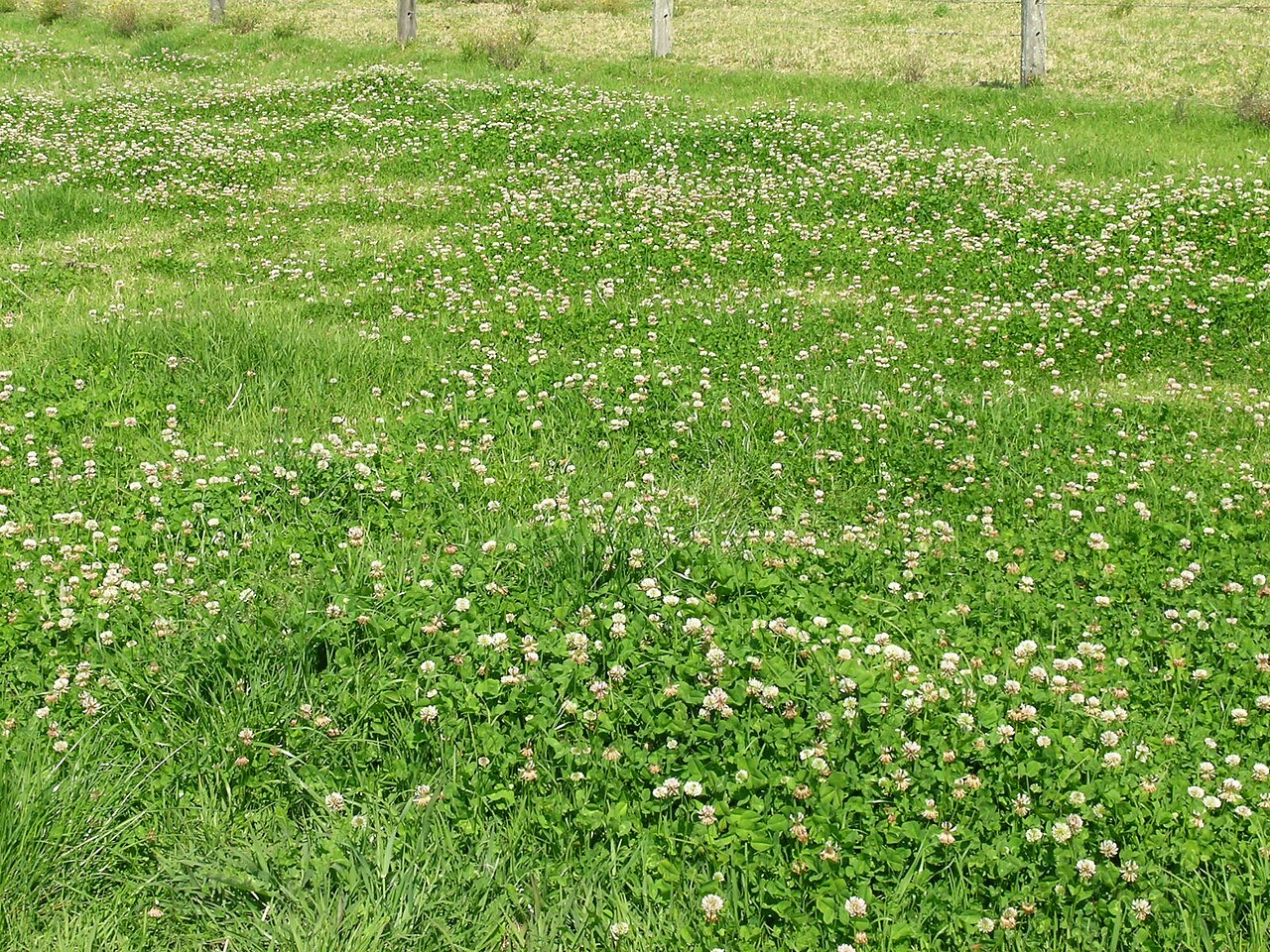
Farmers facing urea prices up to 50% higher than a year ago are turning to white clover for nitrogen, and most pastures have far less of it than they could, according to Graham Kerr, a pasture specialist at the seed company Barenbrug in New Zealand.
Kerr says every tonne of clover dry matter grown fixes 25 kg of nitrogen per hectare from the air, and also lifts feed quality. The recommended target is for white clover to make up 30% of the total dry matter yield of a ryegrass pasture, but he says few farms reach it: most have 10 to 20%, and some less. Farmer interest in clover is rising fast because the urea market shows no sign of settling, he says.
His first step for an existing pasture is a herbage test. Clover is more vulnerable to nutrient deficiencies than ryegrass and has particular pH needs, so a test shows whether the plants are short of something, and correcting a nutrient or pH problem improves the stand straight away.
For new pastures he sets two rules at sowing. Clover seed is tiny and must go in shallower than ryegrass; sown deeper than 20 mm, he says, about half of it is likely never to come up. And because clover spends its early life building a taproot, it grows slowly at first and should be sown apart from the ryegrass rather than in the same drill row. "Clover needs its own space, otherwise ryegrass swamps it," Kerr says. Drilling clover with 20 kg/ha of ryegrass seed in 15 cm rows, he points out, in effect puts 60 kg/ha of ryegrass inside each row.
A Barenbrug trial comparing sowing methods for perennial ryegrass and white clover found that in the 12 months after sowing, broadcasting the clover seed gave twice the clover yield of drilling it in the same row as the ryegrass. Kerr says the extra clover was worth the equivalent of $50 a hectare of urea, plus two to three times that in extra lamb growth or milksolids. He says farmers need to get smarter about the drills they sow with, and that he has seen good drill modifications made to help clover.
Kerr works for a seed company that sells pasture seed; the figures are his and the company's trial results.
Photo: Harry Rose / Wikimedia Commons (CC BY 2.0)
Source: Rural News Group

Comments
(0)