
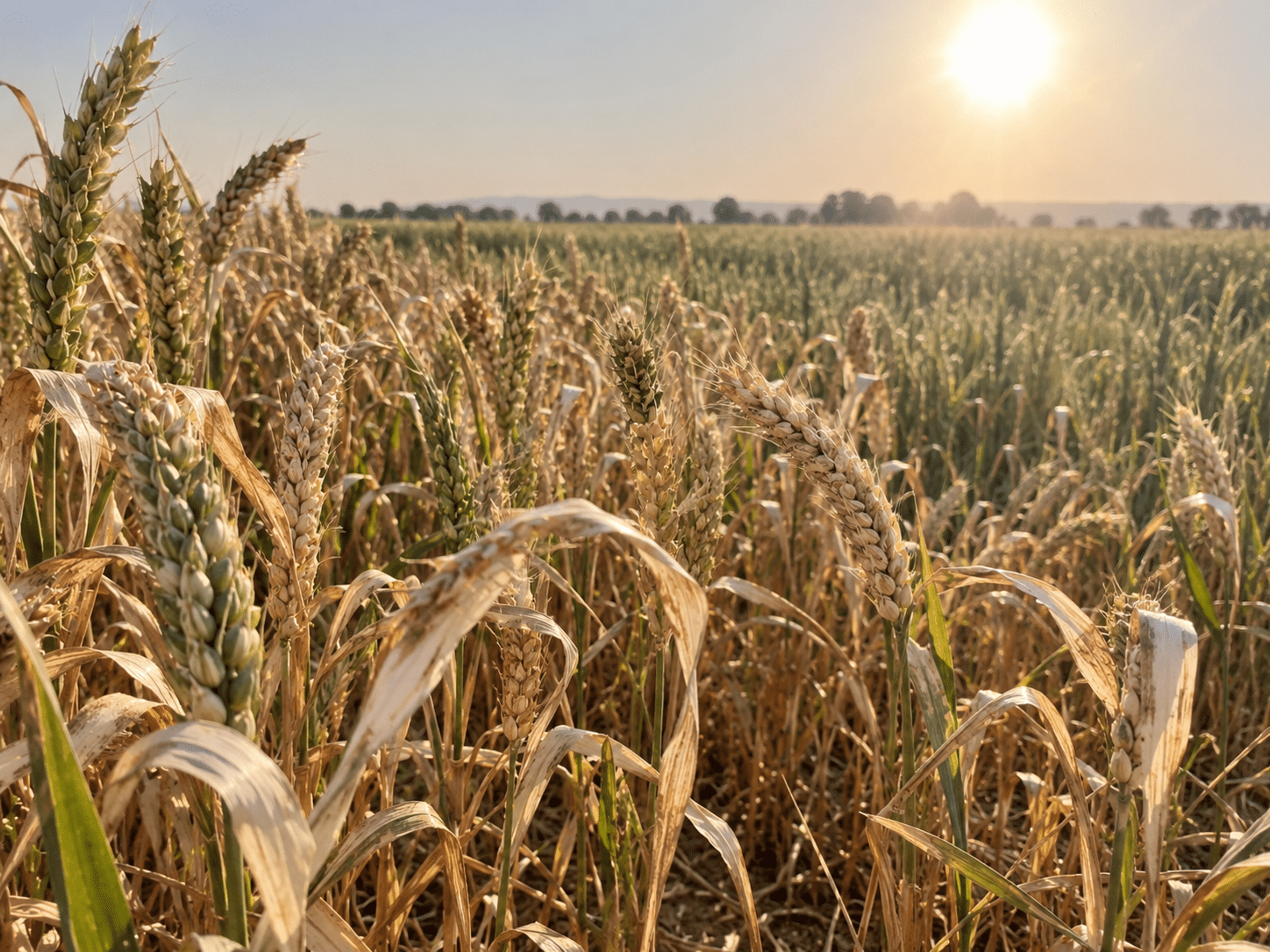
Wheat loses the most yield when a heat wave strikes before flowering, but that early heat can also prime the crop to cope better with a second heat wave later in the season, according to field research from the University of Lleida in Catalonia, Spain, published in the Journal of Experimental Botany.
Over two growing seasons the team raised daytime temperatures with transparent tents over two modern wheat varieties that build yield in different ways. They compared heat before and after flowering using a standardised measure of heat load that gives more weight to temperatures above 32 C. Both varieties responded alike.
Heat before flowering caused greater yield losses than heat afterwards, and the mechanism differed: early heat cut the number of grains, while later heat reduced grain weight.
Plants exposed to heat both before and after flowering suffered less from the later event than those that met only post-flowering heat, a protective priming effect, though the early heat still cost them grain number. "To our knowledge, this is the first evidence of this type of antagonistic interaction between successive heat waves in field-grown crops," said co-author Gustavo Slafer.
Slafer said the results show the importance of protecting wheat around flowering, when grain number is set, and that yield forecasts should treat successive heat waves together rather than one at a time. Similar responses may occur in barley, oats and rye, though thresholds will differ.
"As a crop of temperate origin, wheat is generally less adapted to high-temperature episodes than crops with tropical origins, such as maize or rice," Slafer said. Breno Bicego and Roxana Savin co-authored the study.
Source: Seed World Europe
Comments
(0)