
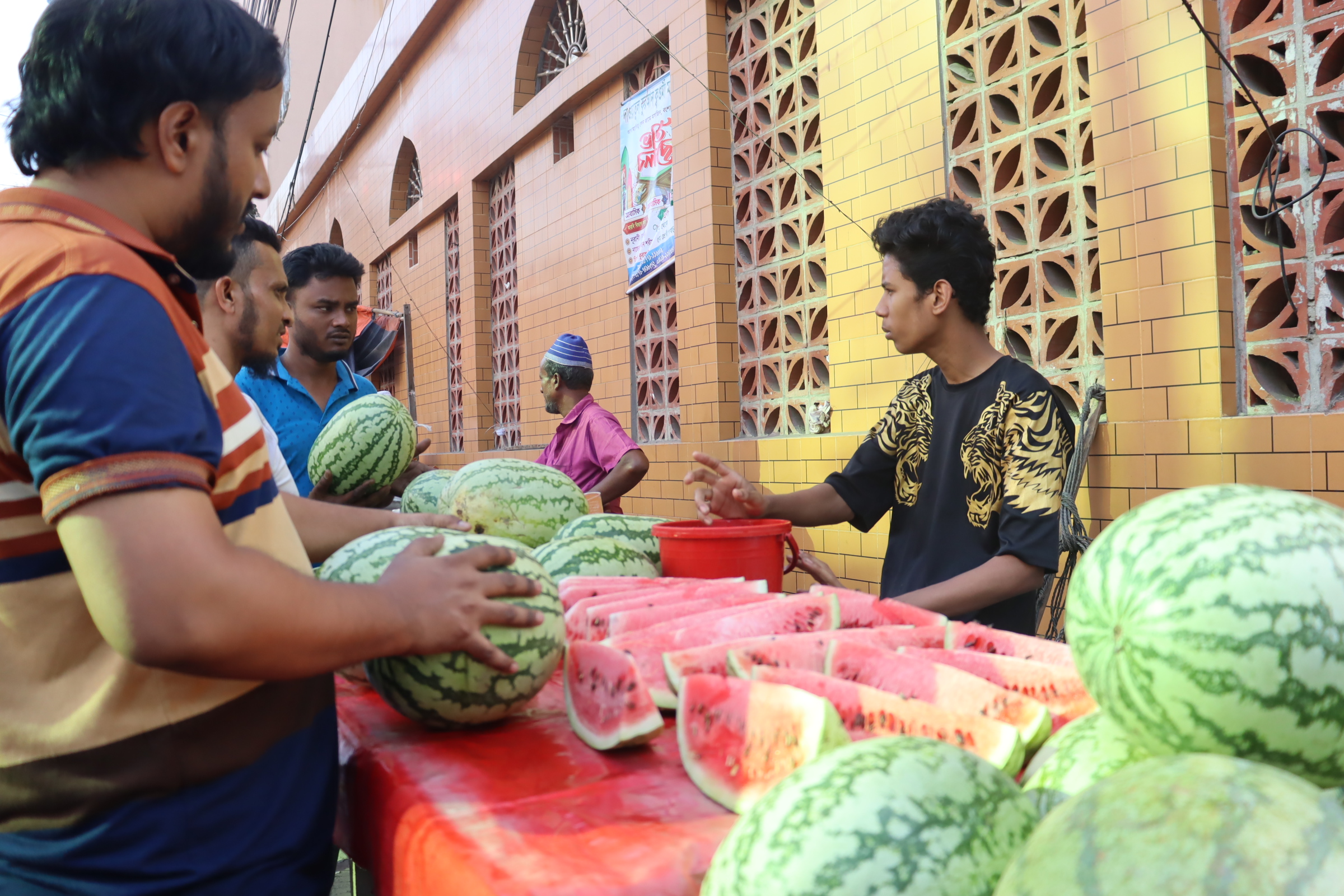
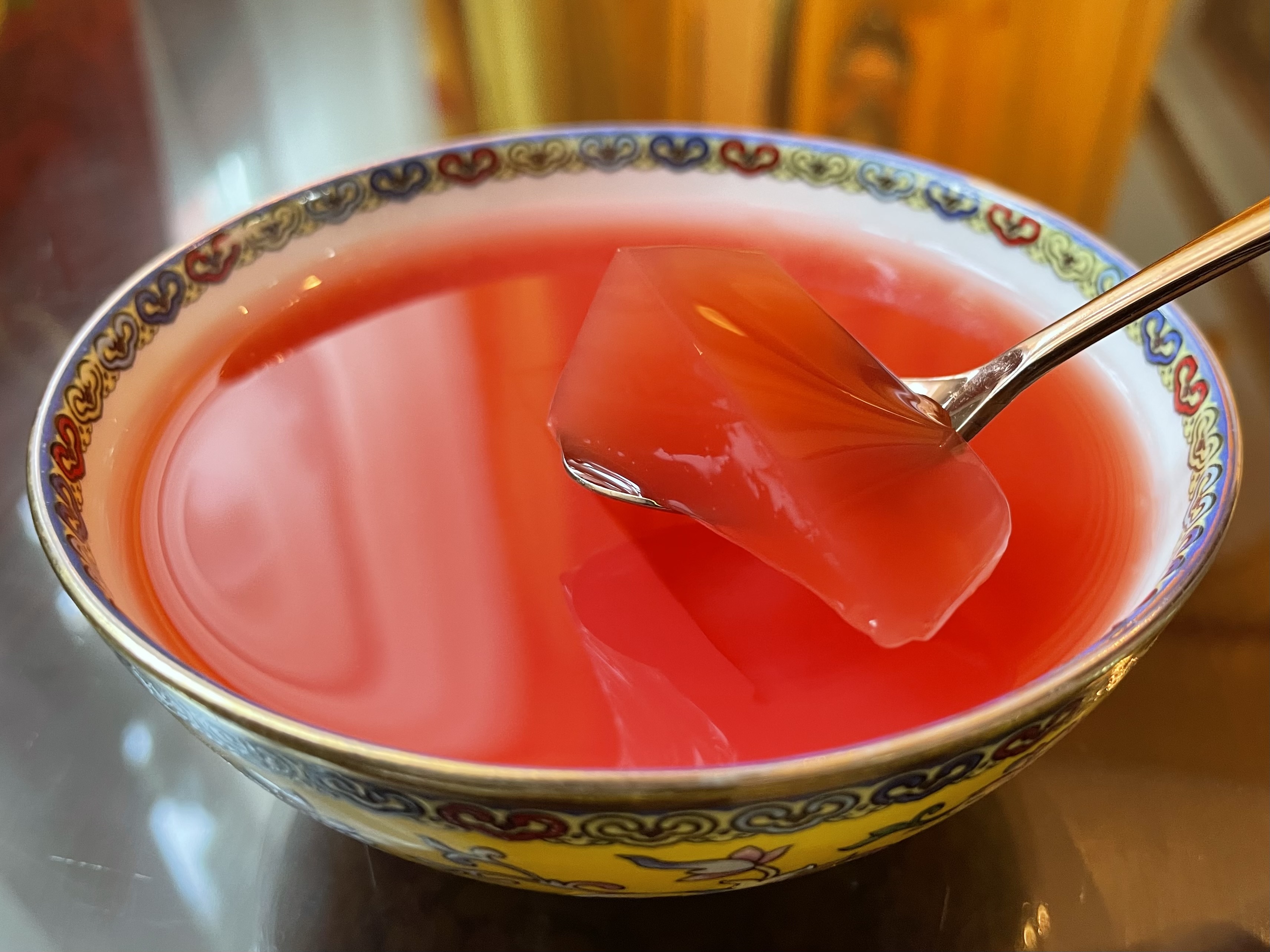
On 11 April 2026, as the hot season set in and watermelons filled Bangladesh's markets, Jagonews24 published a simple recipe for watermelon pudding: a chilled dessert made from strained watermelon juice, sugar, agar agar and lemon juice, set in the fridge and ready to serve in about half an hour. The recipe needs no oven, no eggs and no milk. It turns a fruit that most families simply slice and eat into a cool, spoonable sweet that can be made at home with a blender, a pan and a few bowls.
The idea is the same one behind fruit jellies across Asia: a fruit juice is sweetened, heated with a gelling agent, and left to cool until it sets. What makes this version work is agar agar, a gelling agent made from red seaweed, which sets firmly at room temperature and does not melt again in the heat. Below is the recipe as Jagonews24 gave it, followed by what the ingredients are, where the season's watermelons come from, and how to handle the fruit safely.
The recipe as published
Jagonews24 listed four ingredients. It gave a quantity only for the juice, three cups of strained watermelon juice, and left the amounts of sugar, agar agar and lemon juice to the cook. Sugar can be adjusted to the sweetness of the fruit, and agar agar is best measured by the directions on its packet, since powders and strips of different brands set with different strength.
- Watermelon, enough to give three cups of strained juice
- Sugar, to taste
- Agar agar
- Lemon juice
The method, step by step, as the original described it:
- Cut the watermelon, remove the seeds and blend the flesh without adding any water.
- Strain the blended fruit to separate the juice from the pulp.
- Put three cups of the strained juice in a pan with the sugar, agar agar and lemon juice, and heat it on the stove.
- Let the mixture come to the boil, then take it off the heat. Before you do, make sure the sugar has fully melted and the sugary liquid has reduced a little.
- Pour the hot mixture into a bowl or small cups and let it cool.
- Once it has cooled, put it in the fridge.
- After 30 minutes, take it out and serve.
Blending without water keeps the flavour of the fruit strong, since watermelon flesh is already more than nine-tenths water. Straining removes the fibre and any seed fragments, so the pudding sets clear and smooth. The boiling step matters: agar agar dissolves in boiling liquid, and a mixture that is merely warmed will not set properly.
Why agar agar sets the pudding
Agar agar, often just called agar, is the ingredient that turns juice into pudding. According to the Food and Agriculture Organization of the United Nations (FAO), in its guide to the seaweed industry, the uses of agar centre on its ability to form gels and on the unusual properties of those gels. Agar dissolves in boiling water, and when it cools it forms a gel at between 32 and 43 degrees Celsius, depending on the seaweed it was made from.
The key difference from gelatin is in the melting point. Gelatin gels melt at around 37 degrees Celsius, about body temperature. Agar gels, the FAO guide says, do not melt until they are heated to 85 degrees Celsius or higher. In food, this means an agar dessert does not need to be kept in the refrigerator in a hot climate to hold its shape, which suits a Bangladeshi kitchen in April. The FAO notes that this large gap between the temperature at which agar sets and the temperature at which it melts is unusual and unique to agar.
The same property gives agar a different feel in the mouth. Gelatin melts on the tongue; agar does not melt or dissolve in the mouth in the same way, so an agar pudding is firmer and breaks cleanly under a spoon. Agar is also tasteless, the FAO says, so it does not interfere with the flavour of the food it sets. In this recipe, that leaves the taste of the watermelon and the lemon to come through.
Sugar matters too. The FAO guide describes some agars, especially those extracted from Gelidium seaweed, as "sugar reactive", because sucrose increases the strength of the gel; these are used in fruit candies with a very high sugar content. Unlike starch, agar is not readily digested, so it adds little to the calorie value of food. The FAO also notes that agar is used in vegetarian foods, and that the United States Food and Drug Administration (FDA) classes it as Generally Recognized As Safe, with maximum usage levels set for different applications.
Fruit jellies set with agar have a long history in Asia. The FAO guide traces them to the early practice of boiling seaweed, straining it and adding flavours to the liquid before it cooled and set. It gives the Japanese sweet dish mitsumame as an example: cubes of agar gel with fruit and added colours, which can be canned and sterilised without the cubes melting. About 90 percent of the agar produced is used in food, the FAO says, and the remaining 10 percent in bacteriology and other biotechnology work.
From red seaweed to a kitchen powder
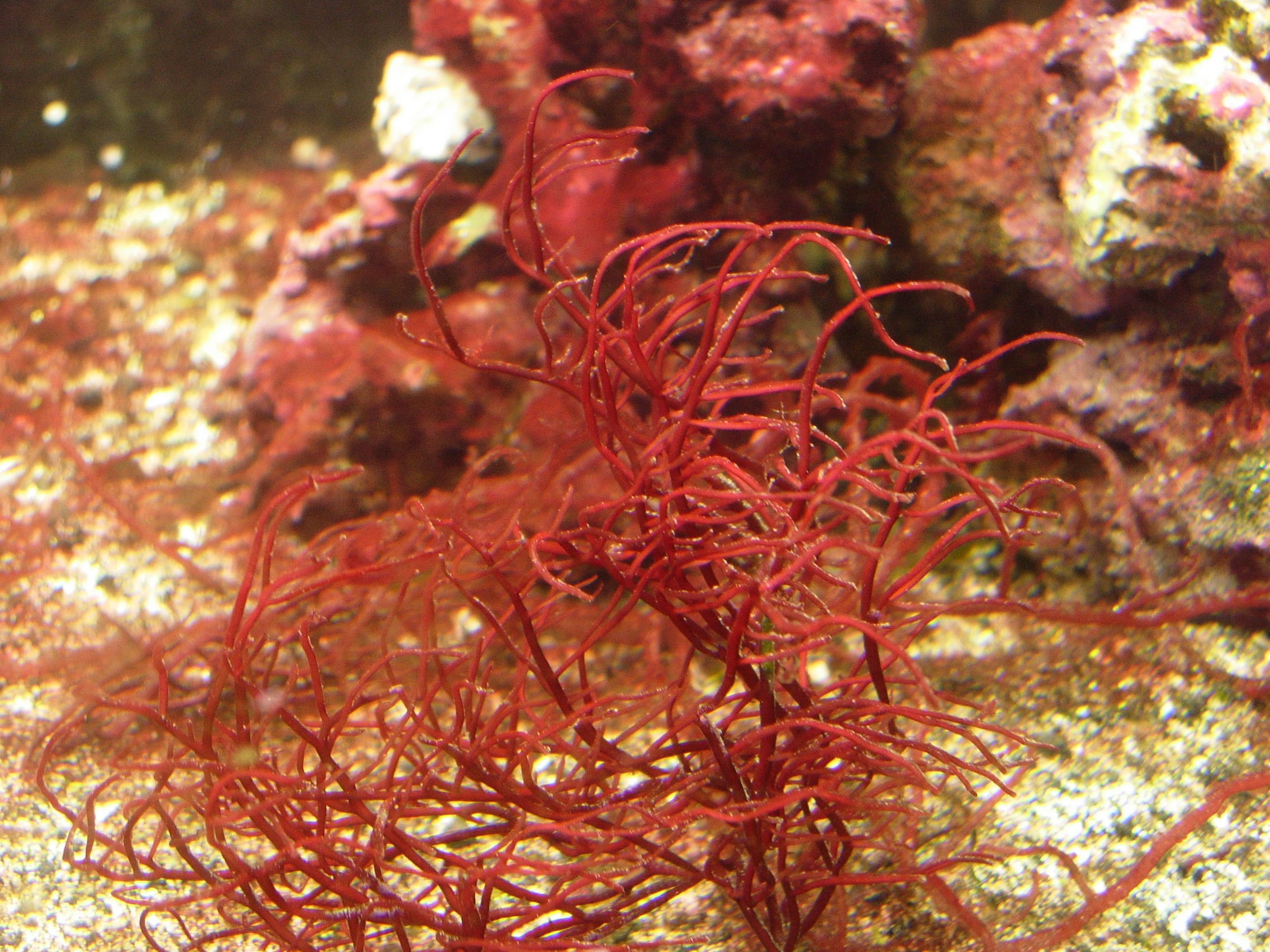
Agar comes from red seaweeds. The FAO guide says most agar is extracted from species of Gelidium and Gracilaria. Pterocladia, close relatives of Gelidium, are collected in small quantities, mainly in the Azores and New Zealand. Gelidiella acerosa is the main source of agar in India, and Ahnfeltia species have been used in Russia and Japan.
The two main seaweeds live in different places. Gelidium prefers rocky areas with steep slopes, in water from 2 to 20 metres deep, and usually grows best at 15 to 20 degrees Celsius. Gracilaria grows on sandy or muddy bottoms protected from waves, sometimes floating free in tidal lakes of salt or brackish water, and needs seawater of 20 degrees Celsius or more for at least three months of the year. Gracilaria adapts to a wide range of conditions, and it is cultivated in several countries, including in ponds and estuaries in southern China.
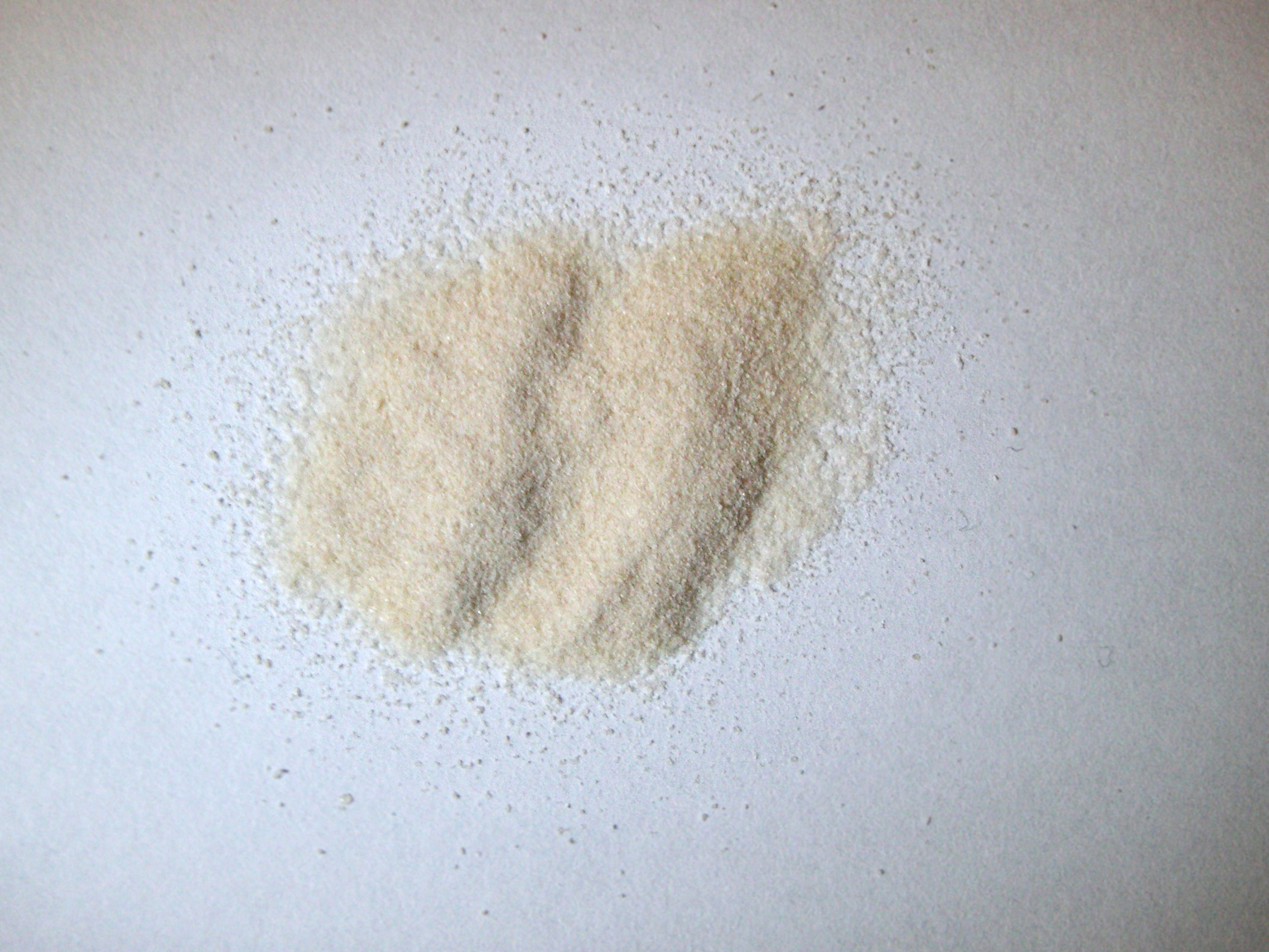
In simple terms, the FAO guide explains, the seaweed is washed to remove sand, salt and shells and then heated with water for several hours. The agar dissolves, the mixture is filtered to remove the seaweed, and the hot liquid is cooled into a gel that contains about 1 percent agar. Gracilaria must first be treated with alkali, which changes its agar chemically and raises the strength of the gel; without this step most Gracilaria species give agar too weak for commercial use. The water is then removed from the gel, either by freezing and thawing it or by pressing it out, and the remaining agar is dried in a hot-air oven and milled into powder.
Food agar is sold in two forms, strips and powder. The strips, sometimes called natural agar, are still made on a small scale in China, Japan and the Republic of Korea by an old method: Gelidium is boiled for hours in slightly acidified water, the extract is filtered through cotton cloth and set in wooden trays, and the gel is pushed out into strips about 30 centimetres long. The strips are left outside to freeze at night and thaw by day, so that water runs off, and are then dried in the sun. The FAO notes that soaking strip agar first makes it easier to dissolve in boiling water, which is worth remembering for this recipe if your agar comes in strips rather than powder. India, the guide adds, uses 800 to 1,300 dry tonnes of seaweed a year to produce 100 to 160 tonnes of agar.
Watermelon, the fruit behind the dessert
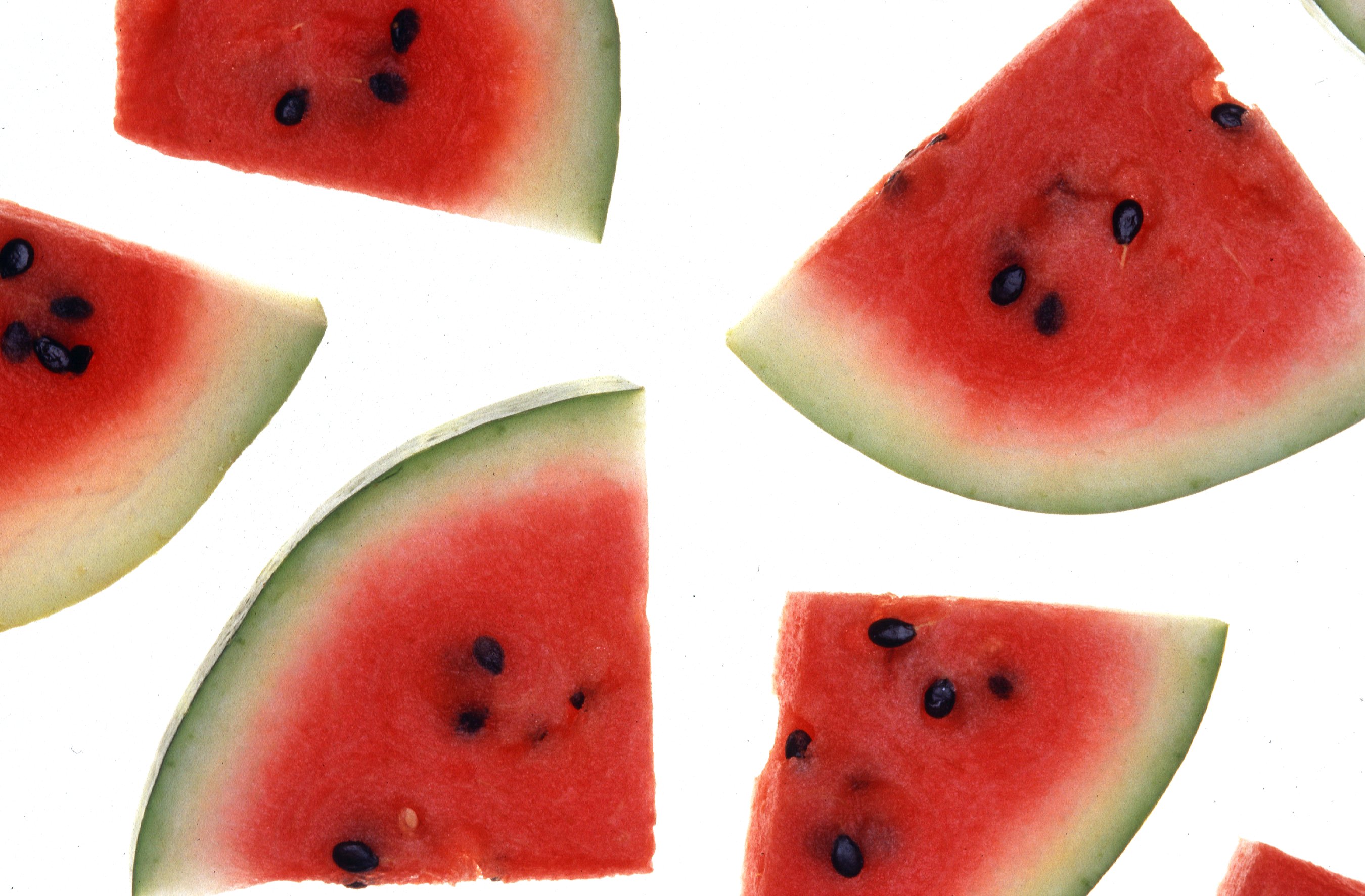
The watermelon, Citrullus lanatus, is a trailing, vine-like annual plant of the gourd family, Cucurbitaceae, grown from tropical to temperate regions for its large fruit. Botanically the fruit is a kind of berry called a pepo, with a firm rind and no internal divisions. The flesh is usually deep red to pink, and its many seeds are black when mature and white when immature; seedless varieties also exist. The fruit can be eaten raw or pickled, drunk as juice, or used in mixed drinks, and the rind can be eaten after cooking.
The plant has a long history. Botanical and archaeological work summarised in encyclopedic references traces the modern watermelon to Sudan, where it was first domesticated; the Kordofan melon of Sudan is thought to be its closest relative and a possible ancestor. Watermelons were cultivated in Egypt by 2000 BC, were grown in India by the 7th century CE and had reached China by the 10th century. Early watermelons were bitter, with yellowish-white flesh, and the sweeter fruit eaten today was developed over centuries of selective breeding. Japanese scientists developed the first seedless, triploid watermelons in 1939.
There are more than 1,200 cultivars, ranging from less than one kilogram to more than 90 kilograms in weight, with red, pink, orange, yellow or white flesh. The crop needs warmth: watermelons thrive at temperatures above 25 degrees Celsius, and the ideal soil is a well-drained sandy loam with a pH between 5.7 and 7.2. Its major pests include aphids, fruit flies and root-knot nematodes, and in high humidity the plants are prone to diseases such as powdery mildew and mosaic virus. China is by far the world's largest producer.
What 100 grams of watermelon contains
The United States Department of Agriculture (USDA) food composition database, FoodData Central, gives the make-up of raw watermelon flesh. A 100-gram portion contains:
- Water: 91.45 grams
- Energy: 127 kilojoules (30 kilocalories)
- Carbohydrate: 7.55 grams, of which sugars 6.2 grams
- Dietary fibre: 0.4 grams
- Protein: 0.61 grams; fat: 0.15 grams
- Potassium: 112 milligrams
- Vitamin C: 8.1 milligrams
- Vitamin A: 28 micrograms, with 303 micrograms of beta-carotene
- Lycopene, the red pigment of the flesh: 4,532 micrograms
In other words, watermelon is mostly water, with some natural sugar and little fat or protein; the red colour comes from carotenoid pigments, chiefly lycopene. The pudding differs from the fresh fruit in one important way: it contains added sugar. Anyone managing diabetes, following a doctor's diet, or preparing it for a young child should take that into account and ask a doctor or a qualified nutritionist how much is suitable.
Bangladesh's watermelon season in the south
In Bangladesh, watermelon is a dry-season crop of the south, and the coastal Barishal division, with Patuakhali and Bhola among its main growing districts, produces a large share of it. Reports from the Department of Agricultural Extension (DAE) over the seasons before this recipe was published show how fast the crop has grown.
In March 2023, the DAE's Patuakhali office told The Daily Star that watermelon had been grown on 28,700 hectares in the district that season, at an average of 38 tonnes per hectare, for a total of 10 lakh 92 thousand tonnes. Officials said the district's soil was very well suited to the crop and that the weather had been favourable. Galachipa upazila had the largest area, 11,750 hectares, followed by Rangabali with 8,262 hectares, and traders were trucking the fruit across the Padma Bridge to Dhaka and other districts.
In April 2024, the district DAE told Bangla Tribune that 23,600 hectares had been planted, expected to yield about six and a half lakh tonnes. By upazila, Galachipa had 8,950 hectares, Rangabali 6,350, Bauphal 3,520, Kalapara 1,750, Dashmina 1,720, Sadar 805, Dumki 350 and Mirzaganj 155. The DAE training officer Khairul Islam Mallik said nearly all of it was high-yielding hybrid watermelon and that its market value would pass Tk 2,000 crore. Farmers described leasing land for a season, and traders from Dhaka and elsewhere advancing money to growers before the season and collecting the fruit by trawler, truck and launch.
In March 2025, the DAE's Barishal regional office told Bangla Tribune that the six districts of the division had a target of 48,344 hectares but had planted 54,551 hectares, with a yield of 39.15 tonnes per hectare, and that officials expected 18 lakh 81 thousand 172 tonnes by the end of the season. Wholesalers at Barishal's Port Road said more than a hundred engine-driven trawlers, each carrying 2,500 to 3,000 melons, were arriving every day, and that large melons were selling at Tk 18,000 to 20,000 a hundred. Farmers said there had been no rain and yields were good, although a virus had damaged some fields.
The 2025-26 season was larger again. On 23 February 2026, The Daily Star reported that, according to the DAE, Patuakhali's watermelon area had risen from 27,350 hectares the previous year to about 34,480 hectares, and could grow further before the season ended. The DAE estimated about Tk 300 crore of trade around production, transport and seed. Experts quoted in the report said loam and sandy loam soils suit the crop, and that silt left by the tidal rivers raises fertility, so good yields come with comparatively little fertiliser. Sadar, Galachipa, Dashmina, Bauphal, Rangabali and Mirzaganj upazilas grow the most, and many fruits there weigh 20 to 22 kilograms. Some farmers said they had switched from pulses or chilli to watermelon after the rice harvest. The DAE deputy director, Dr Md Amanul Islam, told the paper that farmers were being given regular advice, and that instructions had been given to take the necessary measures against fog-related leaf rot and against fruit cracking in excessive heat.
Buying, washing and storing the fruit safely
A dessert made from fresh fruit is only as safe as the fruit and the kitchen. The FDA, in its consumer guidance on selecting and serving produce safely, says harmful bacteria from soil or water can contaminate fruit in the field or after harvest, during storage or preparation. Its advice applies directly to a watermelon bought for this recipe:
- Choose fruit that is not bruised or damaged. If you buy cut produce, such as half a watermelon, choose only pieces that are refrigerated or surrounded by ice.
- Wash your hands for at least 20 seconds with soap and warm water before and after preparing produce.
- Wash the fruit under running water before cutting it, even though the rind is not eaten, so that dirt and bacteria are not carried from the surface into the flesh. Scrub firm produce such as melons with a clean produce brush, and dry it with a clean cloth or paper towel.
- Do not wash fruit with soap, detergent or commercial produce wash; produce is porous and can absorb them.
- Cut away damaged or bruised parts, and throw away any fruit that looks rotten.
- Keep fruit that will be eaten raw away from raw meat, poultry and seafood, and from the boards and knives used for them.
- Refrigerate cut produce, in a clean refrigerator at 40 degrees Fahrenheit or below.
The FDA adds that washing reduces bacteria but does not remove them all, and that cooking produce thoroughly kills harmful bacteria. In this recipe the juice is boiled with the agar; the pudding should still be kept covered in the refrigerator after it has set, since it is served cold. The FDA advises anyone who thinks they have a foodborne illness to contact a healthcare provider.
Photo: Wasiul Bahar / Wikimedia Commons (CC BY-SA 4.0)
Sources: Jagonews24, Food and Agriculture Organization of the United Nations (FAO, "A guide to the seaweed industry", 2003), United States Department of Agriculture (FoodData Central), United States Food and Drug Administration (FDA), The Daily Star, Bangla Tribune, Wikipedia


Comments
(0)