
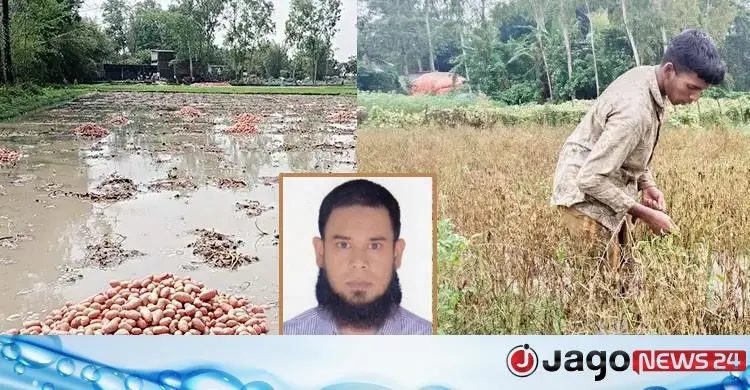
By Mahmudul Hasan Chowdhury
Bangladesh is an agricultural country. Its food security, farmers' livelihoods and the wider economy depend heavily on farming. Because most farmland depends on monsoon rain, excessive rainfall, runoff from upstream, rising rivers and poor drainage cause waterlogging in many areas during the rainy season. With climate change, heavy rain over short periods has become more common in recent years, so waterlogging is happening more often. It damages not only crops but also soil health, biodiversity and long-term productivity. Waterlogging should therefore be seen not just as a seasonal problem but as an important issue in soil health management.
What waterlogging does to the soil
Soil is a living, dynamic natural system. Mineral particles, organic matter, water, air and countless beneficial micro-organisms together create a balanced environment. A healthy soil usually contains about 45 per cent minerals, 25 per cent water, 25 per cent air and 5 per cent organic matter. This balance keeps root growth, nutrient uptake and microbial activity going. But when water stands on land for a long time, the pores in the soil fill with water and air movement almost stops. The soil runs short of oxygen and the roots cannot breathe normally. Just 24 to 48 hours of waterlogging is enough for oxygen shortage to begin in the roots of most upland crops. Prolonged waterlogging can make the soil fully anaerobic. Root cells then produce less energy, new roots fail to form and the ability to absorb water and nutrients falls rapidly.
As a result plant growth slows, leaves start to yellow, the number of tillers falls and yields drop significantly. Root rot often becomes more common, speeding up crop damage. The most important change in waterlogged soil is a rapid fall in its redox potential. In normal aerobic conditions there is enough oxygen for various beneficial chemical reactions to proceed properly. When waterlogging cuts off the oxygen supply, redox potential falls and the aerobic environment gradually becomes anaerobic. The chemical forms of nitrogen, sulphur, iron, manganese and other nutrients begin to change, often in ways that harm rather than help plants. Lack of oxygen speeds up denitrification: nitrate nitrogen in the soil is converted step by step into nitric oxide, nitrous oxide and finally nitrogen gas, which escapes into the atmosphere. The nitrogen available to plants falls and crops become nitrogen-deficient.
Nitrous oxide in particular is a very powerful greenhouse gas, with a global warming potential about 270 times that of carbon dioxide. Waterlogging is therefore harmful not only to farm production but is also directly linked to climate change. Other important chemical changes follow. Iron and manganese are reduced into more soluble forms, and if too much of them enters plant roots they can cause toxicity. At the same time the availability of key nutrients such as phosphorus, zinc, boron and sulphur changes. Often, even though the soil contains enough nutrients in total, plants cannot take them up effectively; scientists call this a "physiological nutrient deficiency". So applying fertiliser alone does not solve the problem in waterlogged land; restoring normal soil conditions is just as important.
Harm to soil life and structure
The effects of waterlogging are not limited to soil chemistry; it also has a deep negative impact on soil biology and biodiversity. A healthy soil is home to billions of bacteria, fungi, actinomycetes, algae, protozoa, earthworms and other organisms, whose combined activity breaks down organic matter and makes nutrients available to plants. When prolonged waterlogging causes oxygen shortage, these beneficial organisms become much less active. Nitrogen-fixing and phosphorus-solubilising bacteria are especially affected. The normal nutrient cycle is disrupted and soil fertility gradually declines.
In waterlogged conditions some anaerobic micro-organisms become active. As they break down organic matter they produce methane, hydrogen sulphide and various organic acids. Hydrogen sulphide is highly toxic to plant roots, interfering with root respiration and normal cell metabolism. Methane, meanwhile, is a powerful greenhouse gas that plays an important part in global warming. Waterlogging thus has long-term effects on the environment and climate as well as on farm output. The longer land stays waterlogged, the greater the risk of soil toxicity: in anaerobic conditions iron and manganese become more soluble, and toxicity can occur if too much enters plant roots.
Root growth then slows, brown or dark spots appear on leaves, young leaves may wither and normal nutrient uptake is disrupted. Some organic acids and other reduced compounds also build up and make the soil environment even more hostile. So in waterlogged land it is not enough just to remove the water; restoring the soil's chemical balance is also very important.
The physical structure of the soil also changes significantly. Using heavy farm machinery or repeatedly walking on land when it is very wet presses the soil particles tightly together and compacts the soil easily. Porosity falls, drainage capacity drops and root spread is hindered, so productivity may fall in the following season too. If this continues for a long time, the soil structure breaks down, the normal balance of water holding and drainage is lost and the land becomes less suitable for cultivation.
Crops at risk
Not all crops tolerate waterlogging equally. Rice is relatively tolerant, but wheat, maize, potato, pulses, onion, garlic, chilli and most vegetables are damaged by even short periods of waterlogging. Losses are greatest when waterlogging occurs during germination, seedling establishment, and flowering and fruit set. Water management plans should therefore take account of crop type, land position and rainfall patterns. With climate change, heavy rain over short periods is becoming more common in Bangladesh.
Various studies show that irregular rainfall and flash floods may raise the risk of waterlogging further in future. Protecting soil health and spreading waterlogging-tolerant farming technology are now essential. To ensure sustainable agriculture, soil must be conserved not merely as a medium of production but as a living natural resource. Healthy soil, balanced water management and science-based farming are among the main foundations of future food security.
What farmers can do
To reduce waterlogging damage, effective drainage must come first. Digging enough channels or drains around and through the field lets excess water run off quickly. In low-lying areas, growing vegetables on raised beds protects roots from much of the damage. Keeping canals, drains and natural waterways clear allows water to be removed quickly during heavy rain. Where possible, even land levelling and controlled drainage can greatly reduce the risk of waterlogging.
Organic matter plays a vital role in restoring soil health. Regularly adding compost, well-rotted cow dung, vermicompost, green manure and crop residues improves soil structure, increases porosity and creates a good balance between water holding and drainage. Organic matter feeds beneficial micro-organisms, boosting biological activity and reviving natural nutrient cycles. Research shows soils rich in organic matter cope comparatively well with both waterlogging and drought. Fertiliser use after waterlogging also needs particular care, as heavy rain can wash away some nutrients such as nitrogen, sulphur and boron or cause them to be lost as gas.
The most effective approach is therefore to test the soil after the water recedes and apply balanced fertiliser according to need. In particular, applying urea in two or three split doses rather than all at once reduces nitrogen losses and lets plants take up nutrients gradually. Integrated use of organic and inorganic fertilisers also plays an important part in maintaining long-term fertility. Changes in crop choice and cultivation methods are needed too. In waterlogging-prone areas, choosing tolerant crops and varieties, crop rotation, mulching, conservation tillage and sowing or transplanting at the right time all help reduce damage. Farmers can also cut losses considerably by managing their fields in line with local weather forecasts, rainfall outlooks and advice from the Department of Agricultural Extension (DAE).
Extreme weather events are becoming more frequent with climate change. Heavy rain, flash floods and prolonged waterlogging have become major challenges for Bangladesh's agriculture. This calls for long-term planning as well as immediate remedies. Sustainable agriculture can only be achieved through the integrated use of farming, water management, soil conservation and environment-friendly technology. Coordinated efforts by farmers, researchers, extension workers and policymakers can greatly reduce waterlogging losses.
Soil is our most valuable natural resource and the foundation of farm production. Only a healthy soil can give plants enough nutrients, water and a favourable environment. Waterlogging should therefore be treated not merely as a seasonal problem but as an integral part of soil health management. Science-based water management, regular soil testing, more organic matter, balanced fertiliser use and the integrated use of modern farm technology can significantly reduce its harmful effects. If healthy soil can be protected, a strong foundation can be built for safe food production, environmental conservation and sustainable farming, not only now but for future generations.
The writer is a soil scientist at the Soil Resource Development Institute (SRDI).
Source: Jagonews24. First published in Bengali on The Agro News.

Comments
(0)