
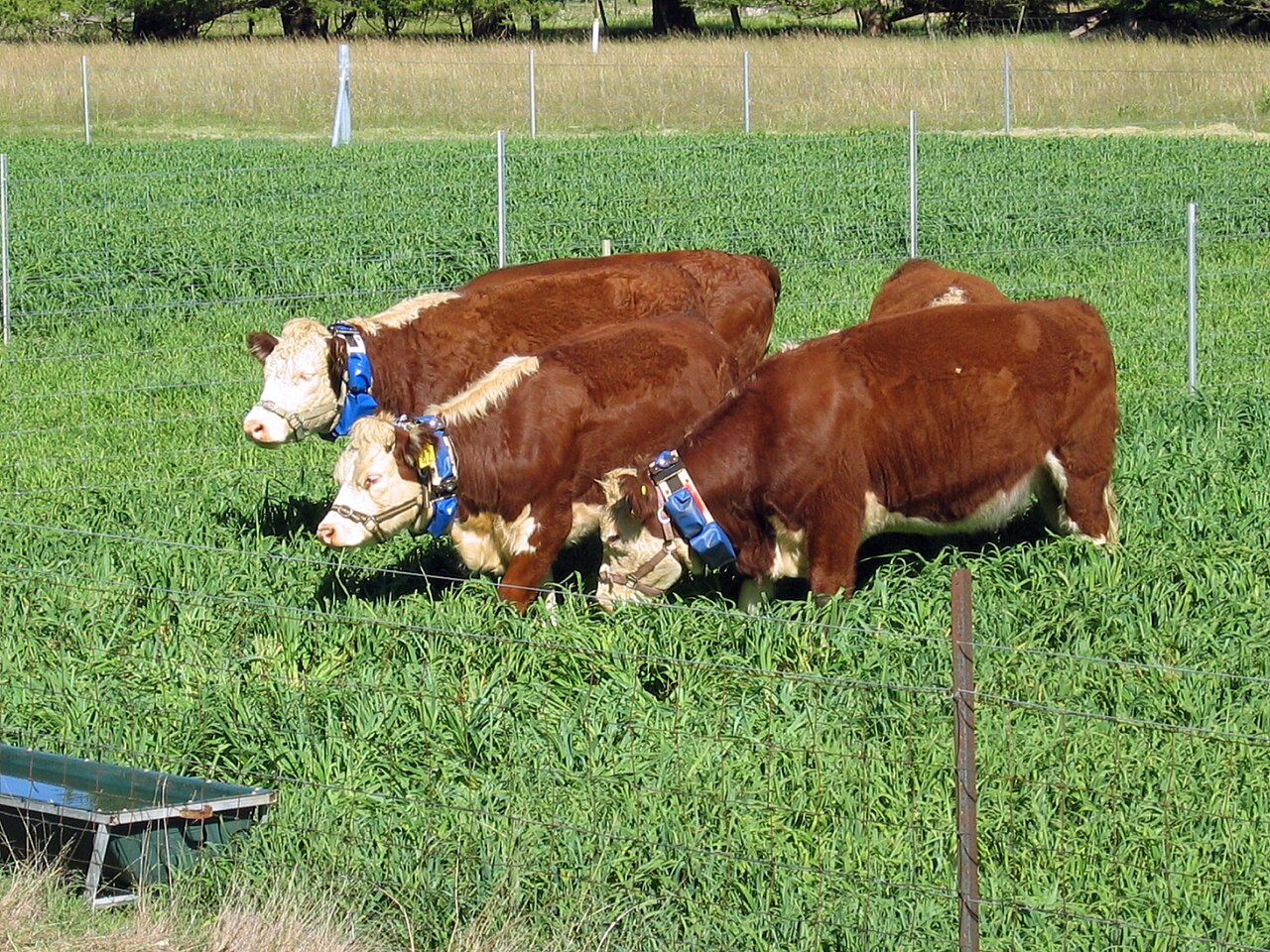
Wildfires are pushing more ranchers in the American West to try virtual fencing, a system that keeps cattle within boundaries drawn on a map rather than with posts and wire. Jay Smith, who runs the J Lazy S Angus Ranch with his wife Chyenne near Carmen, Idaho, began using it a few years ago after a fire. "Now that we have virtual fencing and GPS location technology, we have the confidence to get those cattle home; we can go get them anytime we want," he told Capital Press.
The system combines GPS collars, a base station or cellular tower, the internet and software, according to the Natural Resources Conservation Service. As a cow approaches the boundary its collar sounds a tone to turn it away; some collars talk to a satellite instead of a station. Because he can find his cattle, Smith now brings them home from the mountain allotments by mid-August and calves in September, rather than calving in January or February with cattle sometimes still on the mountain in November and December. "Now they calve on green grass instead of snowbanks," he said.
After a fire, burned and reseeded land has to be rested. Virtual fences let ranchers keep grazing the unburned parts of an allotment without building new wire, which can offset some of the cost of collars. Jessie Jarvis of King Hill, Idaho, used the system with her family for two seasons after two range fires; collars and batteries came by seasonal subscription and the Bureau of Land Management (BLM) supplied the base station. "Even if we had to buy our own base station, we still would've used the technology," she said.
Dallas Hall Defrees of Sustainable Northwest's regenerative ranching programme said the tool also saves labour, improves logistics and herd health, and helps with targeted grazing and protecting sensitive areas. Cameron Mulrony of the Idaho Cattle Association cautioned that it is "another tool in the toolbox" and will not replace hard fences on perimeters, along highways or around springs and troughs.
Land agencies are backing it. BLM has three virtual fencing projects in Idaho, and in March BLM and the Forest Service agreed to invest in new technologies such as voluntary virtual fencing to lower costs for grazing permittees. A USDA memo of 12 June told Forest Service leaders to consider virtual fencing to allow grazing of unburned areas after fire, while physical fences are rebuilt. The report is by Brad Carlson.
Photo: CSIRO / Wikimedia Commons (CC BY 3.0)
Source: Capital Press


Comments
(0)