
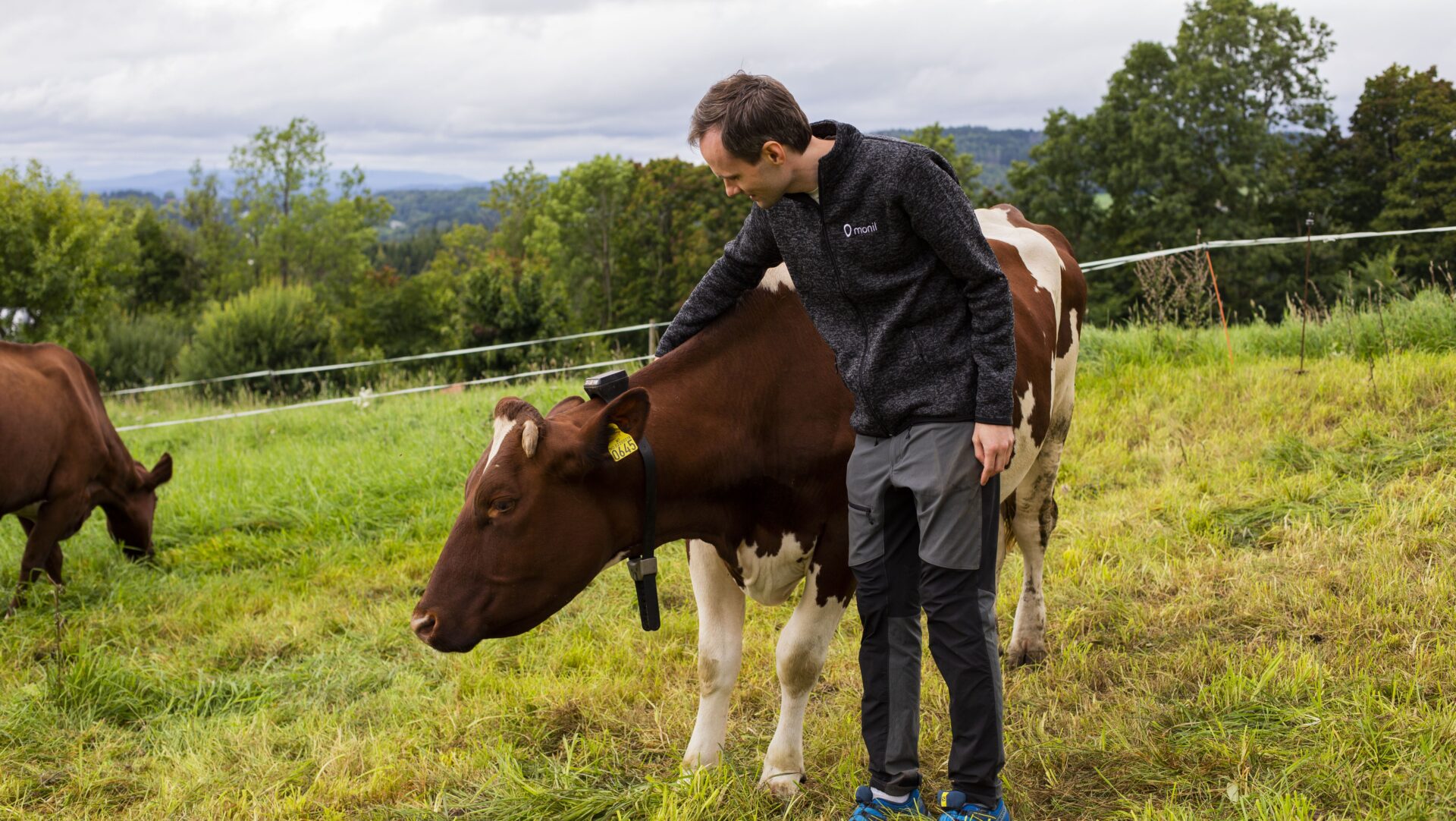
Halter's $220 million Series E round earlier this year, which valued the New Zealand livestock technology company at roughly $2 billion, sent a familiar ripple through agricultural technology: investors excited, practitioners cautious, and a public argument over whether virtual fencing is the new barbed wire or another overhyped sector.
Away from the pitch decks, a growing number of American ranchers are putting virtual fencing collars on cattle to change how they move herds and manage land. It is not yet widespread, but the same comparison keeps coming up.
"Just as barbed wire revolutionised the management of agricultural ecosystems around the world in the late 19th and early 20th centuries, virtual fencing offers similar transformational potential," says Drew Bennett, a professor at the University of Wyoming who also owns several thousand acres of ranch land.
"What we're watching here is the new barbed wire," says Zach Abney, who manages about 5,100 acres in south-west Oklahoma and deploys virtual fencing across several family-office agricultural investments. When you think of the leaps in animal management, he says, from herding to barbed wire to electric fence, it is hard to overstate how dramatic this one looks at the front end.
The systems differ between companies but share the same basic method: cattle and other livestock wear a GPS-enabled collar that communicates over cellular networks and base stations to hold the animals inside an invisible boundary, which the manager draws and redraws from software.
What that buys a rancher is rotational grazing without the cost of building and moving fence, the ability to keep stock off a burnt paddock, a riparian strip or a recovering pasture, and a record of where the herd has actually been.
The open question is reliability. A collar that loses signal, a battery that fails in the cold or an animal that learns to walk through the cue all cost the rancher stock or ground, and it is on that ordinary dependability, rather than on valuations, that the technology will be judged.
For smallholder livestock systems in South Asia the cost of collars puts the technology out of reach for now, but the underlying idea of grazing management by boundary rather than by barrier is not tied to the hardware.
Source: AgFunderNews

Comments
(0)