
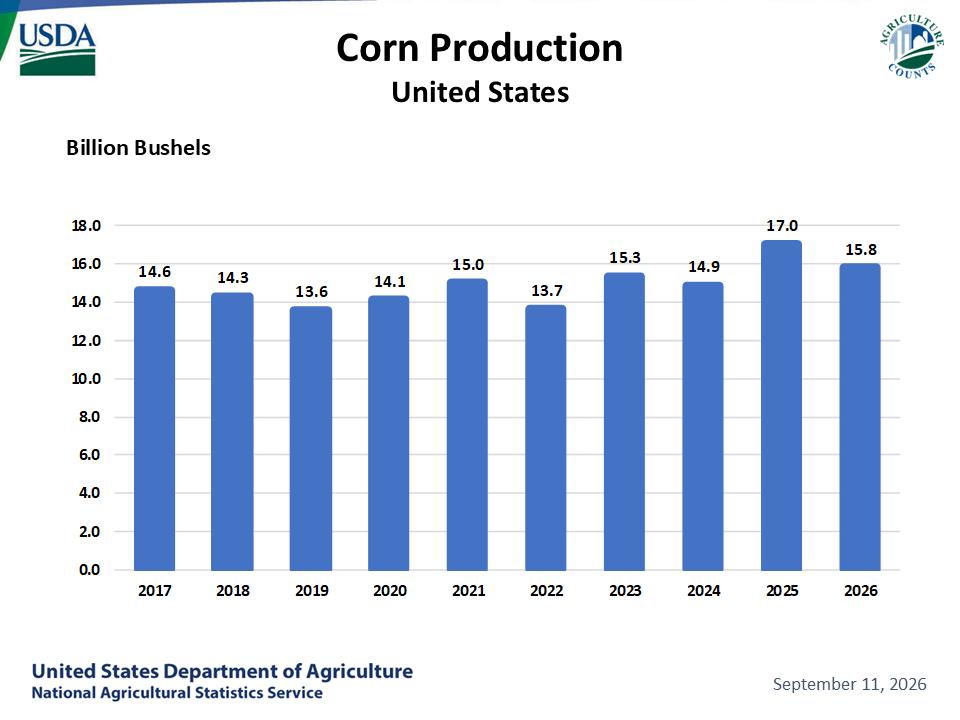
The United States Department of Agriculture has closed data collection for the Agricultural Yield Survey, the survey that underpins its August Crop Production report, and has changed the way it puts the forecast together. The National Agricultural Statistics Service (NASS) said the report would be released at noon Eastern time on Wednesday 12 August.
The August report is the first nationwide forecast of the American crop year, and NASS said producers use it for marketing, production and risk management decisions through the rest of the season. Grain handlers, processors, exporters, input suppliers, lenders, crop insurers, commodity organisations, researchers and policymakers read it as well.
The change this year is in how much the agency asks of farmers. NASS made greater use of acreage information producers had already reported to USDA's Farm Service Agency, and narrowed the survey to what only a grower can supply — crop yields and current growing conditions.
“Producer participation in the Agricultural Yield Survey makes a difference in the quality of USDA's data,” said Deputy Secretary Stephen Alexander Vaden. He said the report “builds on our commitment to producers to make better use of information already available, reduce unnecessary reporting, and continue delivering the trusted statistics on which agriculture depends.”
Producer-reported yield information, the agency said, remains the foundation of the August production forecasts. Combined with the Farm Service Agency's acreage records and the agency's statistical methods, it produces one of the first national pictures of the 2026 crop.
NASS also carried the release on a livestream briefing on YouTube minutes after publication, and the chair of its Agricultural Statistics Board, Lance Honig, took questions on X the same afternoon.
Reducing the paperwork behind a forecast without weakening it is a problem every statistics agency faces, and the American approach — matching survey returns against records the government already holds — is one that agricultural statisticians elsewhere watch closely. The output matters here too: the August forecast is one of the numbers world grain and oilseed markets trade on.
Source: USDA National Agricultural Statistics Service


Comments
(0)