
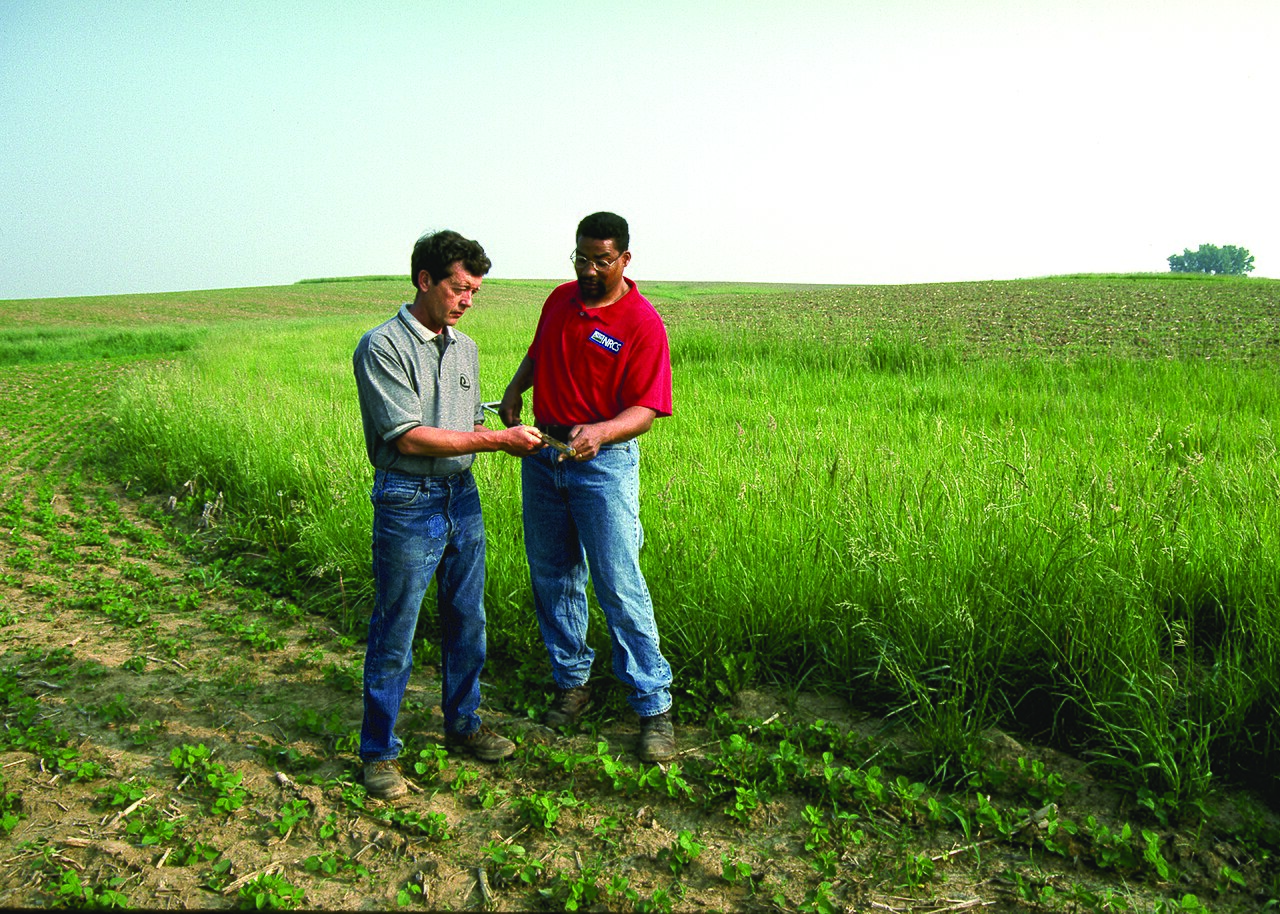
The US Department of Agriculture and its public and private partners are rebuilding SHAPE, the free online Soil Health Assessment Protocol and Evaluation tool, and they need farmers and landowners to supply the soil. The upgraded tool is meant to give each farmer a regionally relevant reading of how healthy a field's soil is, and what could improve it.
SHAPE was developed a decade ago by a team led by Kristen Veum, a soil scientist with the USDA Agricultural Research Service based at the University of Missouri in Columbia. It lets farmers benchmark the soil health of their fields, but the data behind it has gaps. "We will collect on-farm data across all 50 states and the inhabited territories to then create a tool that will provide this regionally relevant and meaningful interpretation for every farmer across America," Veum said in a video about the project.
The plan is to collect more than 13,000 soil samples from roughly 6,000 fields in the United States and its territories, covering row crops, small grains, pastures, rangelands, fruit groves and vegetable production, with woodlands, forestry and agroforestry to be added later. Participants book an online meeting of under an hour with a facilitator, who asks about tillage, crops, rotation, grazing and conservation practices on two or three fields; a team then samples two or three spots in each field. The new version will recommend practices such as cover crops, conservation tillage and no-till.
Newell Kitchen, a retired USDA soil scientist who leads the sampling and data collection, said the aim is soil that copes better with extreme weather, absorbing more water to prevent runoff and letting roots go deep for nutrients and water in a drought. As of 21 September about 40% of the field-enrolment goal had been reached, and he said more producers are needed east of the Mississippi River and across the Mid-South.
Farmers are paid for their time and receive an initial soil-health report, then a final report with recommendations once the new tool is finished; their identities and data are protected. John Pike, who farms near Marion, Illinois, and whose fields were sampled this week, called the process "simple and painless". USDA is funding the upgrade, and the new SHAPE tool is expected in 2029. The report was written by Matthew Wilde.
Photo: Tim McCabe, USDA Natural Resources Conservation Service / Wikimedia Commons (public domain)
Source: DTN / Progressive Farmer
Comments
(0)