
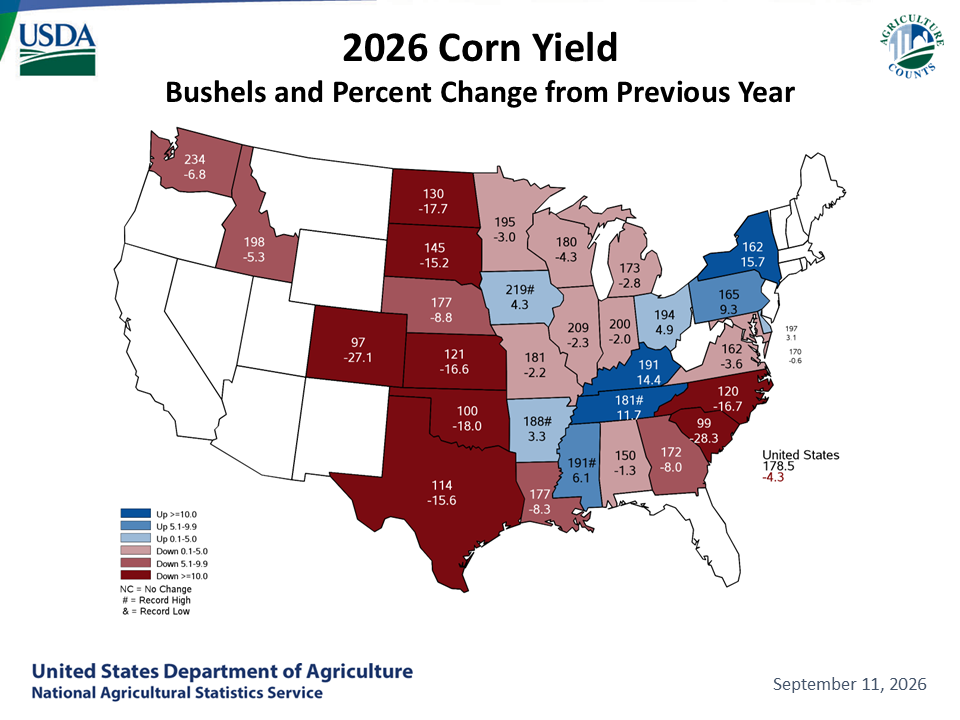
The United States Department of Agriculture has begun asking selected farmers to complete its annual County Agricultural Production Survey, the questionnaire behind the only official yearly crop estimates the country publishes at county level. The National Agricultural Statistics Service (NASS), which runs the survey, said on 12 August that what growers report decides how accurately local yields are measured.
“Every year, producers across the country use USDA's county crop estimates to compare local yields, understand growing conditions, and make better business decisions,” said Joseph L. Parsons, the NASS administrator. Depending on the state, he said, the survey supports county estimates for corn, soybeans, wheat, cotton, peanuts, rice, sorghum, barley, oats and other commodities.
The estimates are used well beyond the farm gate. NASS said lenders, crop advisers, insurers, landlords, agribusinesses, researchers and the department itself read them to compare a farm's yield with the county average and to see how weather and growing conditions have played out across a district.
The agency does not build the figures from the survey alone. It combines what producers report with acreage records already held by USDA's Farm Service Agency and Risk Management Agency, adds soil productivity information and statistical methods, and then benchmarks the result against the official state estimates so that county and state numbers agree.
Even with those extra sources, NASS said, only producers can supply the current, on-the-ground information needed to estimate harvested acreage, production and yield inside their own county. Selected growers receive the form by post and may return it by mail or complete it online with the code printed on the questionnaire; agency representatives also telephone or call in person to help.
Federal law requires NASS to keep every return confidential and to use it for statistical purposes only. No individual producer or farm can be identified in a published report, and the information cannot be passed to other agencies for regulatory or enforcement purposes. The survey results will be published in the agency's Quick Stats database in December.
For a reader in Bangladesh the interest is indirect but real. County returns are the foundation of the United States' national crop estimates, and those estimates are among the figures that move world prices for maize, wheat, soybean and cotton — the same prices that shape the country's import bill for feed grain and edible oil.
Source: USDA National Agricultural Statistics Service


Comments
(0)