
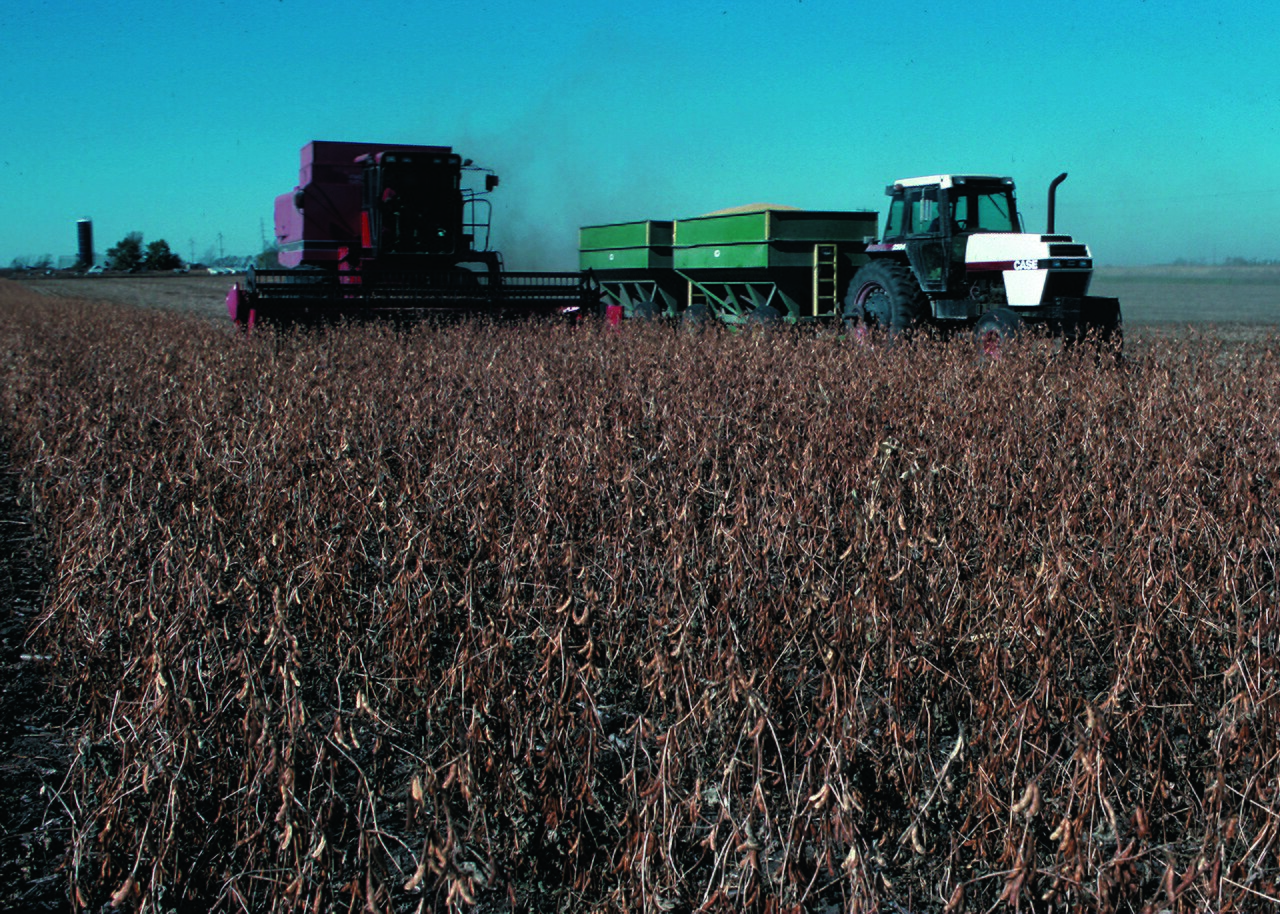
American soybean farmers say they are "disappointed" that their crop received no further tariff relief from China after President Donald Trump met Chinese President Xi Jinping last week. The two countries recommended more favourable treatment for $30 billion of non-sensitive goods, reportedly including wheat, corn, beef, poultry and dairy products, but not soybeans.
According to the American Soybean Association (ASA), China's remaining 10% retaliatory duty limits access for private Chinese importers, so soybean trade will continue to run mainly through China's state-owned enterprises. Removing the duty would make US soybeans more competitive and open the door to private buyers, the association said.
The market reacted at once, with soybeans down 31 cents a bushel, said Dave Walton, the association's vice president, who farms near Wilton, Iowa. "That's $20 an acre that cost us today," he said on 28 September, adding that the drop took 25% to 30% of his profit margin in a day and left a local cash price of about $12 a bushel. Walton grows about 350 acres of soybeans, along with corn, some wheat, alfalfa and grass hay for a cow-calf herd.
Walton said the bigger worry is the lack of consistency in the market, which makes planning difficult. The association's main priority, he said, was that China keep its commitment to buy 25 million metric tons of soybeans each marketing year; with 15 million tons already bought, it is on track. "We're asking for 25 million as a bare minimum," he said, noting that US sales used to be considerably higher.
Another open issue is the one-year suspension of US Section 301 port fees on Chinese ships, which expires on 9 November, during the main shipping window to China. The association fears the fees would be passed on to farmers and disrupt shipping. More than $5 billion worth of whole soybeans was exported through the Pacific Northwest in 2024, nearly $4.8 billion of it bound for China.
The two governments have committed to meet twice more before the trade truce deadline of 10 January 2027. Capital Press reporter Matthew Weaver wrote the original report.
Photo: Lynn Betts, USDA NRCS / Wikimedia Commons (public domain)
Source: Capital Press

Comments
(0)