
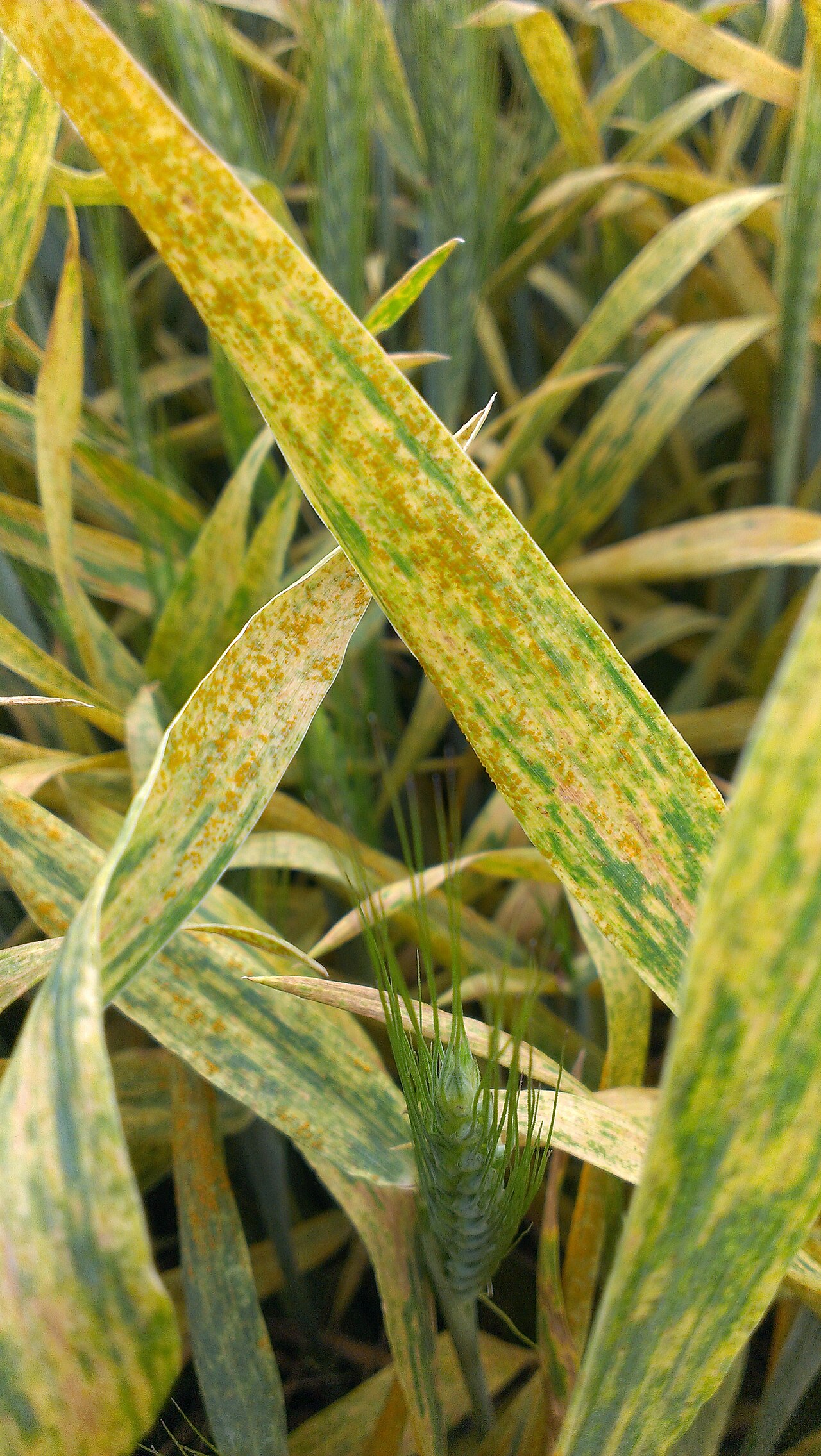
Researchers at the University of Sydney's Plant Breeding Institute at Cobbitty, New South Wales, have mapped a new wheat gene, Yr88, that explains about 86 percent of the variation in resistance to a strain of stripe (yellow) rust, one of the most damaging wheat diseases worldwide.
Stripe rust, caused by the fungus Puccinia striiformis f. sp. tritici, covers leaves in yellow-orange pustules and can cut yields sharply in cool, moist seasons in Australia, the western US, East Africa and South Asia, including India and Pakistan. The team crossed the resistant line Kazouria Taliani with the susceptible Avocet S, grew 95 recombinant inbred lines, and located the gene using targeted genotyping at about 2,000 points across the genome.
Yr88 has an unusually strong single-gene effect, but it is race-specific, protecting against pathotypes that cannot overcome it rather than giving durable "slow rusting" resistance, so breeders are likely to combine it with other genes.
Photo: Brauna55 / Wikimedia Commons (CC BY-SA 4.0)
Source: Global Agriculture
Comments
(0)