
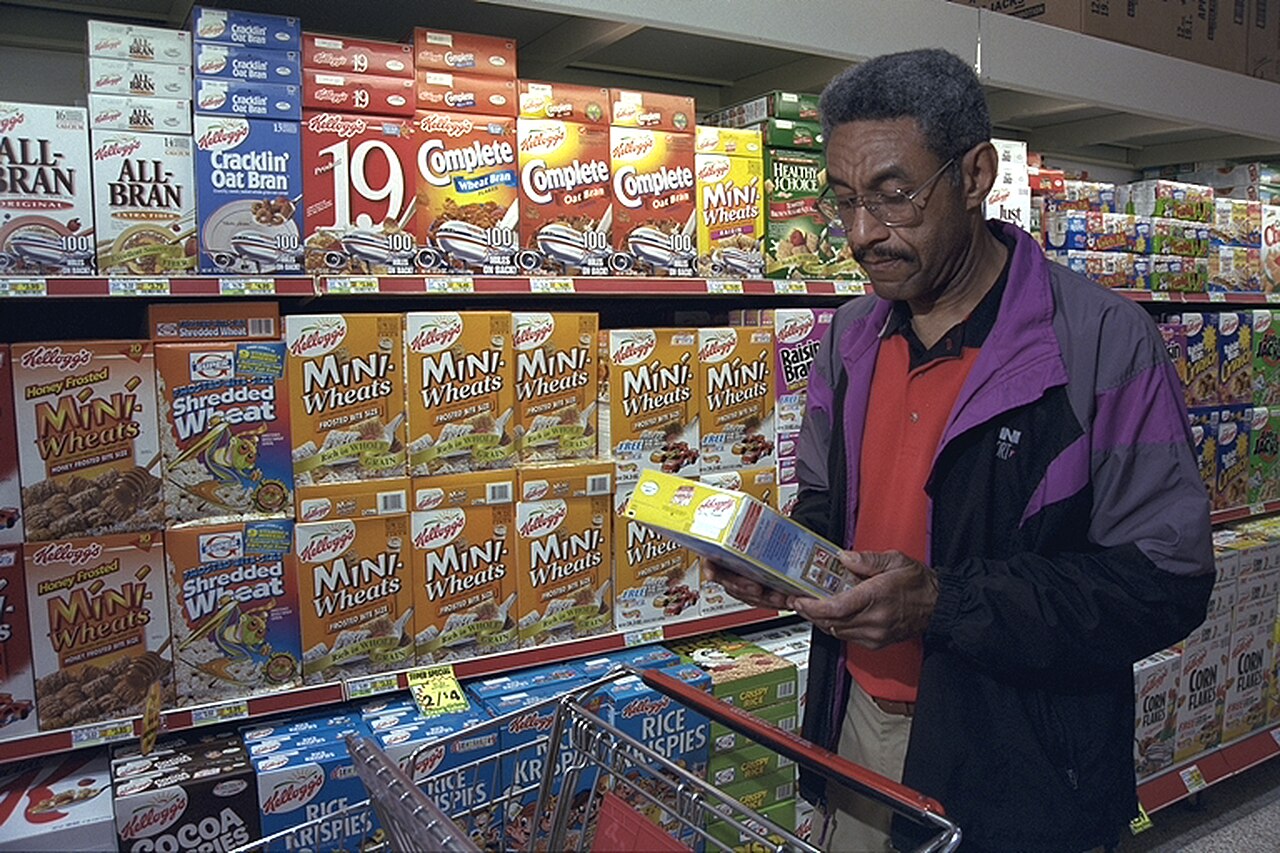
Whether a food counts as ultra-processed says less about its nutritional value than the label suggests, according to an analysis of more than 40,000 US grocery products by the market research firm NielsenIQ (NIQ), commissioned by the International Food Information Council (IFIC), reports FoodNavigator.
NIQ classified products with the NOVA system, which counts a food as ultra-processed (UPF) by ingredients such as certain flavours, colours, emulsifiers, sweeteners and thickeners. It then scored each product's nutrient density from its Nutrition Facts panel using the Nutrient Rich Food Index 6.3, which weighs six nutrients to encourage, such as protein, fibre and calcium, against three to limit: saturated fat, added sugar and sodium.
Ultra-processed products made up roughly three-quarters of US food and beverage sales in the data, and 92% of sales in cereals. On average non-UPF products were more nutrient-dense, but many UPFs matched or beat them within the same category. The average nutrient density score for cereal was 30, yet 837 cereals classified as UPF scored above that, against 329 non-UPF cereals. Non-UPF products also cost more on average.
IFIC says this "illustrates why processing classification alone can be misleading regarding nutrition and/or healthfulness". The analysis does not claim processing is irrelevant to health. A 2024 umbrella review in the British Medical Journal, covering 45 pooled analyses and nearly 9.9 million people, linked higher UPF consumption with 32 health measures, including mental, respiratory, cardiovascular and metabolic health. The two looked at different things: the BMJ review at diets and health outcomes, the NIQ work at the make-up of individual products.
Consumers are confused, IFIC's surveys suggest: 80% of Americans consider whether a food is processed before buying, up from 76% in 2023, but only four in ten say they can clearly explain processing, and sentiment towards UPFs is nearly four times more negative than in 2022. For policymakers, FoodNavigator notes, the findings raise the question of whether processing is best treated as one dimension of food assessment rather than a full measure of quality.
Photo: US Department of Agriculture / Wikimedia Commons (public domain)
Source: FoodNavigator


Comments
(0)