
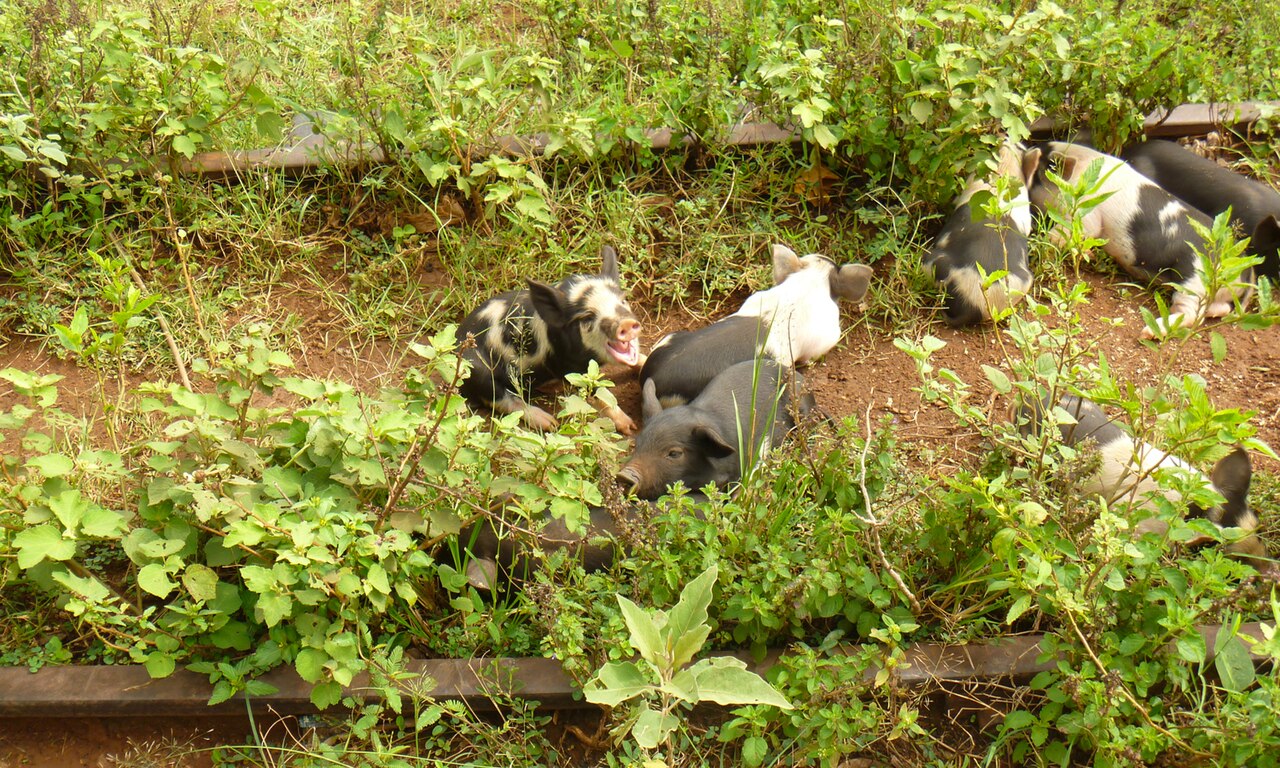
A new research project in Uganda will test whether treating both people and pigs controls the pork tapeworm better than treating people alone, the International Livestock Research Institute (ILRI) reports. The parasite, Taenia solium, passes between humans and pigs and is a leading cause of acquired epilepsy where it is endemic.
Pigs pick up the tapeworm's eggs from feed or surroundings polluted by human waste. In the pig the eggs become larvae that form cysts in the muscle. A person who eats raw or undercooked infected pork can develop an adult tapeworm in the gut and pass its eggs in faeces, and those eggs can cause cysticercosis, which can reach the brain and bring on seizures.
The Sustainable Strategies for Taenia solium Interventions in Uganda project (SUSTAIN) brings together ILRI, the universities of Edinburgh, Gulu and Makerere, Imperial College and Unlimit Health. It is funded by the UK's Foreign, Commonwealth & Development Office, the CGIAR Sustainable Animal and Aquatic Foods Science Program and the Alborada Foundation, and implemented with Ugandan government ministries and the WHO's ESPEN programme.
In October, vets, farmers, researchers and officials from across the pork value chain met in Kitgum, northern Uganda, to judge whether the combined intervention is workable and acceptable and how it can have the most effect. The region is hyperendemic for T. solium, and ILRI says it needs intensified, targeted control aimed at both people and pigs under a One Health approach. "Sustainable solutions are possible only through collaboration," said Sam Odong, Kitgum's District Assistant Chief Administrative Officer.
ILRI senior scientist Lian Thomas set out three lines of work: stronger surveillance and early detection across people, livestock and the environment; better pig husbandry, sanitation, meat inspection and safe food practice to break the transmission cycle; and One Health work that connects farmers, health workers, vets and communities with practical prevention tools.
What worries scientists and health officers is what happens when a pig falls sick. Some farmers say that rather than lose money they slaughter the animal and sell the meat to unsuspecting buyers. Others try to treat their pigs but cannot find the right drug or dose, or cannot afford it, and some sell pigs cheaply into channels where the pork is not inspected.
ILRI and its partners have worked at the study site for six years, gathering the data used to design the intervention. Inspection officers say farmers' contact with scientists has given them prevention knowledge that has helped interrupt transmission. Yael Velleman, director of innovation at Unlimit Health, called this "the most opportune moment to be decisive", and ILRI says the task now is to turn the research into solutions that work in the field at an affordable cost.
Photo: US Army Africa / Wikimedia Commons (CC BY 2.0)
Source: ILRI

Comments
(0)