
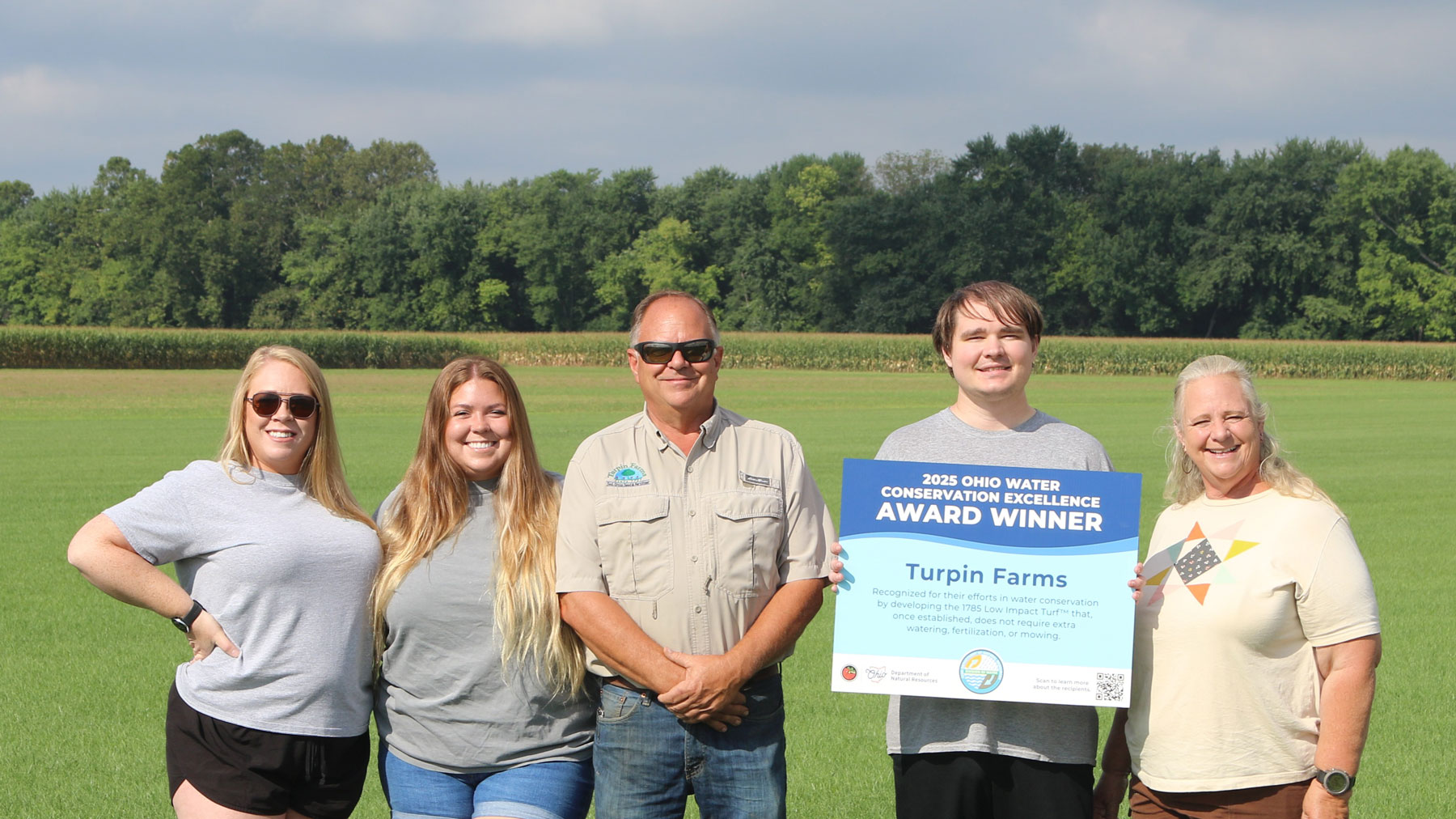
Nine miles from downtown Cincinnati, a 700-acre farm held by the same family since a Revolutionary War land grant in 1785 has become a test case for whether turf can be grown without the chemistry and plastic the industry takes for granted. Turpin Farms, run by siblings Pam Simmons and Robert Fischer, is an Ohio Conservation Farm Family Award winner and was named a 2025 Ohio Water Conservation Excellence Award winner. "We realized that without the insects, we're done," Simmons said. "That's why we are insecticide-free here."
The switch from grain began in the 1970s, when their father Bob Fischer tired of taking whatever the grain terminal offered and started growing sod so he could set his own price. The farm now sells a proprietary blend called 1785 Low Impact, which it says is the only turf in the United States meeting US Green Building Council standards for sustainable landscaping. Fischer bred it by trying to kill candidate grasses under drought and minimal water and fertiliser; once established after a season the turf needs no watering, mowing or fertiliser and tops out at six inches. It is sold within 500 miles, on Cincinnati riverfront parks and green roofs, and to Home Depot and Lowe's, whose specifications bar neonicotinoids.
Pest control comes from endophytes, beneficial fungi bred into the grass that upset the stomach of an insect that eats it, and mycorrhizae are used to build roots and cut synthetic fertiliser. Fischer said gibberellic acid and seaweed extract, which he once dismissed as snake oil, let the farm produce turf in four to five months rather than 12 to 24, with large savings on fertiliser and herbicide. The farm has also dropped the plastic netting most sod growers use to speed harvest, which can leave microplastics in the soil, after finding that fertiliser technique gave the same result. In one trial he applied fertiliser on 5 February with the ground at 28°F and got roots moving, which Ohio State professors did not believe until they saw the photographs.
Simmons, a certified LEED professional from commercial landscaping, has laid out pollinator habitat, monarch waystations and wildlife corridors, favours white oaks for the 200 to 300 caterpillar species they host, and leaves clover in the yards for the farm's bees. On the machinery side the farm runs automated sod cutters, GPS-guided mowers and drones for spraying, is looking at Firefly's robotic electric mowers, and is fitting irrigation with soil-moisture sensors that tell moving units to speed up or slow down.
The farm sits where the Little Miami River meets the Ohio, and every spring the Ohio backs up and stands on the fields for a day or so, leaving a quarter to half an inch of silt that replaces the soil lifted with each sod harvest; a sewer trench once revealed about 22 feet of topsoil. Of the 700 acres, about 120 are in sod and about 300 in soybeans, which fix nitrogen for the next sod crop, with the rest woods and hills; Chinese chestnuts planted for diversification begin bearing this year.
Simmons, 62, and Fischer, 59, are edging towards stepping back, with Fischer's daughter Christine Turpin Fischer, 30, learning every part of the operation; labour, he said, will be her biggest hurdle. "We are already trying to achieve not really a totally net-zero carbon footprint, but getting pretty close, and that's good for the environment and our bottom line – fertilizer and diesel are not cheap," Simmons said. Reporting by Jennifer Kiel; photograph courtesy of Turpin Farms.
Source: Farm Progress
Comments
(0)