
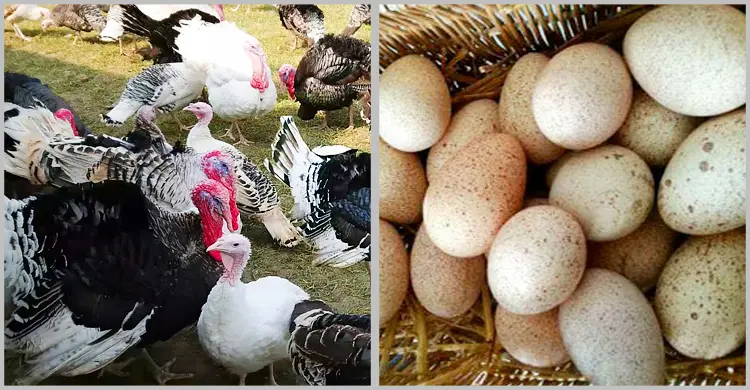
Turkeys are now being raised commercially in many parts of the country, and because they are quite profitable, turkey farming is growing day by day. But without learning the rules of turkey rearing well, farmers risk losses.
One of the main problems turkey farmers face today is hens laying few eggs, and many cannot find the reason.
The main reason turkey hens lay fewer eggs is not being given enough feed. Other causes include the laying environment, failure to ensure biosecurity, not giving certain monthly and weekly medicines, and shortages of calcium and phosphorus.
First of all, balanced, nutritious feed must be supplied in the right amount for an adult turkey. An adult female turkey should be given 130 to 150 grams of feed a day, taking care that calcium and phosphorus are never short.
This should include 16 to 17 grams of protein and energy of 2,800 kilocalories (per kg of feed). Male turkeys should be given 180 to 190 grams of balanced, nutritious feed.
Turkey hens usually lay a little less at first and lay more at 13 to 14 months of age. Certain monthly and weekly medicines should be given regularly, and above all the birds must be well cared for.
A turkey hen usually lays 130 to 140 eggs a year and 30 to 35 eggs a season. If so, the hen is laying properly and there is no reason to worry.
Source: Jagonews24. First published in Bengali on The Agro News.


Comments
(0)