
By Umme Salma
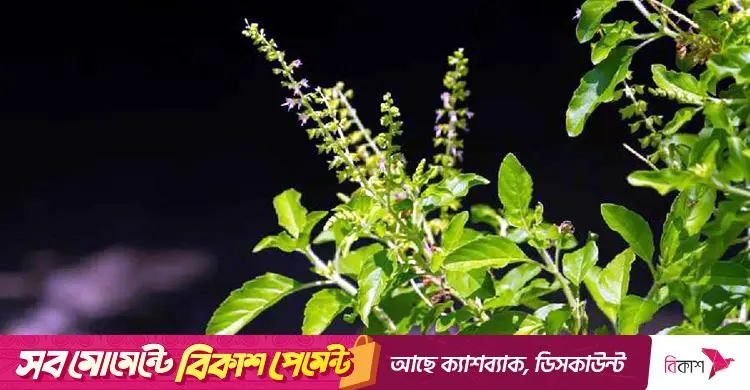
Tulsi is a medicinal plant. The word tulsi means "that which has no equal". The tulsi plant is an aromatic plant of the Lamiaceae family and is revered as a sacred plant by the Hindu community. It is a densely branched evergreen shrub 2-3 feet tall.
The edges of tulsi leaves are serrated, and five flower stalks emerge from the tips of the branches. Around each stalk the flowers sit in 10-20 umbrella-like tiers, with six small flowers blooming in each tier. The leaves, flowers and fruit have a pungent smell.
Benefits attributed to tulsi
The plant is seen everywhere and has many benefits. For example, the writer says that if two tulsi leaves are soaked in water every morning and that water is drunk, no illness of any kind occurs.
Tulsi leaves work remarkably on skin diseases. Though it is a great remedy for children's colds and coughs, people of any age benefit from it.
The plant has excellent medicinal or herbal qualities, and many medicines are made from its stems and leaves. Tulsi is unrivalled in preventing pollution. It increases people's vitality and keeps illness away.
The tulsi plant supplies a large amount of oxygen to the environment, which is why it is called a "store of oxygen". Its juice acts against worms and wind. The usable parts of the plant are the juice, leaves and seeds.
Tulsi is widely used in Ayurvedic and herbal medicine, especially in the Indian subcontinent. Four kinds of tulsi are found in these regions: babui tulsi, ram tulsi, krishna tulsi and shwet tulsi.
The writer is a student at Chattogram College.
Source: Jagonews24. First published in Bengali on The Agro News.



Comments
(0)