
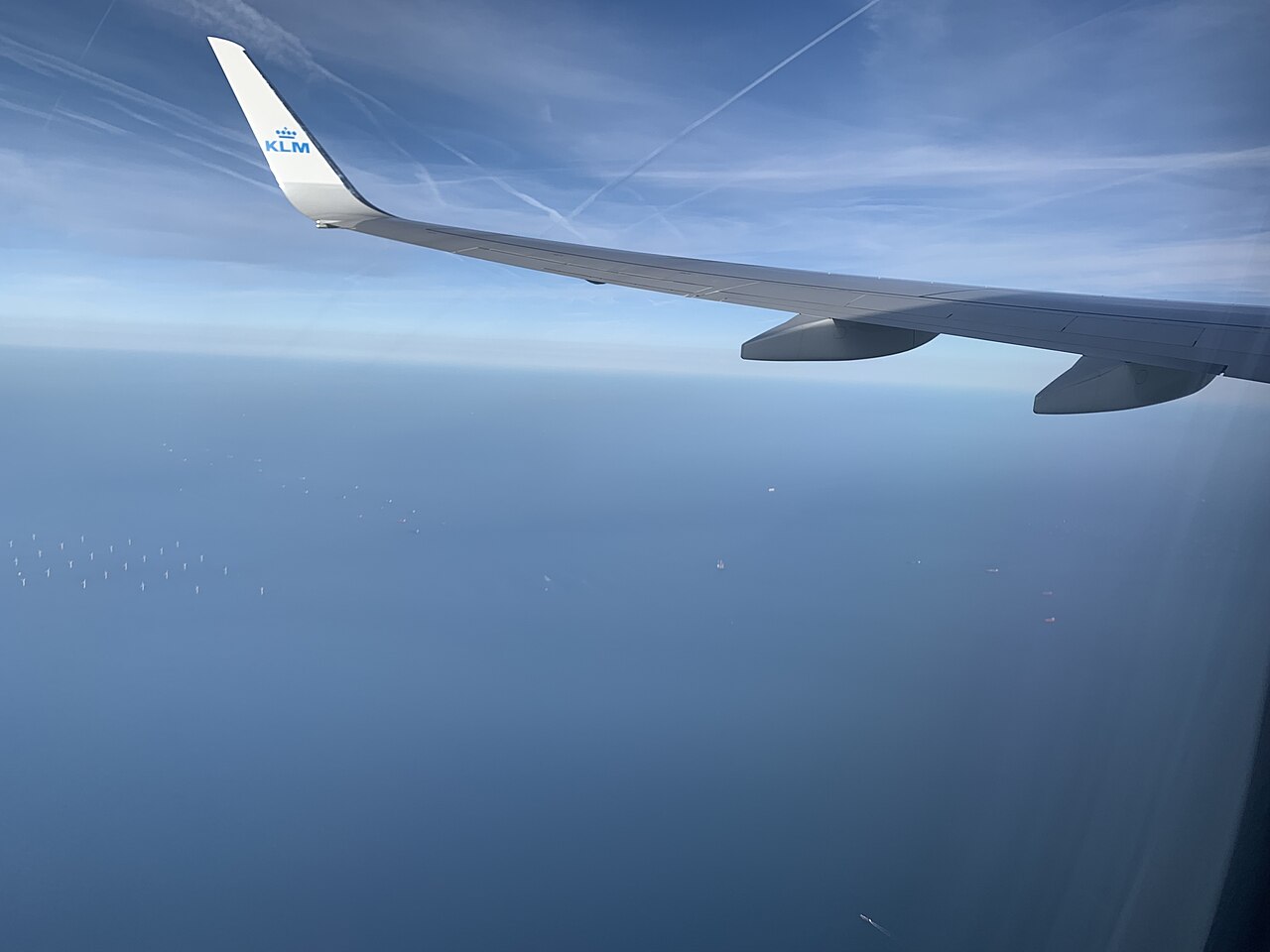
A year-long pilot on a Dutch offshore wind turbine has shown that thermal cameras combined with artificial intelligence can directly observe birds colliding with turbines at sea, something that until now has been estimated only with models, Wageningen University & Research (WUR) reports.
The pilot, started by the energy company Vattenfall, ran at the Hollandse Kust Zuid wind farm. Wildlife Imaging Systems (WIS) fitted one turbine with 16 thermal cameras covering every angle and running 24 hours a day, and AI software detected and interpreted bird movements by day and night, including in fog and rain. WUR researchers analysed the data and assessed how well the system worked.
Millions of songbirds cross the North Sea each spring and autumn, mostly at night. The system could detect these small birds and bats in darkness as well as larger birds in daylight. Over almost a year, covering one spring and one autumn migration, it identified 22 possible collisions, two of them confirmed and one considered highly probable.
"On land, we already know quite a lot about when and why birds collide with turbines, and which species are most at risk. As offshore wind energy continues to expand, we need to develop that same understanding at sea," said Karen Krijgsveld, a bird ecology researcher at WUR. Jesper Kyed Larsen, a bioscience expert at Vattenfall, said fatalities at sea are very hard to verify because there are no remains to recover.
The researchers stress that the results from a single turbine do not show that collisions are rare, and cannot simply be applied everywhere; the main aim was to test the technology in real offshore conditions.
The next phase will collect collision data at different sites and in different conditions, refine the cameras and software, and study when collisions happen, so that wind farms can take better measures to protect birds.
Photo: Tbatb / Wikimedia Commons (CC BY-SA 4.0)
Source: Wageningen University & Research

Comments
(0)