
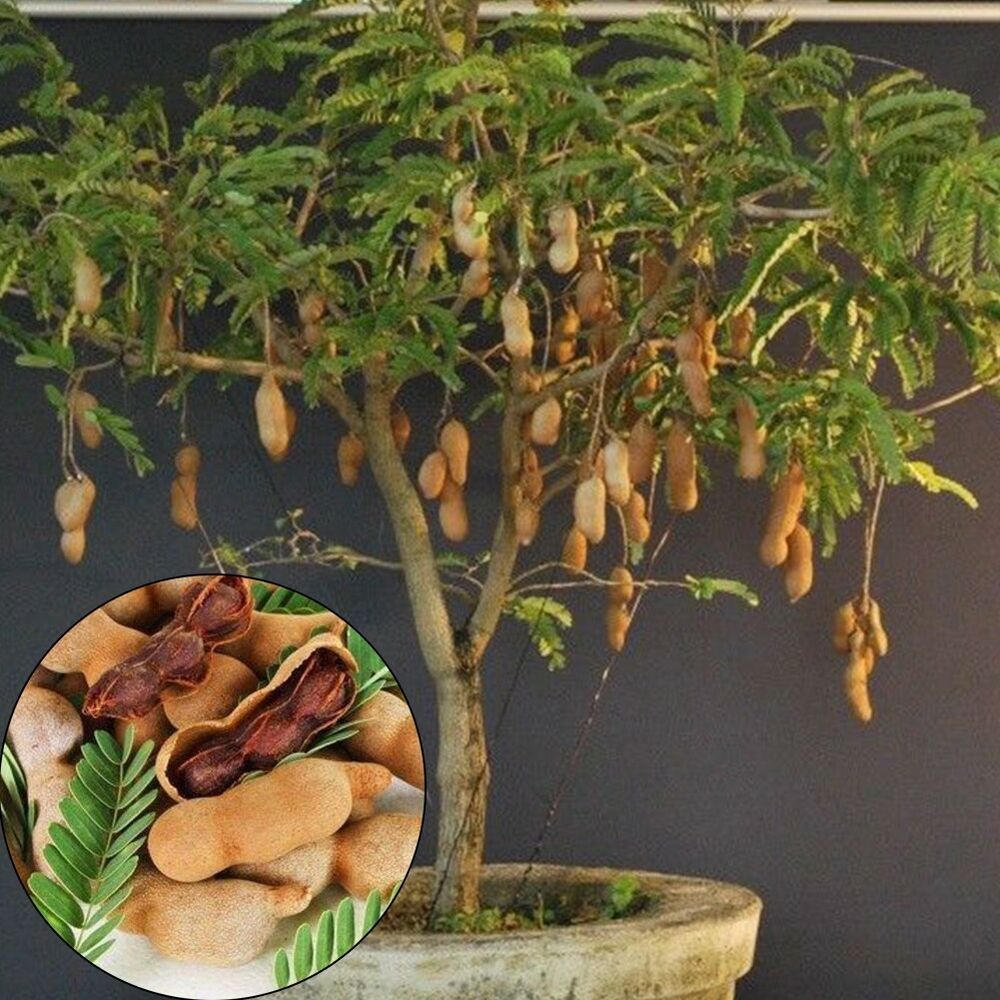
As the world's population grows, many plant and animal species are being lost, and farmland is shrinking as civilisation advances. Tall buildings are swallowing up every open plot, leaving people little room to plant a tree or a fruit or flower seedling for pleasure.
Does that mean tree planting must soon stop? We still have to plant trees in order to live. A small veranda or balcony can hold plants if one wishes, and a rooftop can become a fine garden. For city dwellers there is no alternative to the rooftop garden, where many kinds of flowering and fruit trees can be grown in tubs.
Why Thai sweet tamarind
People have moved on from growing vegetables, guava and lemon in tubs to raising many foreign plants on balconies and roofs. Among them, Thai sweet tamarind has become especially popular for tub growing. First, the right seed of this particular tamarind must be obtained from a nursery. Grafts of Thai sweet tamarind are somewhat hard to find, and it is up to the garden owner to judge carefully and bring home the right seedling.
It takes about seven months for a Thai sweet tamarind flower to become fruit. The tree fruits twice a year, first in the monsoon and again in winter. It needs no separate care: it must be looked after, but it does not need any special attention.
Preparing the tub and planting
The ideal soil for Thai sweet tamarind is loam or sandy loam; choose either one. Mix two parts of that soil with cow dung, 100 g of TSP, potash, 250 g of bone meal and 50 g of mustard oil cake, fill a large 20-inch tub, add water and leave it. After 10 to 12 days, loosen the soil well and leave it for another four to five days. After those four to five days, plant a good sweet tamarind seedling in the tub.
The seedling needs little care in its first few months, though it must have enough water and weeds must be cleared during this time. Once six months have passed since planting, give the tree rotted water mixed with mustard oil cake once a month. Remember to loosen the soil before applying the cake.
Pests and disease
Insect attack is usually not seen on Thai sweet tamarind, but in the monsoon fungus often strikes the tree and causes the tamarind to split. To protect the tree, spray a good fungicide every 10 days before the rainy season arrives.
Bengal's very sour tamarind is no match for the Thai sweet variety. This very sweet tamarind is grown in large quantities in Thailand, Cambodia and Indonesia, but its cultivation has not yet picked up in our state. You can, however, easily grow a Thai tamarind tree on your balcony or roof.
Source: Staff Correspondent. First published in Bengali on The Agro News.

Comments
(0)