
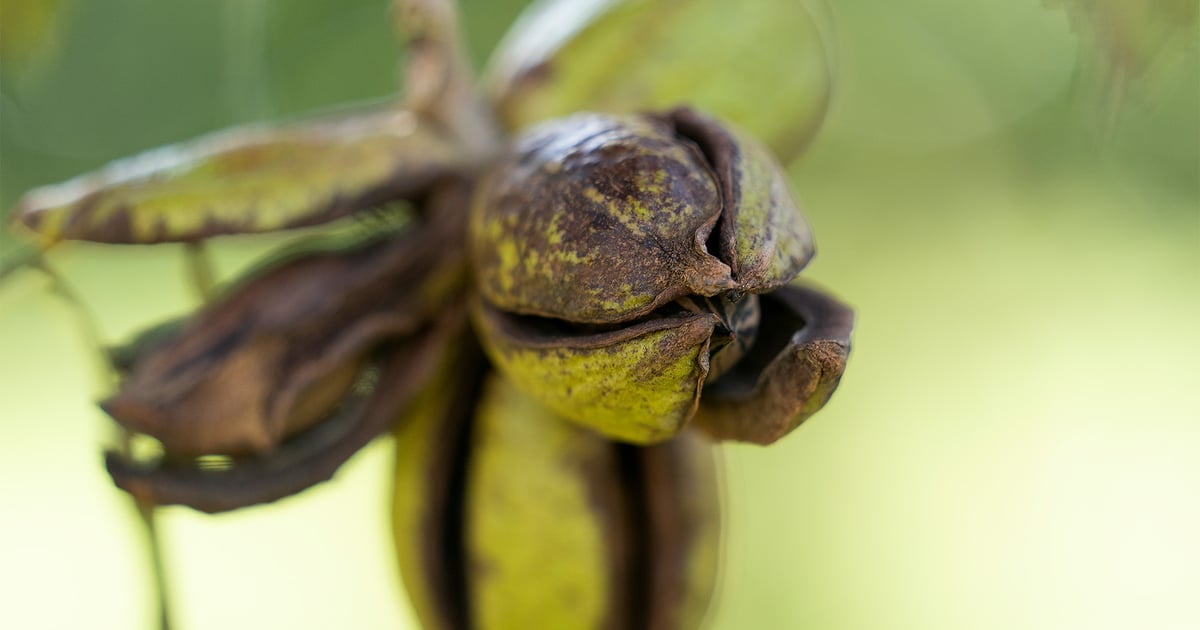
Texas pecan growers are looking at a larger crop than last year and hoping prices hold, but disease from a wet spring and a hot, dry August during kernel fill will decide how much of it is worth harvesting, said Monte Nesbitt, pecan specialist with the Texas A&M AgriLife Extension Service.
Nesbitt estimates the state's 2026 yield at about 39 million pounds, up from 32 million in 2025. Growers issued no official forecast at their July conference, but the Tri-State Pecan Growers Association put Texas near 42 million pounds. Wholesale prices for the 2025 crop were better at times than in 2023 and 2024, with some spring lots above $2 a pound and approaching $3 in the first quarter of 2026.
How the market opens for the new crop depends on the volume and kernel quality of the early harvest in Georgia, Louisiana and East Texas, he said. Rising diesel, petrol and fertiliser costs and heavier spraying against disease and insects are squeezing margins, and a 2024 Texas Pecan Growers Association survey confirmed more growers turning to direct sales to consumers. Nesbitt expects retail pecan prices to edge up with food inflation.
The season runs from bud break in late March to a harvest that starts in October at the earliest, leaving trees exposed for months. An unusually wet spring in North, East and Central Texas meant little irrigation was needed into July, but the moisture set up pecan scab, a fungal disease that starts as small dark spots and can blacken and drop the shucks, along with more downy spot and powdery mildew.
Then the weather flipped. A hot, extremely dry spell arrived as trees entered kernel fill, the August-to-September stage when the edible nut develops and water demand peaks. "The dry weather we're having now is impacting the development of kernel," Nesbitt said. "Shriveled, malformed kernels can hide inside normal-looking shells." Orchards with reliable irrigation have a good chance of finishing the crop; those without face uncertainty. "August is the separating point where pecans can go well or they go badly."
Pecan nut casebearer pressure was also above normal; its larvae bore into nuts and eat the kernel, making it the most damaging insect an orchard faces, and growers monitor and treat it closely. Even so, Texas's size and range of growing regions all but guarantee pockets of high-quality pecans somewhere, Nesbitt said: "I don't know where just yet, but somewhere in this state, growers will put together the right combination of management decisions ... and their pecans will be really good." Reported by Karn Dhingra for Farm Progress; photograph by Laura McKenzie, Texas A&M AgriLife.
Source: Farm Progress
Comments
(0)