
Many of us believe that every snake is venomous. We panic when we see a snake in the yard, in bushes, on farmland or beside a pond, and many people kill it before knowing what it is. Yet a large share of the snakes regularly seen in Bangladesh are not venomous.
Professor Farid Ahsan of the Department of Zoology at the University of Chittagong said 80 per cent of the snakes in Bangladesh are not venomous. Some live around homes, some on farmland or in water bodies, and some in trees and bushes.
Wildlife expert Dr M Monirul H Khan's book, Photographic Guide to the Wildlife of Bangladesh, records 105 snake species in the country, though the presence of 24 of them in Bangladesh has not yet been confirmed.
IUCN Bangladesh's 2015 Red List assessed 81 snake species. Some are rare and restricted to particular areas, while others are more commonly seen across the country. IUCN Bangladesh has named 10 such snakes. Here are their names, where they live and which are venomous.
Dhora (checkered keelback)
The dhora is one of the most commonly seen snakes in Bangladesh. Its scientific name is Xenochrophis piscator, and in English it is known as the checkered keelback or Asiatic water snake. IUCN Bangladesh's 2015 Red List classes it as Least Concern.
It is found in almost every part of the country and prefers places near water such as ponds, canals, lakes, slow rivers, wetlands, fish farms and paddy fields, so it is often seen in ponds beside homes in villages and towns.
Young dhora eat frog eggs, tadpoles, small frogs and insects. As they grow they may also take fish and frogs as well as lizards, mice and small birds. Although often seen near people, the dhora is not venomous, though it may bite in self-defence. Its body is brown with black and yellow patches.
Laudoga (vine snake)
The laudoga is one of Bangladesh's familiar tree snakes. The IUCN Red List gives laudoga or sutanoli as the local name for two species, Ahaetulla nasuta and Ahaetulla prasina, both listed as Least Concern in Bangladesh.
Its long, slender green body blends easily with branches and leaves. It is found in forests and bushes, and in gardens and trees around homes. It is most active by day and spends most of its time in trees.
It feeds on lizards, chameleons, frogs, small birds and other small animals, and can wait almost motionless on a branch when hunting. The laudoga is not venomous, but "it bites quickly", said Professor Farid Ahsan. It is long and thin and, although it lives mostly in trees, it sometimes comes down.
Kalnagini (ornate flying snake)
The brightly coloured kalnagini easily catches the eye. Its English name is the ornate flying snake and its scientific name Chrysopelea ornata. Despite "nagini" in its name, it is not related to cobras or kraits.
It is mainly arboreal, found in forests, bushes, gardens and well-wooded areas. An expert climber, it can flatten its body and glide some distance through the air from one tree to another, hence "flying snake". It eats lizards, chameleons, frogs, small birds, bats and other small animals, and is mostly active by day.
A popular belief holds that its bite means certain death, but in reality it is generally not dangerous to people. Professor Ahsan said: "The kalnagini is very beautiful. It is only mildly venomous, and so far no one has died from its venom."
Ghorginni (wolf snakes)
The ghorginni probably gets its name, "housewife", from being seen around homes. On the IUCN list the name is attached to several snakes, including Lycodon aulicus, Lycodon jara and Lycodon zawi.
They may be found in gaps in walls, brick piles, old houses, tree bark and sheltered places around homes. They are mainly nocturnal, hiding by day and coming out at night to hunt.
Geckos and skinks are among their main food, and because homes have many geckos they sometimes come indoors after them. They may also eat small mice and other small animals. The ghorginni is not venomous, but because of its colour and pattern people often kill it, mistaking it for a venomous snake. Professor Farid Ahsan said it is very familiar in the Chattogram region.
Pati dudhraj (common trinket snake)
The pati dudhraj's scientific name is Coelognathus helena and its English name the common trinket snake. It is one of Bangladesh's familiar non-venomous snakes, found in bushes, forest edges, farmland and around homes. It moves on the ground but can climb trees when needed, and adapts to many habitats, so it is also seen in settlements.
Rats are one of its main foods, and it may also eat lizards, frogs, small birds and other small animals. It is seen on farmland and around homes because it hunts rats. Despite "dudh" (milk) in its name, there is no scientific basis to the belief that it comes to drink milk.
Bet anchra (bronzeback tree snake)
The bet anchra, or common bronzeback tree snake, has the scientific name Dendrelaphis tristis; in English it is also called Daudin's bronzeback. It is a very fast tree snake with a slim, elongated body, which is why locals also call it the gechho (tree) snake. It is found in forests, bushes, gardens and wooded areas, and may come near homes where there are enough trees. It sometimes comes to the ground but spends much of its life in trees and bushes.
It is mainly active by day and feeds on lizards, chameleons, frogs and small birds; its speed and climbing skills help it hunt. The bet anchra is not venomous. It prefers to avoid people and escapes quickly when it can.
Darash (Indian rat snake)
The darash is one of Bangladesh's best-known large non-venomous snakes. Its scientific name is Ptyas mucosa, and in English it is known as the Indian rat snake or Oriental rat snake.
It is found on farmland, in bushes, village homesteads, pond banks and many places people use. It moves fast on the ground and can climb trees and swim when needed.
Rats are one of its main foods, and it also eats frogs, lizards, birds, eggs and other small animals; by hunting rats it plays an important role on farmland. Its size and speed frighten many people, but it is not venomous. It may bite in self-defence, but with no risk of envenomation. Professor Farid Ahsan said a darash bite can sometimes tear the flesh, and bites from this snake are common.
Maitya (olive keelback)
The maitya or mete snake usually refers to the olive keelback water snake, scientific name Atretium schistosum. It lives mainly near water, around ponds, wetlands, paddy fields, canals and other freshwater bodies, and is often seen in village ponds and paddy fields.
It eats frogs, tadpoles, fish and other small animals near water, and moves both on land and in water. The maitya is not venomous. Because it is often seen near water, it is sometimes confused with the dhora. "This snake does not bite easily," said Professor Ahsan.
Gokhra (cobras)
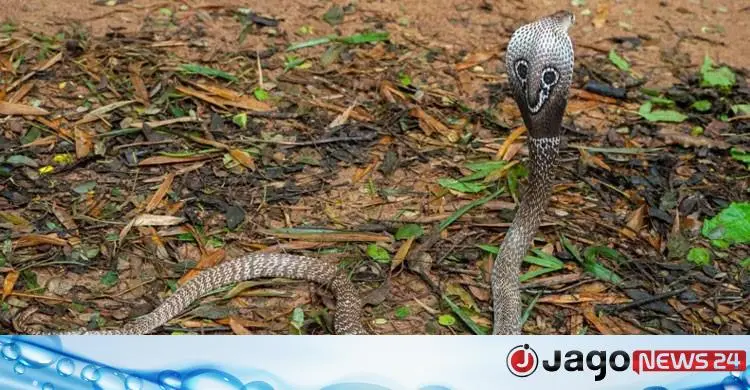
The gokhra is Bangladesh's well-known, highly venomous cobra. Several species are found in the country, notably the monocled cobra, Naja kaouthia (padma gokhra), and the spectacled cobra, Naja naja (khoiya gokhra).
Cobras may be found on farmland, in bushes, around village homes, in rat holes, abandoned places and other sheltered spots. Because rats live near human settlements, cobras may come there looking for food.
Professor Farid Ahsan said both the padma gokhra and the khoiya gokhra are found throughout Bangladesh. The padma gokhra is more common near watery areas and the khoiya gokhra in paddy fields; the padma gokhra is more common in the Chattogram region and the khoiya gokhra in Rajshahi.
They eat rats, frogs, lizards and other snakes. When threatened, a cobra raises the front of its body and spreads its hood, its best-known defensive behaviour.
Cobra venom can affect the nervous system, and without prompt treatment after a bite the situation can become serious, so it is essential to keep a safe distance. Professor Ahsan said that if a cobra bites properly, symptoms appear within half an hour.
Kal keute (kraits)
The kal keute is one of Bangladesh's well-known venomous snakes and among those causing the most snakebite deaths in the country. Several krait species of the genus Bungarus occur in Bangladesh, and the local names "kal keute" and "kalach" are used for more than one closely related species.
Professor Farid Ahsan said the kalach is more venomous than the cobra. Kraits are mainly nocturnal, hiding by day in holes, piles of bricks and wood, cracks in the ground or other dark, sheltered places.
At night they come out to hunt and may be found near homes. Other snakes make up much of their diet, though they may also eat lizards, frogs or small animals. Because they are active at night, there is a risk of sudden encounters with people in the dark.
Professor Ahsan added that kraits stay quiet and bite suddenly, often without the victim noticing. The effect of the venom begins three to four hours later, not before. Krait venom affects the nervous system and can cause severe poisoning; pain or swelling at first is relatively mild, but serious symptoms may follow. The snake is black and white, with a relatively raised spine.
Source: Jagonews24. First published in Bengali on The Agro News.


Comments
(0)