
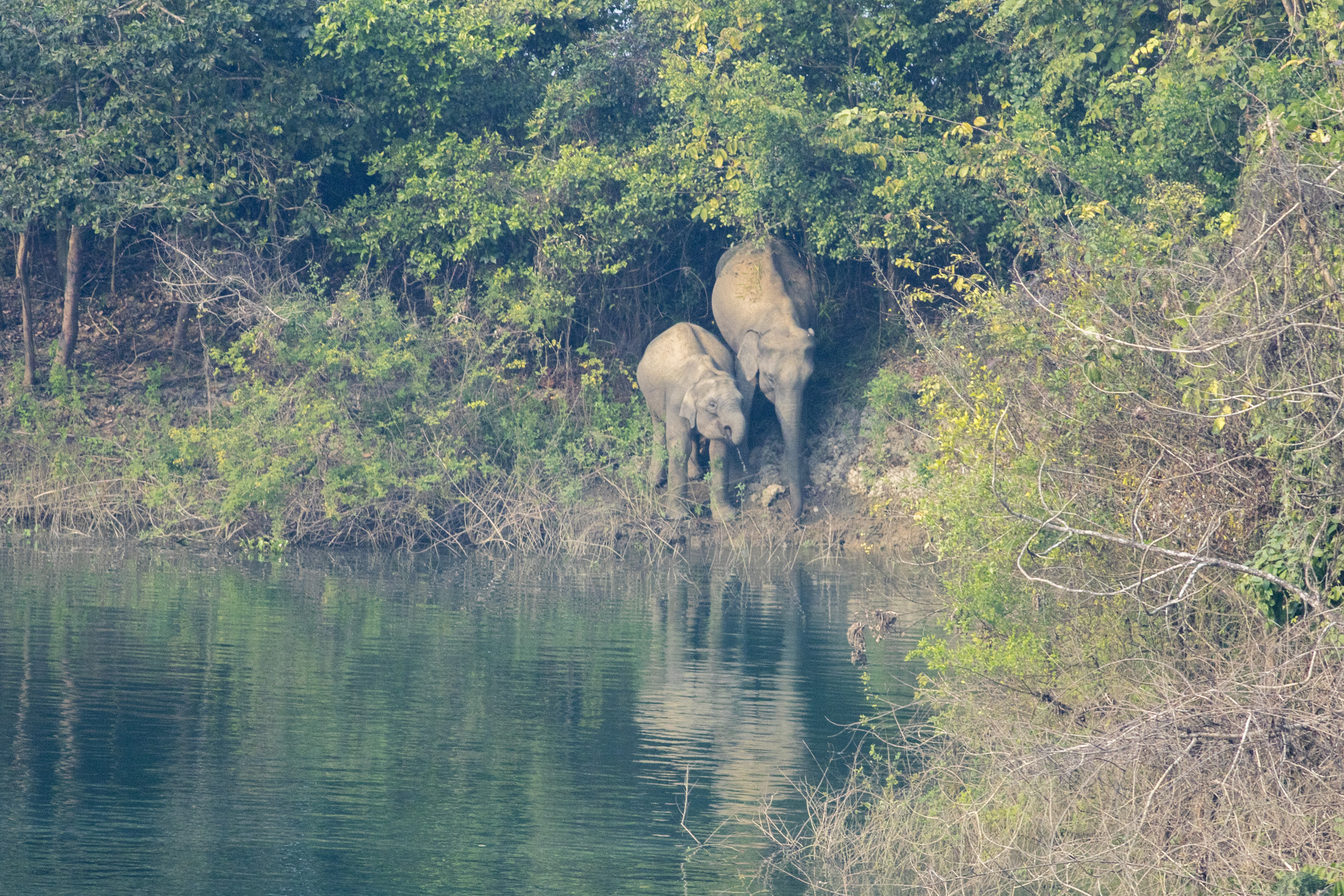
A wild female elephant, described by local officials as a mother elephant, was seriously injured after falling down a steep hillside in Teknaf, Cox's Bazar, on Saturday, 11 July 2026. The fall happened at about 3pm in the Naitongpara area of Ward 1 of Teknaf municipality. Jagonews24 reported that the hill was about 300 feet high and that the skin under the elephant's belly had been slightly torn. The Daily Star's Bengali edition quoted the assistant conservator of forests for Teknaf and Ukhiya as saying the elephant had fallen from about 200 feet and had two serious injuries to the abdomen. Forest Department officials and veterinary doctors began treating her where she lay.
How the fall happened
According to the Forest Department, as reported by Jagonews24, the elephant was feeding on creepers and leaves on the hill when she lost her footing and slid down a deep slope. She was badly hurt in the fall and could not get back on her feet afterwards. The Daily Star, citing Forest Department sources, gave the same account and added a detail about the ground: the elephant slipped on soil that had been softened by rain while she was feeding on the hillside, and tumbled down the steep slope.
Local people who saw the injured animal informed the Forest Department. Forest officials went to the spot and started a rescue operation, and a veterinary doctor gave the elephant first aid. Independent Television (ITV) placed the site in Naitkhongpara and the Shialerghona area under the department's Sadar beat in Teknaf, and reported that soft soil had given way after heavy rain.
The reports differ on the height of the fall. Jagonews24 and ITV said the hill was about 300 feet high. Md Monirul Islam, the assistant conservator of forests for Teknaf and Ukhiya, told The Daily Star that the elephant had fallen from roughly 200 feet. Both figures are estimates given on the day; no measured height was reported.
Her injuries and the treatment on the hillside
Teknaf range officer Abdur Rashid told Jagonews24 that a Forest Department team reached the scene as soon as it was informed and that a veterinary doctor was treating the elephant. He said he hoped she could recover if she received intensive care and treatment for a few days.
Teknaf upazila nirbahi officer (UNO) SM Anik Chowdhury told Jagonews24: "The elephant was seriously injured after falling from the hill. She is now lying on the ground and can move only very slightly. It is believed she has suffered a serious injury to her belly." He added: "A team of experienced vets from Dulahazara Safari Park has reached the scene to treat her. Once she has recovered, she will be released into the forest on the advice of experts. If necessary, she will be sent to Dulahazara Safari Park for treatment and rehabilitation." The UNO also visited the site, The Daily Star reported, and said the elephant could make slight movements but could not use her hind legs.
The Daily Star reported that the assistant conservator, Md Monirul Islam, described two serious injuries to the elephant's abdomen and said she could not move her hind legs. According to that report, forest officials began emergency treatment with doctors from the Teknaf upazila veterinary hospital and the Dulahazara Safari Park, and the officials were hopeful that she could recover if she received intensive care and monitoring for several days.
ITV, in a report published late on the evening of 11 July, said the elephant had been hurt in her hind legs and chest, that the two hind legs were the most badly affected, that she also had a stomach injury, and that the wounds on her legs and chest had been stitched. It reported that the local administration, Forest Department officials, police and doctors of the Department of Livestock Services had gone to the site and that treatment was continuing.
Because the site lay in remote hill country, the elephant was being treated where she had fallen. None of the reports published on 11 July gave her age or said whether a calf had been with her.
A week of heavy rain and landslide warnings
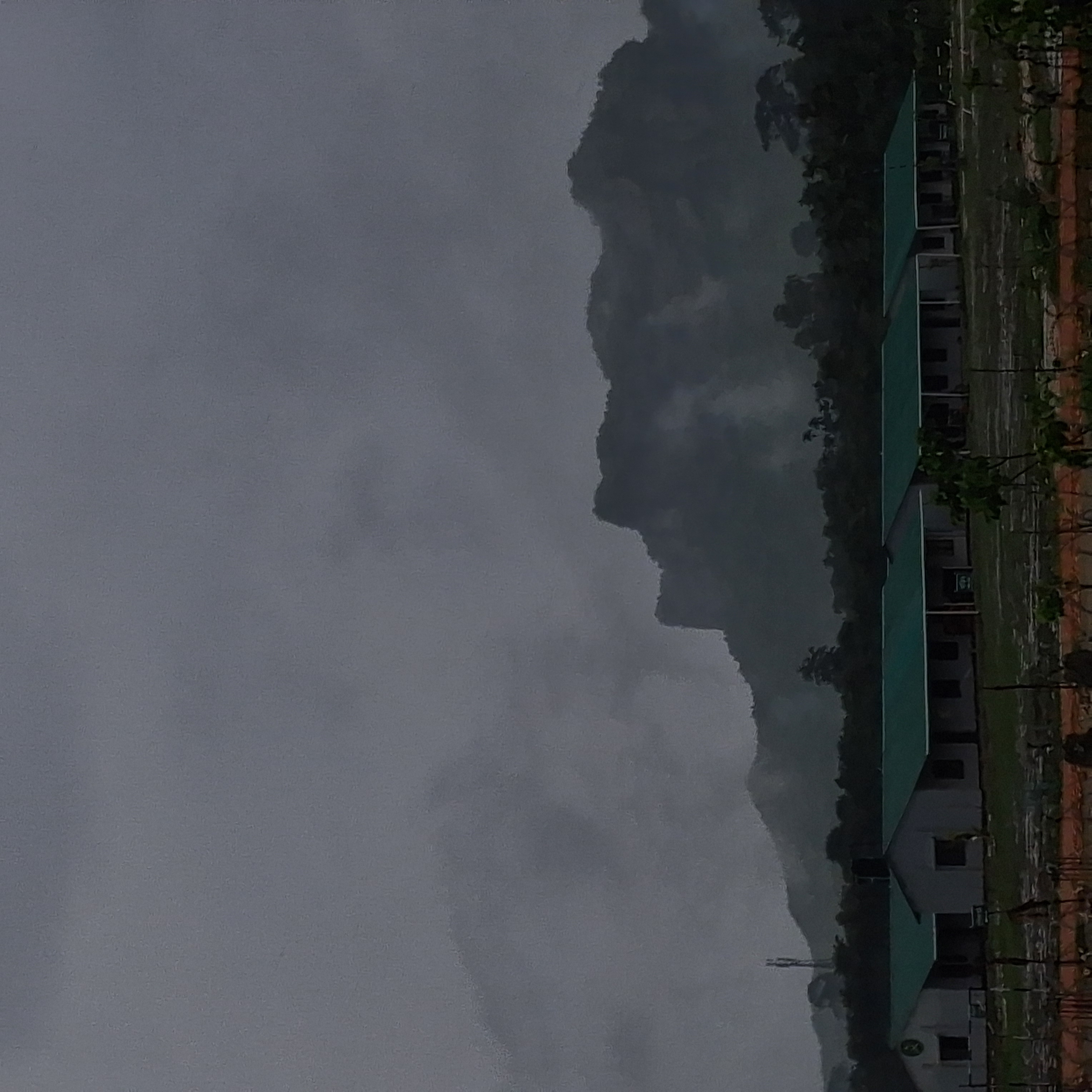
The fall came during several days of very heavy monsoon rain in south-eastern Bangladesh. The Bangladesh Red Crescent Society (BDRCS), in a situation report issued at 4pm on 7 July 2026, said a monsoon depression and a strong active monsoon over the north Bay of Bengal were bringing heavy to very heavy rain to Cox's Bazar, Bandarban and Chattogram districts. In the 24 hours to 6am on 7 July, it said, the Bangladesh Meteorological Department (BMD) recorded 283 mm of rain in Chattogram, 195 mm in Kutubdia, 129 mm in Cox's Bazar and 128 mm in Bandarban.
The same report said the BMD's landslide warning bulletin of 7 July had classified Teknaf, Ukhiya and Cox's Bazar Sadar upazilas as areas of high landslide risk. Landslides had already struck Rohingya refugee camps in Ukhiya in the early hours of 6 July, killing eight people, among them five children, and a ninth person died in a separate landslide in Cox's Bazar municipality. Between 5 and 7 July, the report counted 170 weather-related incidents across the 33 camps, with 10 deaths and 88 injuries.
On 8 July the BMD issued a further landslide warning for Cox's Bazar, Chattogram, Bandarban, Rangamati and Khagrachhari, valid until 6pm on 11 July, the day of the elephant's fall. It said these districts could receive heavy to very heavy rain from 9 to 11 July, with accumulated rainfall of 200 to 500 mm, and again listed Teknaf, Ukhiya and Cox's Bazar Sadar among the landslide risk areas. The warning told people to leave hill slopes and other high-risk places for designated shelters. The reports of 11 July did not say that a landslide had struck the slope where the elephant fell; the Forest Department's account, as The Daily Star carried it, was that she slipped on soil the rain had made soft.
Teknaf, Naitong hill and the sanctuary forest
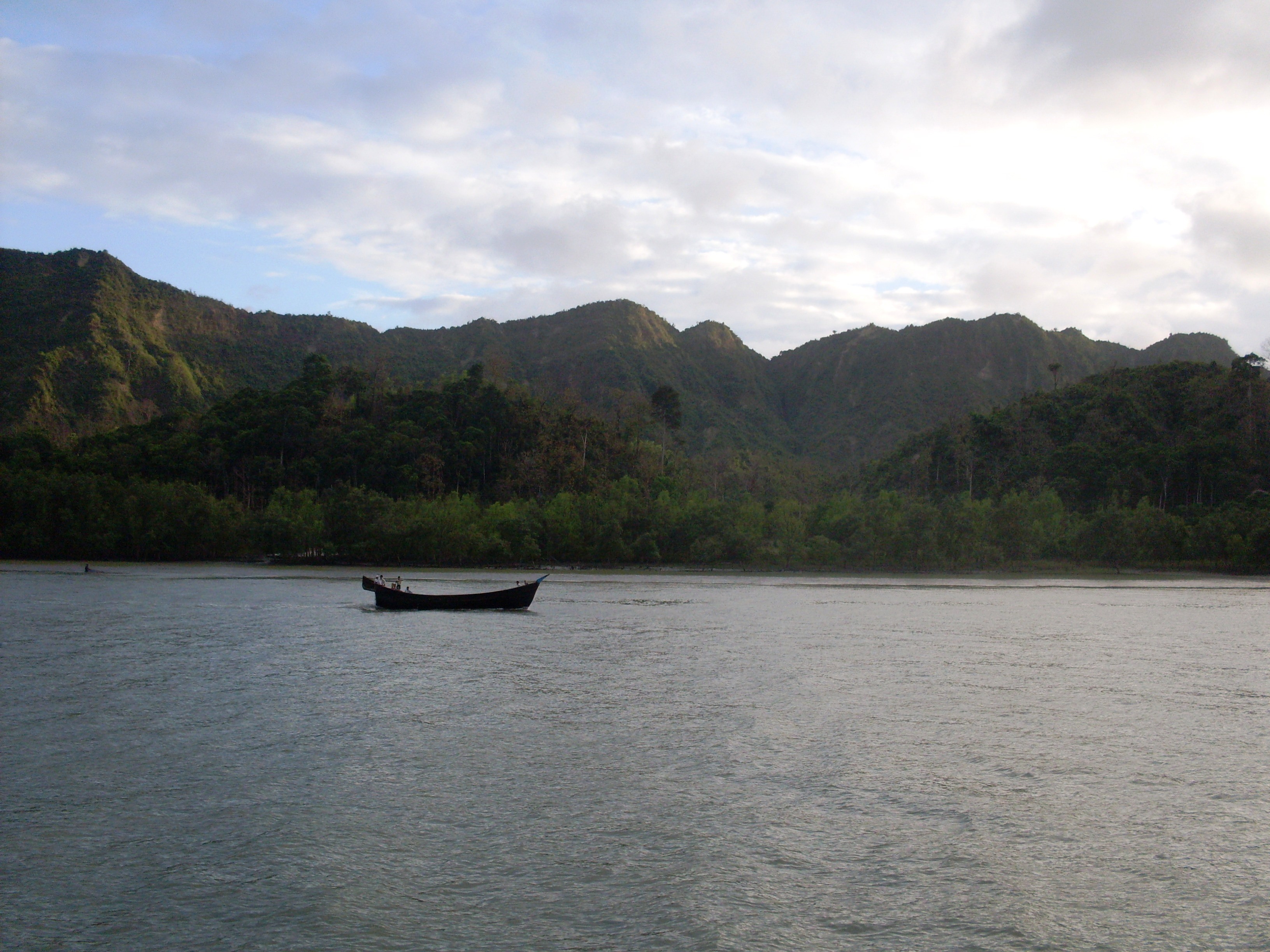
Teknaf is the southernmost upazila of Cox's Bazar district, at the south-eastern tip of Bangladesh. Banglapedia, the national encyclopedia, gives its area as 388.66 square kilometres and places it 86 kilometres south of Cox's Bazar town. It is bounded by Ukhia upazila to the north, Myanmar's Arakan (Rakhine) State to the east across the Naf River, and the Bay of Bengal to the south and west. It has six unions, Teknaf, Baharchhara, Sabrang, Whykong, Nhilla and St Martin's Island, and a municipality of 4.05 square kilometres with nine wards. Banglapedia lists Naitong hill, the site of a Buddhist temple, among the upazila's places of note. Agriculture is the largest source of household income, at 44.95 per cent, and paddy, betel leaf and potato are the main crops.
Much of the hill forest of the Teknaf peninsula is protected as the Teknaf Wildlife Sanctuary, a hill forest of about 11,615 hectares between the Naf River to the east and the Bay of Bengal to the west. It was declared a game reserve in 1983 under the Bangladesh Wildlife (Preservation) (Amendment) Act, 1974, and was long known as the Teknaf Game Reserve. It spreads across five unions of the upazila, Baharchhara, Nhilla, Sabrang, Teknaf Sadar and Whykong, and its known sites include Nitong (Naitong) hill, Kudum cave, Kuthi hill and Toinga peak, which rises to about 1,000 feet. It is one of the few places in Bangladesh where wild Asian elephants can still be seen. The reports of 11 July did not say whether the spot where the elephant fell lay inside the sanctuary's boundary.
The elephants of Teknaf and Cox's Bazar
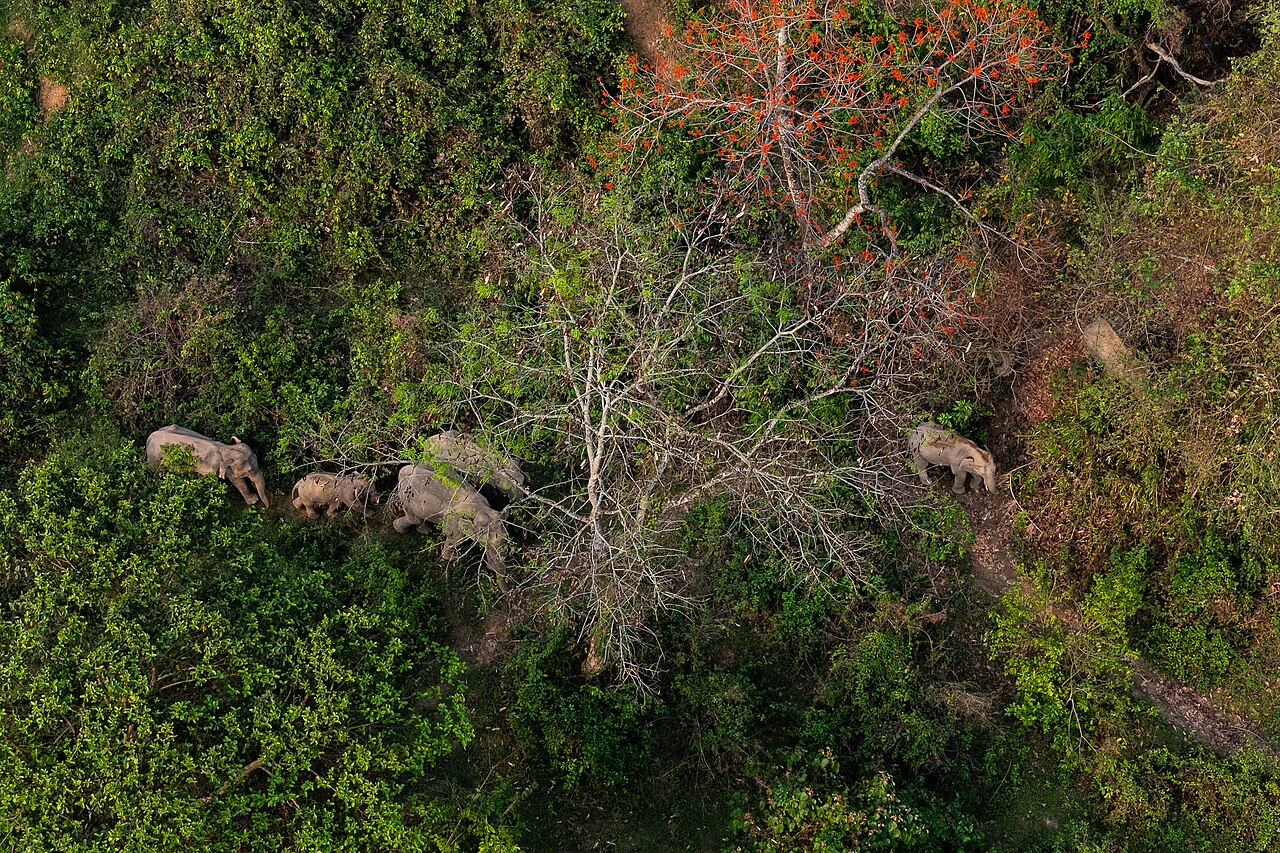
The elephant that fell belonged to one of the last small populations of wild elephants in Bangladesh's south-east. In a report on 4 February 2025, Prothom Alo quoted Md Monirul Islam, the same assistant conservator of forests for the Teknaf-Ukhiya area of the Cox's Bazar South Forest Division, as saying that Cox's Bazar had 203 elephants, including 25 calves, of which 37 lived in the forests of Teknaf and 30 in those of Ukhiya.
That report described how the Rohingya refugee camps had cut into the elephants' range. Citing the Forest Department, it said 34 camps had been set up on about 7,000 acres of forest land in Ukhiya and Teknaf, that five elephant corridors and more than 15 water reservoirs had been blocked, and that more than 60 elephants in the area faced severe shortages of food and water. Of the eight elephant corridors in Cox's Bazar, five were in Ukhiya and Teknaf: three at Kutupalong had been blocked by the camps for seven years, and two at the Ghumdhum border had been closed after Myanmar built a barbed-wire fence. Because of the camps, the assistant conservator said, elephants in Teknaf could no longer move towards Ukhiya, nor those of Ukhiya towards Teknaf.
The same report said that, according to IUCN and Forest Department officials, 23 people, 12 of them Rohingya refugees, were killed by elephants between August 2017 and February 2018, and that 375 incursions by elephants into areas around the camps were recorded in that period. Forest Department records showed 135 people killed by elephants over the six years before the report. Muhammad Shamsuddouja, the additional Refugee Relief and Repatriation Commissioner, said the elephant population of the Ukhiya-Teknaf forests was in a critical condition because of the camps, but that alternative pathways had been created outside the camps for the animals to move.
The Asian elephant: critically endangered in Bangladesh
The animal at the centre of the story is the Asian elephant, Elephas maximus. In Bangladesh it is listed as critically endangered, and globally as endangered, on the IUCN Red List, according to IUCN Bangladesh. When the government released the results of the national elephant survey on 21 March 2017, IUCN said the country had 268 resident wild elephants, all in the south-eastern forests, and between 79 and 107 migratory elephants, with a mean of 93, moving between Bangladesh and neighbouring countries in four forest divisions. Calves made up 11 per cent of the estimate. The survey was carried out by Forest Department biologists from 2013 to 2016 with World Bank support.
The same survey mapped the routes elephants use through the year. It identified 12 small corridors that elephants use to travel between forests and 57 crossing points on the borders with India and Myanmar. It put the elephants' possible range at about 1,518 square kilometres, roughly 1 per cent of the country. IUCN said encroachment on elephant habitat was blocking corridors and causing conflict between people and elephants, and it pointed to the Bangladesh Elephant Conservation Action Plan 2016-2025, with large-scale restoration of degraded forest, starting with elephant ranges, as an urgent priority. In May 2026 A.S.M. Jahir Uddin Akon, the conservator of forests who heads the Forest Department's elephant conservation project, told Mongabay that the exact current number was not known and that a new census was planned.
The Smithsonian's National Zoo describes adult Asian elephants as standing 1.8 to 3.8 metres at the shoulder and weighing 2,750 to 5,420 kilograms. They feed mainly on grasses, along with leaves, roots, vines, twigs, shoots, bark and fruit, and in the wild eat 74 to 150 kilograms of food and drink about 189 litres of water a day. Females live in small herds with their daughters and young males, and males usually leave the herd at puberty, between the ages of 8 and 13. Pregnancy lasts about 21.5 to 22 months, the longest of any animal, and usually produces one calf weighing 68 to 158 kilograms. Banglapedia notes that herds in Bangladesh usually number 5 to 20 animals and feed on grasses, banana plants, bamboo, bark, leaves, fruits and flowers.
Earlier falls and deaths in the Cox's Bazar hills
Falls from hillsides had killed elephants in the district before. Early on 20 April 2021, at about 1am, an elderly female elephant slipped and fell from a hillside onto the road below while a herd was crossing the Panerchhara area of the Eidgaon range, and died of severe head injuries, according to Forest Department sources quoted by UNB in a report carried by The Financial Express. Tohidul Islam, the divisional forest officer of the North Forest Division, said samples had been collected and that the cause of death would be clear after the autopsy report.
Prothom Alo's report of February 2025 said seven elephants had died in Cox's Bazar in the previous year, two in Teknaf, three in Ramu and two in Eidgaon and Chakaria, from electric-wire traps set by people, gunfire, accidents and disease. Not one of the 16 cases filed over elephant killings had been resolved, it said. Prantosh Chandra Roy, an assistant conservator of the Cox's Bazar North Forest Division, said 52 electric-wire traps, each about a kilometre long, had been removed over three years.
Across the country, Mongabay reported on 7 May 2026, citing Forest Department data, that at least 148 elephants, resident, non-resident and captive, were killed in Bangladesh between 2017 and 2025, and that three deaths in 2026 brought the total to 151. Among them was a 60-year-old male that died in Rangamati on 25 April 2026 while being treated for injuries. The report said a 103-kilometre railway between Chattogram and Cox's Bazar runs for 27 kilometres through three protected areas, Chunati and Fasiakhali wildlife sanctuaries and Medhakachhapia National Park, where nearly half of the country's resident elephants live.
Dulahazara Safari Park and what the law requires
The Dulahazara Safari Park, whose vets were sent to Teknaf, lies in Chakaria upazila of Cox's Bazar, about 107 kilometres from Chattogram. It was set up in 1999 on about 2,224 acres of undulating land and is run by the Forest Department for eco-tourism, research and the conservation of wild animals in a natural setting. The UNO named it as the place where the elephant would be sent for treatment and rehabilitation if experts advised it.
On 11 July 2026 the law in force was the Wildlife (Conservation and Security) Act, 2026 (Act No. 86 of 2026), which is deemed to have taken effect on 7 January 2026 and replaced the Wildlife (Conservation and Security) Act, 2012. According to its official text, the Act gives the Forest Department the primary responsibility for the protection, welfare and security of wildlife. Among the duties it sets out for the department, through the chief wildlife warden and other wardens, are these:
- to identify and protect the habitats and corridors of wildlife at risk and take conservation measures both in their natural habitat and outside it (section 5);
- to reduce conflict between people and wildlife and ensure coexistence, through public awareness, compensation, legal action, incentive programmes and the help of volunteers (section 5);
- to make guidelines for the protection of rescued and injured wildlife and take the necessary steps for their care and treatment (section 5);
- to form volunteer teams for the welfare and protection of wildlife, following guidelines (section 5).
Section 4 of the Act directs the government to take steps to ensure enough treatment centres and doctors for the welfare and protection of wildlife. Section 14 requires that rescued, seized or captured wild animals be released into a suitable natural environment, but allows an animal to be kept in captivity if it needs nursing or carries a risk of spreading disease. Section 34 allows the Forest Department to set up rescue centres to give wild animals medical care, food, shelter and security, and to make guidelines for releasing them from those centres into nature. Section 21 lets the government declare safari parks and wildlife breeding centres for conservation both in and outside an animal's natural habitat.
The elephant is among the most strictly protected animals under the Act. Section 41 bars anyone from hunting a tiger or an elephant listed in Schedule 1(a), and the Act defines hunting to include killing, catching or poisoning a wild animal. Under section 44, hunting such a tiger or elephant is punishable by two to seven years in prison and a fine of 100,000 to 1,000,000 taka, and a repeat offence by up to 12 years in prison and a fine of up to 1,500,000 taka. Nothing in the reports of 11 July suggested that any person was involved in the Teknaf fall, which the Forest Department attributed to the slippery hillside.
Outside the courts, the government had other tools for elephants by the time of the fall. Mongabay reported in May 2026 that the government drew up a ten-year elephant conservation action plan in 2018, and that under the Sustainable Forests and Livelihoods (SUFAL) project the Forest Department and organisations including IUCN Bangladesh had formed Elephant Response Teams of local volunteers in conflict-prone areas. Compensation for losses caused by wildlife, introduced in 2010, was raised in 2021 to 300,000 taka for the family of a person killed, 100,000 taka for an injured person, and up to 50,000 taka for damaged household goods and crops. Monirul H. Khan, a zoology professor at Jahangirnagar University, told the same publication that the response teams worked as unpaid volunteers, which he said made the effort less effective.
Photo: AKM Emdadul Islam Bitu / Wikimedia Commons (CC BY-SA 4.0)
Sources: Jagonews24, The Daily Star, Independent Television (ITV), Bangladesh Meteorological Department, Bangladesh Red Crescent Society, Prothom Alo, IUCN Bangladesh, Smithsonian's National Zoo, Banglapedia, Wikipedia, The Financial Express (UNB), Mongabay, Wildlife (Conservation and Security) Act 2026 (bdlaws.minlaw.gov.bd)
Comments
(0)