
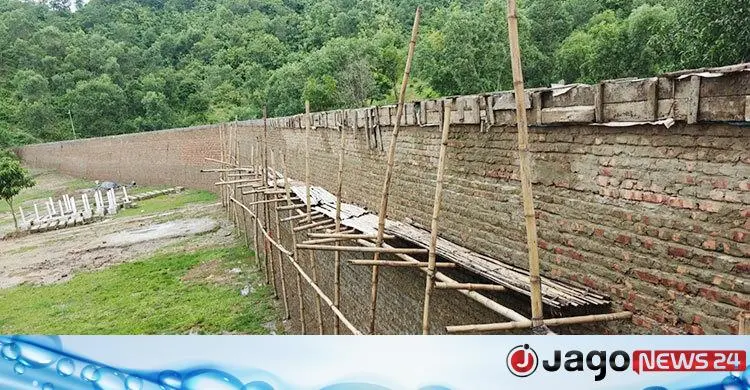
A tall brick boundary wall is being built inside the forest in Teknaf, Cox's Bazar, in a habitat and movement corridor for wild elephants and other wildlife. The wall is 5 metres high and 137 metres long, and it has angered local residents and environmental activists.
It is being built in the reserved forest behind the No. 26 Shalbagan Rohingya camp in Hnila, Teknaf.
Locals fear harm to wildlife
Local people allege that building the guide wall is stripping trees from the forest land and upsetting the natural balance. They say the habitats of many wild animals, including wild elephants, monkeys, jackals, reptiles and various birds, are being damaged. Because the site is an important corridor for wild elephants in particular, they fear the wall will block the animals' normal movement.
They also fear that permanent structures in the forest could increase deforestation, loss of biodiversity and the risk of criminal activity. According to local people, a contracting firm is carrying out the work through the UN Development Programme (UNDP), as part of building a waste management centre for the Rohingya camps.
Local environmental activist Mohammad Toyeb Ullah said: "Shalbagan forest is one of the most important forests in the Ukhiya-Teknaf region and has long been known as a safe habitat for wild elephants and other wildlife. It has also been used as an important elephant corridor. But building a brick boundary wall inside the forest is seriously disrupting the natural environment, biodiversity and the normal movement of wildlife."
He added that the guide wall would further narrow the elephants' path, which could lead to more elephants entering settlements and a greater risk of human-elephant conflict. With trees and natural vegetation being destroyed, habitats of animals large and small were under threat. "Permanent structures like this are a major threat to the ecological balance of the reserved forest," he said.
Another local resident, Mohammad Anwar Hossain, said: "Since the Rohingyas took shelter in this country, many places have been damaged, including hills, forest land, ordinary people's farmland and wildlife sanctuaries."
Forest Department says no permission was given
Abdullah Al Mamun, divisional forest officer of the Cox's Bazar South Forest Division, said: "A contractor is building the boundary wall on behalf of UNDP in the forest land next to Shalbagan camp 26 in Teknaf. But no permission of any kind has been taken from the Forest Department for this work."
He said the Refugee Commissioner's office had been asked to stop the work, but construction was still going on. The forest is an important corridor for wildlife, and a permanent boundary wall there would seriously harm the forest environment and the normal movement and habitat of wild animals.
Commissioner cites waste problem
Mohammad Mizanur Rahman, the Refugee Relief and Repatriation Commissioner (RRRC) in Cox's Bazar, said a huge amount of waste is generated in the Rohingya camps every day, and without proper management pollution could get worse. The project is being carried out to ensure modern waste management, he said. "But building a wall inside the forest is not an ideal solution, just as the lack of proper waste management is also harmful to the environment."
Source: Jagonews24. First published in Bengali on The Agro News.
Comments
(0)